


A Guide On How To Use A Monad Bridge


Table of Contents
- Why Users Bridge to Monad
- Monad Bridging Challenges
- What Makes deBridge Different from Other Monad Bridges?
- What You Need Before Bridging to Monad
- Step-by-Step Guide: Bridging to Monad With deBridge
- Why deBridge is the Safest Option
- Conclusion
- Frequently Asked Questions (FAQs)
- Related Resources
Monad went live in November 2025 as one of the most anticipated Layer 1 blockchains. It is a high-performance EVM blockchain built for scale. Monad is capable of delivering 10,000
TPS, sub-second finality, low fees, and scalable decentralization. Within weeks of launch, more than a billion dollars in assets had already moved onto the network.
That last part will be the main focus of this blog. To trade, swap, lend, or farm on Monad, your capital has to get there first, and a Monad bridge is the onramp. Bridging to a new chain comes with its own set of difficulties. This guide covers what Monad is, what makes bridging to a fresh Layer 1 different, and how deBridge gets your funds to Monad in seconds.
Key Takeaways
- Monad is a parallel-execution Layer 1 with full EVM compatibility, roughly 10,000 TPS, and near-instant finality.
- Bridging to a newly launched chain introduces challenges that mature networks do not have, including thin liquidity and a cold start on gas.
- Monad's canonical route is the Wormhole-powered Native Bridge, which mainly serves Ethereum and Solana.
- deBridge delivers native assets to Monad in real time from 26+ source chains, with no wrapped tokens and no pooled liquidity.
Why Users Bridge to Monad

Monad is not a rollup or a scaling layer stacked on top of another chain. It is a standalone Layer 1 rebuilt from the ground up, using optimistic parallel execution and the MonadBFT consensus mechanism to process many transactions at once, rather than processing them one at a time.
Let’s take a look at some of the advantages of bridging to Monad:
- High Throughput: Monad targets around 10,000 transactions per second, giving traders and dApps room to operate without congestion.
- Fast Finality: Monad confirms transactions in roughly 800 milliseconds, keeping the experience smooth for active users.
- Near-Zero Gas Fees: Transaction costs stay low and predictable, even during periods of high network activity.
- Full EVM Compatibility: Monad runs existing Ethereum bytecode with no rewrites, so leading protocols can deploy directly.
Common Use Cases
- Deploying contracts in a high-throughput EVM environment
- Swapping and providing liquidity on Monad-deployed DEXs like Uniswap and Curve
- Holding stablecoins such as USDC, USDT0, and AUSD for low-cost settlement
- Lending, borrowing, and farming while fees stay negligible
Monad Bridging Challenges
Most bridging guides assume you are moving onto a network that has been around for years, with deep liquidity and dozens of mature routes. Monad is weeks young by comparison, and that changes the calculation in three concrete ways.
Official Monad Native Bridge
The official Monad Native Bridge enables transfers between Ethereum, Solana, Arbitrum, and 7 more chains to Monad. It is a solid canonical option, but many users do not pick it as their first choice. Why? Let's find out:
- Limited chain support: The native bridge focuses only on a handful of blockchains, leaving out many networks where users hold assets.
- Limited token support: It supports a limited set of assets routed through its standard, so not every token you hold is covered.
- Manual setup: Tracking and finalizing transfers can feel slow for users who expect instant settlement.
These restrictions push users toward third-party bridges, which try to fix speed and token coverage but often introduce new risks.
Common Problems with Third-Party Monad Bridges
- Pooled Liquidity Risk: Many bridges rely on pooled liquidity, where user funds sit in smart contracts. This creates large honeypots that are vulnerable to hacks or exploits.
- Wrapped tokens: Some bridges hand you a synthetic IOU rather than the real asset. On a new chain, those wrapped versions can sit in shallow markets and depeg fast.
- Routing delays: Aggregated routes can pause during periods of high volatility or during a token's launch week.
- Token gaps: Coverage on a fresh network is not always the best, and hence, you may be forced to swap into a supported asset before you can even bridge.
What Makes deBridge Different from Other Monad Bridges?
deBridge stands out from the crowd because of its design, and not because of any special-case handling for Monad. Its 0-TVL architecture means there are no liquidity pools to drain and no wrapped assets to depeg. Transfers happen in real time, with users receiving native assets rather than wrapped versions.
How deBridge Solves Them
deBridge removes the bottlenecks and risks of liquidity pools by letting value flow instantly across the DeFiverse with deep liquidity and guaranteed rates.
- Native asset delivery: You receive the real asset on Monad, never a wrapped version of a token for liquidity to deepen.
- No pool, no slippage: With zero pooled liquidity, transfer size is free from slippage, even while Monad's markets are still maturing.
- Wide chain support: Supports major assets (ETH, USDC, SOL, USDT, WBTC, and more) across 20+ chains, including Ethereum, Solana, and Tron.
- Land with gas: Choose MON as your destination asset and arrive ready to transact, skipping the gas cold start entirely.
- Wallet coverage: Works with MetaMask, Phantom, WalletConnect, Coinbase Wallet, and others.
deBridge vs Stargate vs Portal vs Mayan vs Across
What You Need Before Bridging to Monad
Before connecting to Monad, set up your wallet client using the Monad Mainnet RPC information. To do this, visit Chainlist, connect your wallet, and allow it to add the Monad RPC details to your client.
Keep enough gas on your source chain (ETH, SOL, BNB, and so on) to cover the bridging fee. It is also recommended to keep a small amount of MON in your Monad wallet for future transactions.
Please note that Monad uses MON as the gas currency on its blockchain.
Step-by-Step Guide: Bridging to Monad With deBridge
deBridge offers a quick way to move assets between Monad and any supported chain, or vice versa. Here are the simple steps to bridge your crypto:
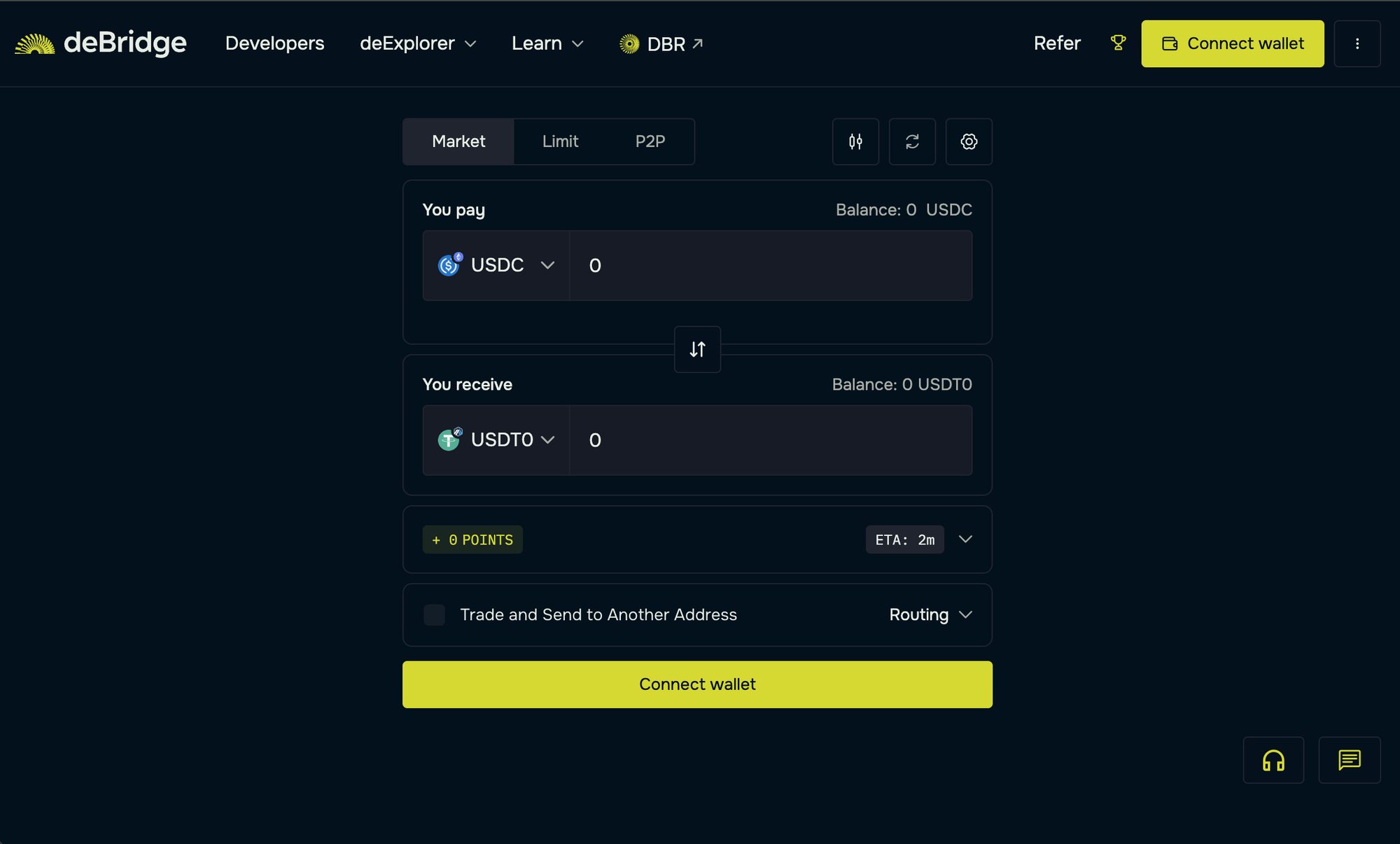
- Select the source chain and asset you want to bridge. Here, we will select Ethereum as the source chain and USDC as the asset.
- Next, select the destination chain and asset you want to receive. Here, we will choose Monad and MON as the asset on the target chain.
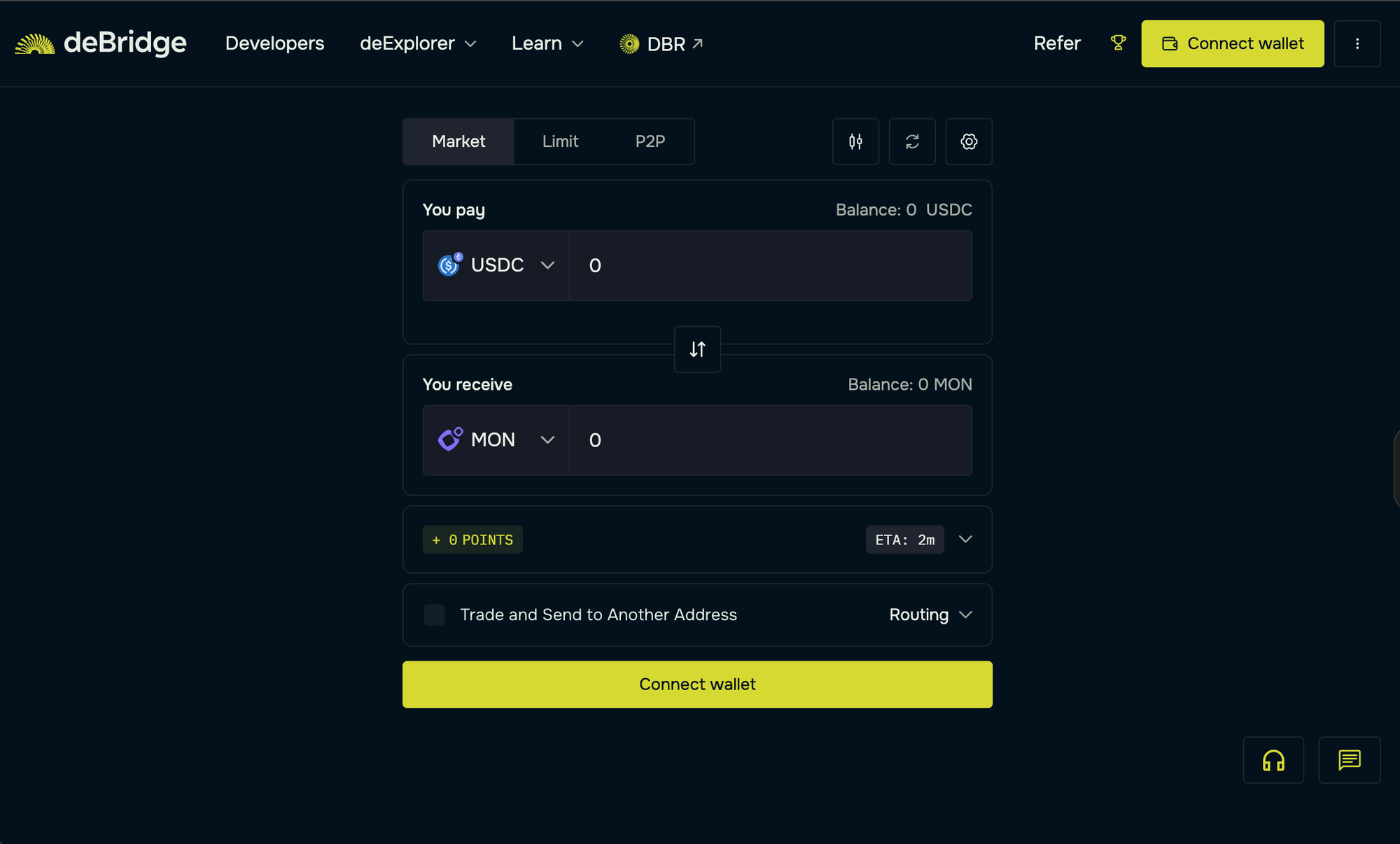
- Connect your source wallet and your Monad destination wallet.
- Enter the USDC quantity and review the transaction details.
- Confirm the trade and sign the transaction to receive native USDC in your Monad account.
Pro Tips
- Make sure you hold a small amount of MON on Monad to cover future transactions.
The "Order Fulfilled" pop-up will appear on your bridging screen in 1-2 seconds, indicating the process is complete and your bridged assets have arrived in your Monad wallet. Technical users can also inspect the transaction on the Monad mainnet explorer.
Why deBridge is the Safest Option
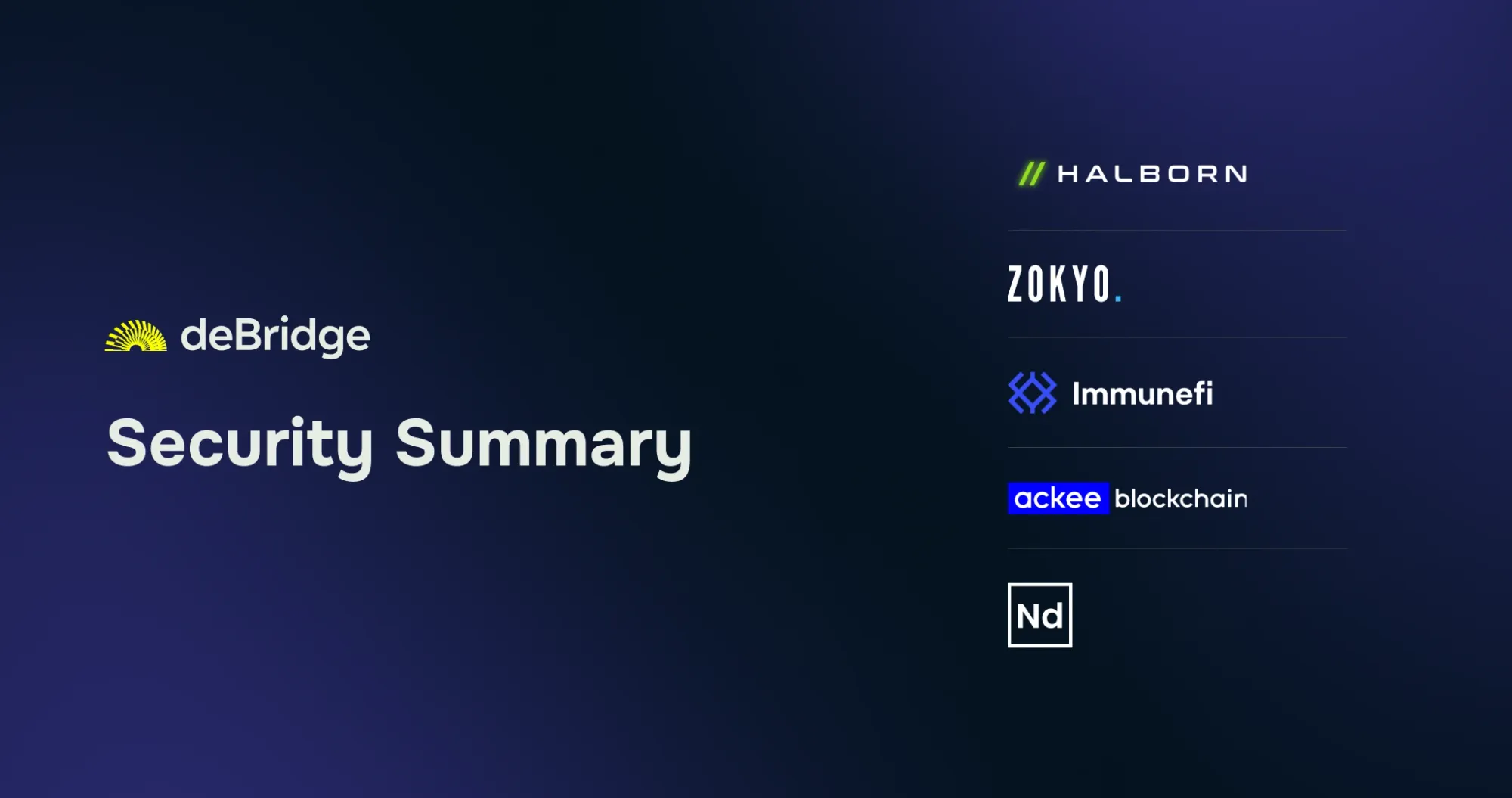
Security is the #1 priority for deBridge
deBridge is based on a 0-TVL model that removes the pooled liquidity that bridge exploits have historically targeted, so there is no smart contract sitting on a pile of user funds to attack in the first place.
deBridge has already completed 30+ security audits by firms including Zokyo, Halborn, and Ackee, along with a bug bounty that has never been claimed. To keep your transactions safe, deBridge ensures funds arrive in the destination wallet before the transaction is finalized, with zero downtime and no security incidents since inception.
Why Users Trust deBridge
deBridge has earned the trust of users across DeFi for seamless bridging to any chain. It also offers a range of features, including:
- 0-TVL means no pooled liquidity risk
- Audited 30+ times, with zero security incidents
- Funds delivered to the wallet before transaction finalization
- Trusted by Phantom, Trust Wallet, MetaMask, Jupiter, OKX, and Solflare
Conclusion
Bridging to Monad opens the door to a new Layer 1 blockchain, unlocking a new era of EVM performance. However, it is equally important to choose the right Monad bridge that helps you move your capital onchain natively.
With over a billion dollars already bridged to Monad, it makes sense to use the Monad bridge and explore the ecosystem. deBridge handles that arrival in seconds, from 20+ chains, with no pools and no wrapped assets. It is the simplest way to move on to Monad and start using the network as soon as you land.