


Tokenized Stocks Explained: How Equities Trade Onchain (2026)


Table of Contents
- What Are Tokenized Stocks?
- How Do Tokenized Stocks Work?
- Tokenized Stocks Platforms
- Why Tokenized Stocks Are Multichain (and Why That Matters)
- Step-by-Step Guide: How to Buy Tokenized Stocks with deBridge
- Why deBridge is the Safest Option
- Conclusion
- Frequently Asked Questions (FAQs)
- Related Resources
Tokenized stocks put real equities like Apple, Tesla, and Nvidia on public blockchains. The catch is that these assets now live across multiple blockchains, and your capital has to move to the right chain & asset. This guide explains what tokenized stocks are, how they work, where to buy them, and how deBridge moves your funds to whichever chain they trade on.
Key Takeaways
- Tokenized stocks are blockchain tokens backed 1:1 by real shares held with a custodian, tracking the stock's price onchain.
- They trade 24/7, settle in seconds, support fractional ownership, and plug into DeFi, but they typically carry no voting rights.
- Listings are fragmented across Ethereum, Solana, Arbitrum, Base, and Plume, with issuers running their own compliance-aware bridges for the tokens themselves.
- deBridge is the capital layer: it moves your stablecoins to any of these chains in seconds, so you can trade wherever the listing lives.
What Are Tokenized Stocks?
A tokenized stock is a digital token on a blockchain that represents ownership exposure to a real, publicly traded share. Each token is backed one-to-one by an actual share held in custody by the issuer, so the token's value tracks the underlying stock. Instead of holding Apple stock in a brokerage account, you hold a token like AAPLx in your own wallet.
The idea is often called the tokenization of stocks, and it turns equities into assets that behave like crypto: transferable around the clock, divisible into fractions, and usable inside onchain applications. Tokenized equities are one slice of the broader real-world asset (RWA) movement bringing traditional finance onchain.
How Do Tokenized Stocks Work?
The mechanics are simpler than they sound:
- Issuance: A regulated issuer, such as Backed Finance (behind xStocks) or Ondo Finance, buys real shares through licensed brokers and places them with a custodian.
- 1:1 backing: For every share held, the issuer mints one token on a supported blockchain. Reserves are typically attested so holders can verify the backing.
- Price tracking: Because each token is redeemable against a real share, its market price stays anchored to the stock's price, with oracles like Chainlink feeding live data onchain.
- Custody: You hold the token in your own wallet. The issuer holds the share. Selling or redeeming the token unwinds the position.
Corporate actions like splits and dividends are handled by the issuer and reflected in the token, which is one reason these tokens are technically more complex than ordinary crypto assets.
Tokenized Stocks vs. Traditional Stocks
Benefits of Trading Stocks Onchain
- 24/7 markets: Trade Tesla exposure on a Sunday night. Onchain markets never close.
- Fractional from the start: Buy 0.1 of a share as easily as 100.
- Instant settlement: Transfers finalize in seconds instead of the next business day.
- Global access: Anyone in a supported region with a wallet can participate, no brokerage account required.
- DeFi composability: Tokenized equities can serve as collateral, sit in liquidity pools, or plug into structured products, which no brokerage share can do.
Risks and Legal Considerations
Tokenized stocks are not risk-free. Take a look at what you should consider:
- Counterparty and backing risk: The token is only as good as the issuer's custody and redemption process. Attestations help, but you are trusting the issuer.
- No voting rights: Most tokenized stocks confer price exposure, not shareholder rights.
- Regulation is regional and moving: These products are generally unavailable to US retail buyers, and offerings like Robinhood's tokenized stocks launched in the EU specifically. Legality depends on where you are and how the token is structured, so check your jurisdiction before buying.
- Liquidity varies: Some listings trade thinly on some chains, so spreads can be wider than on the underlying stock exchange.
Tokenized Stocks Platforms
Which Chains Support Tokenized Stocks?
Tokenized equities are now live across at least five ecosystems: Ethereum for institutional depth, Solana for fast retail trading of xStocks, Arbitrum for Robinhood's program, Base for emerging listings, and Plume as an RWA-dedicated chain. Each chain hosts different issuers, different pairs, and different pools of liquidity.
Why Tokenized Stocks Are Multichain (and Why That Matters)
Issuers go where the users are, so the same tokenized stock increasingly exists on several chains at once. The tokens themselves move between chains through issuer-run, compliance-aware bridges. These exist because equity tokens carry transfer restrictions and rebasing mechanics that general-purpose bridges are not designed to handle.
While your USDT might sit on Tron and the xStocks pair you want trades on Solana, or your funds are on Ethereum while the opportunity is on Arbitrum. Liquidity is fragmented, and deBridge solves this exact problem.
Step-by-Step Guide: How to Buy Tokenized Stocks with deBridge
deBridge moves your capital from any of 18+ chains to the tokenized asset in seconds, with no slippage. Here is the flow, using Tron to Solana as the example:
- Visit https://app.debridge.com/
- Select your source chain and asset. Here, we will choose Tron and USDT.
- Select the destination chain and asset. Here, we will choose Solana and NVDAx.
- Connect your source wallet and your destination wallet.
- Enter the amount and review the route, rate, and fee.
- Confirm and sign the transaction to receive assets in your Solana wallet.
Pro Tips
- Make sure you have sufficient SOL in your destination chain (Solana) for future transactions.
The "Order Fulfilled" pop-up appears within 1-2 seconds once your assets reach the destination wallet.
Why deBridge is the Safest Option
deBridge prioritizes speed without compromising on security.
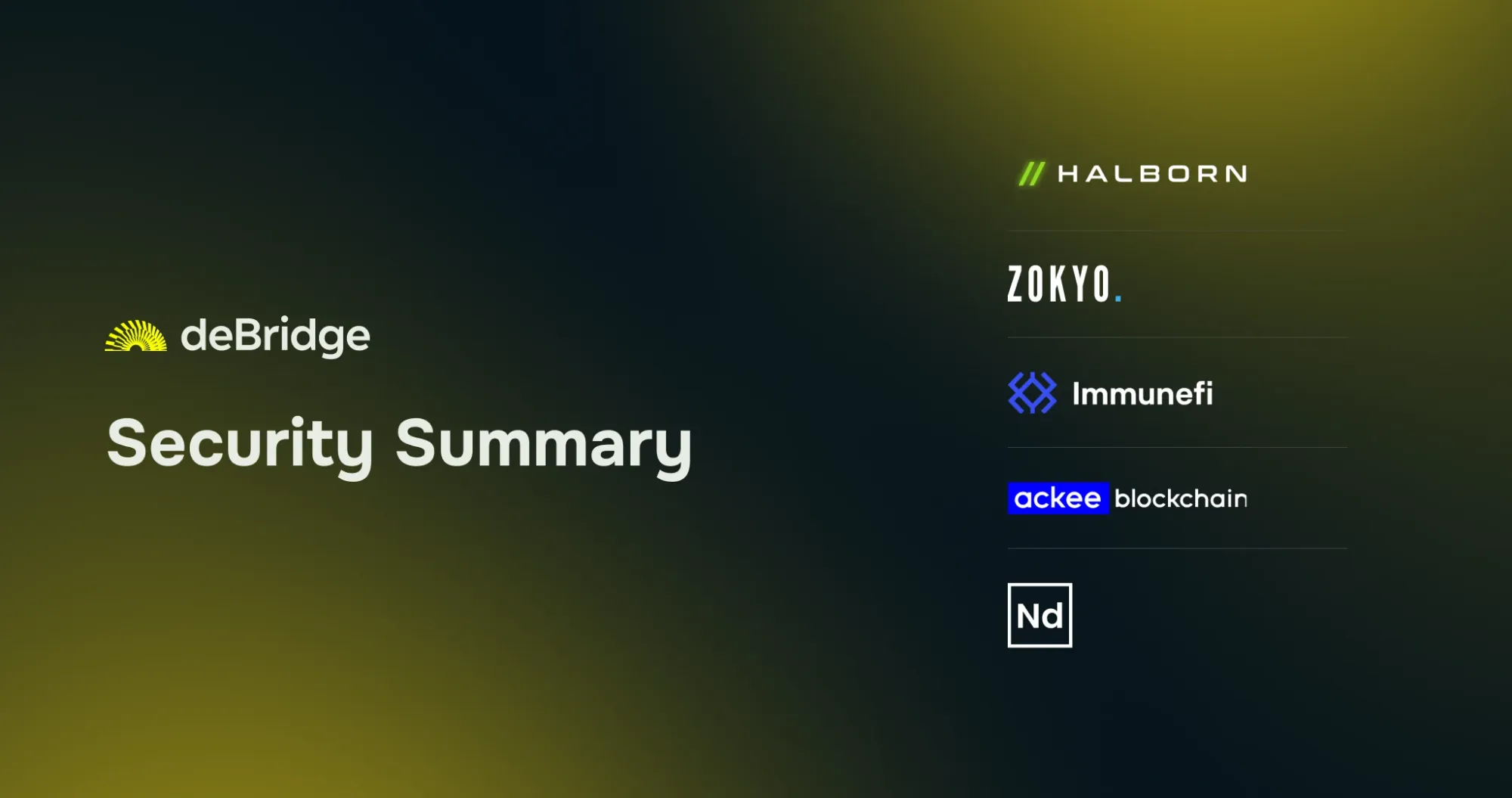
Unlike traditional bridges relying on wrapped assets or pooled liquidity, deBridge uses a 0-TVL architecture that avoids liquidity pools and eliminates attack surfaces. It has undergone 30+ security audits by leading firms, including Halborn and Zokyo, and has maintained a clean record of zero exploits to date.
deBridge maintains a $200,000 bug bounty that has never been claimed, and has processed over $22 billion in volume with no security incidents since inception.
- 0-TVL means no pooled liquidity risk
- Native delivery in 1-3 seconds with no slippage
- 30+ audits, unclaimed bug bounty
- Trusted by Phantom, MetaMask, Jupiter, Trust Wallet, OKX, and Solflare
Conclusion
Tokenized stocks are turning equities into 24/7, globally accessible, DeFi-ready assets, and the market's record growth says the shift is real. The ecosystem is multichain by design, which means the first step of every trade is getting your capital to the right chain.
deBridge handles that step in seconds. This means you can either swap to onchain stocks or bridge directly to the tokenized stock of your choice on any chain.