


A Guide On How To Use A MegaETH Bridge


Table of Contents
- Why Users Bridge to MegaETH
- MegaETH Bridging Challenges
- What Makes deBridge Different from Other MegaETH Bridges?
- Step-by-Step Guide: Bridging to MegaETH With deBridge
- Why deBridge is the Safest Option
- Frequently Asked Questions (FAQs)
- Related Resources
MegaETH claims to be a real-time Ethereum Layer 2 blockchain, targeting 100,000 transactions per second with 10-millisecond blocks. MegaETH is fast enough to give you a comparable experience of using an app onchain vs a Web2 product.
To trade perps, swap on a real-time DEX, or farm yield on MegaETH, your capital has to get there first. This guide covers what MegaETH is, what makes bridging to it different, and how deBridge moves your funds across in seconds.
Key Takeaways
- MegaETH is a real-time Ethereum L2 targeting 100,000 TPS, 10ms blocks, and roughly one-second finality.
- It uses ETH for gas, so bridging ETH means you arrive ready to transact.
- The native MegaETH bridge is slow to exit, since withdrawals to Ethereum follow the rollup's finalization window.
- deBridge moves native assets to and from MegaETH in real time across 20+ chains, with no pooled liquidity and no wrapped tokens.
Why Users Bridge to MegaETH
MegaETH is known for providing faster transactions at a fraction of a cent. In a world where most rollups and Layer 2s settle a block every couple of seconds, MegaETH streams execution continuously, pushing block times down to milliseconds.
That unlocks a few things users want:
- Real-time throughput: Up to 100,000 TPS, with mainnet already sustaining tens of thousands, so apps stay responsive under load.
- 10ms blocks: Trades, liquidations, and game actions are confirmed within milliseconds, making high-frequency use cases viable.
- ETH for gas: Fees are paid in ETH and stay a fraction of a cent.
- Full EVM compatibility: Existing Ethereum contracts and tooling run unchanged.
Common Use Cases
- Trading perpetuals on protocols like GMX and Valhalla
- Swapping on real-time DEXs such as Kumbaya and Prism
- Holding USDm, MegaETH's yield-bearing native stablecoin
- Playing fully onchain games that need sub-100ms feedback
MegaETH Bridging Challenges
Since MegaETH went live on mainnet in February 2026, it has had relatively thin liquidity compared to established blockchains. It is worth knowing all the necessary points before you send anything:
Official MegaETH Native Bridge
The MegaETH Native Bridge, reachable through the Rabbithole portal, is an OP Stack Standard Bridge. Although it is trustworthy, it is not always the one users reach for:
- Slow to exit: Withdrawals back to Ethereum follow the rollup's challenge window, which can take days rather than seconds.
- Ethereum-centric: It is built around moving ETH between Ethereum and MegaETH and offers no support for moving funds on Solana, Base, or BNB Chain.
- Limited assets: Coverage centers on ETH, so anything else means swapping first.
Those gaps push users to third-party bridges, which add their own risks.
Common Problems with Third-Party MegaETH Bridges
- Pooled liquidity risk: Bridges that hold funds in pools create honeypots, especially on newer chains with shallow pools.
- Wrapped tokens: Some routes deliver a synthetic version of your asset that can depeg in thin markets.
- Slippage: Pool-based bridges quote higher slippage on MegaETH than on Ethereum, while liquidity is still building.
What Makes deBridge Different from Other MegaETH Bridges?
deBridge stands apart because of how it is built. Its 0-TVL architecture means there are no liquidity pools to drain and no wrapped assets to depeg. Value moves natively and settles in real time, which suits a real-time chain better than any pool-based one.
- Native asset delivery: You receive the real asset on MegaETH, never a wrapped version of a token.
- No pool, no slippage: Transfer size does not move your quote, even while MegaETH's markets are thin.
- Seconds in both directions: Exit back to Ethereum, Solana, Base, Tron, or any chain in seconds, skipping the native bridge's multi-day withdrawal.
- Wide chain support: Move major assets across 20+ chains, including Ethereum, Solana, and Tron.
deBridge vs Stargate vs Portal vs Across vs Relay
deBridge is the only option here that pairs native delivery with a 0-TVL design and roughly one-second settlement in both directions, so there is no pool to drain, no wrapped IOU to depeg, and no waiting days to take your assets back off MegaETH.
Step-by-Step Guide: Bridging to MegaETH With deBridge
Before bridging funds to MegaETH, it is important to add the MegaETH chain to your wallet. Simply visit Chainlist: connect, find MegaETH (chain ID 4326), and approve its RPC details.
Keep enough gas on your source chain to cover the bridging fee. Since MegaETH uses ETH for gas, bridging ETH means you land ready to transact. deBridge offers a quick way to move assets between MegaETH and any supported chain. Here is how to bridge to MegaETH, step by step:
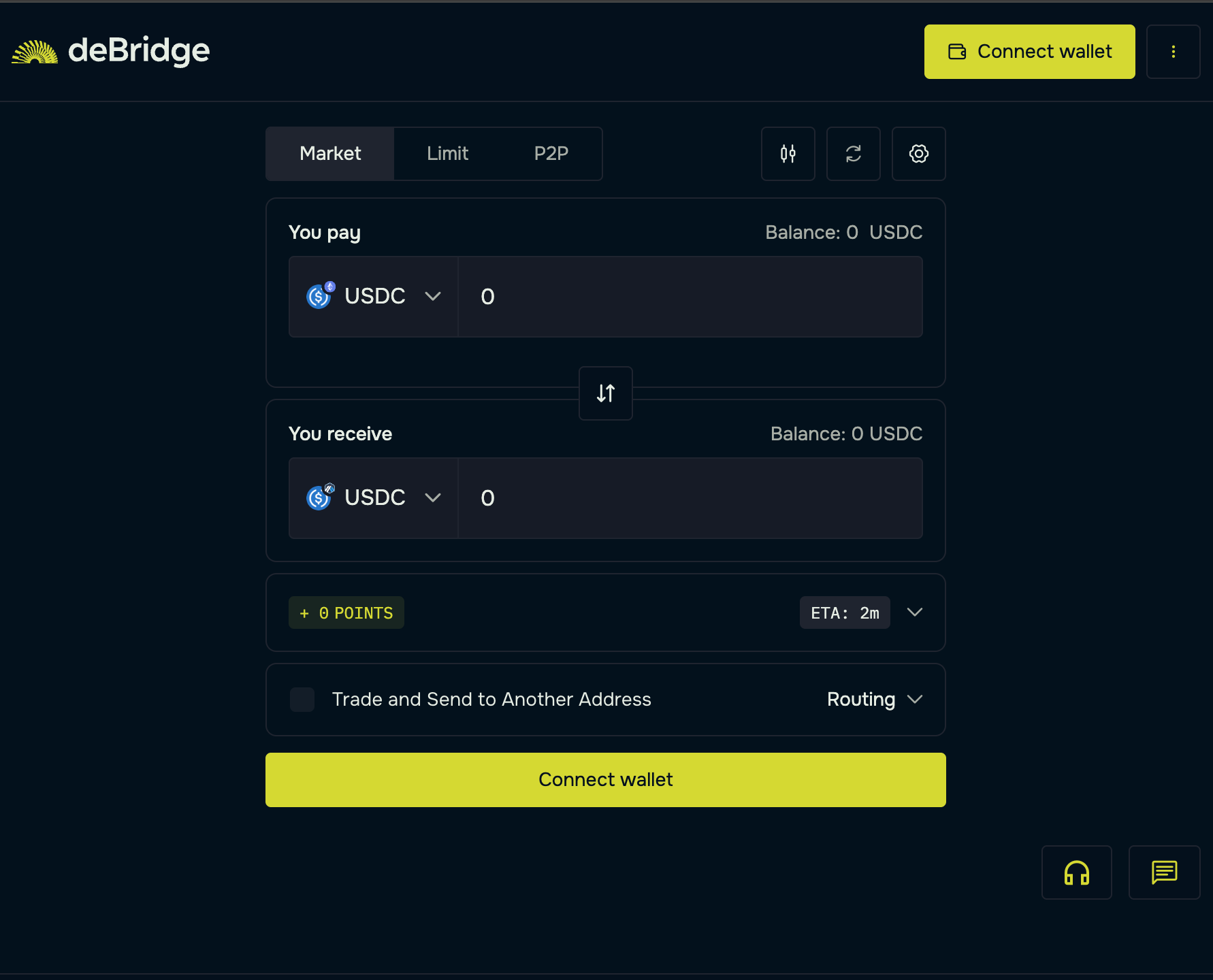
- Select your source chain and asset. Here, we will choose Ethereum and ETH.
- Select the destination chain and asset. Here, we will choose MegaETH and ETH, so you land with gas ready to use.
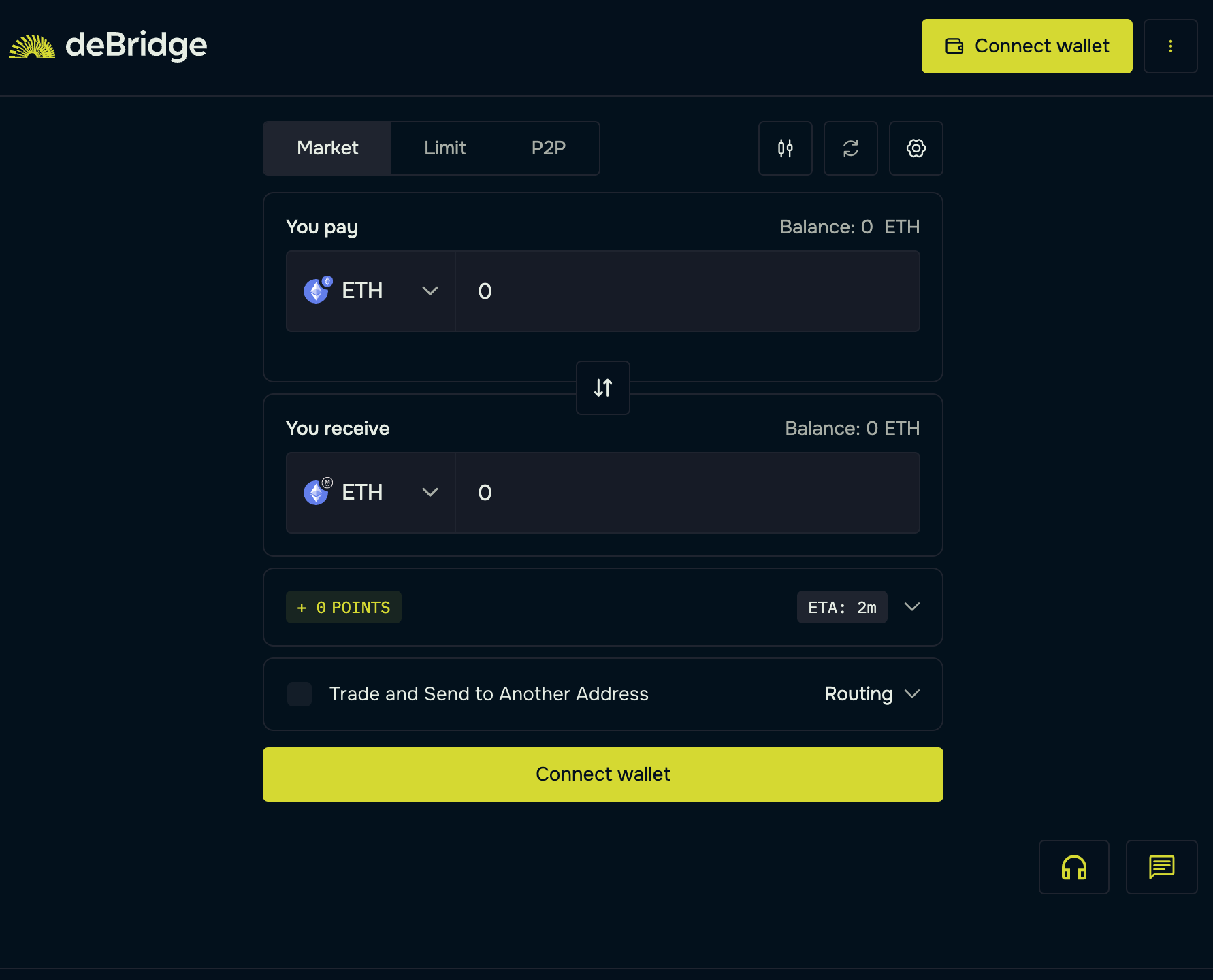
- Connect your source wallet and your MegaETH destination wallet.
- Enter the amount and review the transaction details.
- Confirm and sign the transaction to receive native assets in your MegaETH account.
The "Order Fulfilled" pop-up appears within 1-2 seconds once your assets reach your MegaETH wallet.
Why deBridge is the Safest Option
deBridge is based on a 0-TVL model that skips the need for liquidity pools, which was a prime target for bridge exploits. Since there is no smart contract sitting on a pile of user funds, the attack surface is drastically reduced.
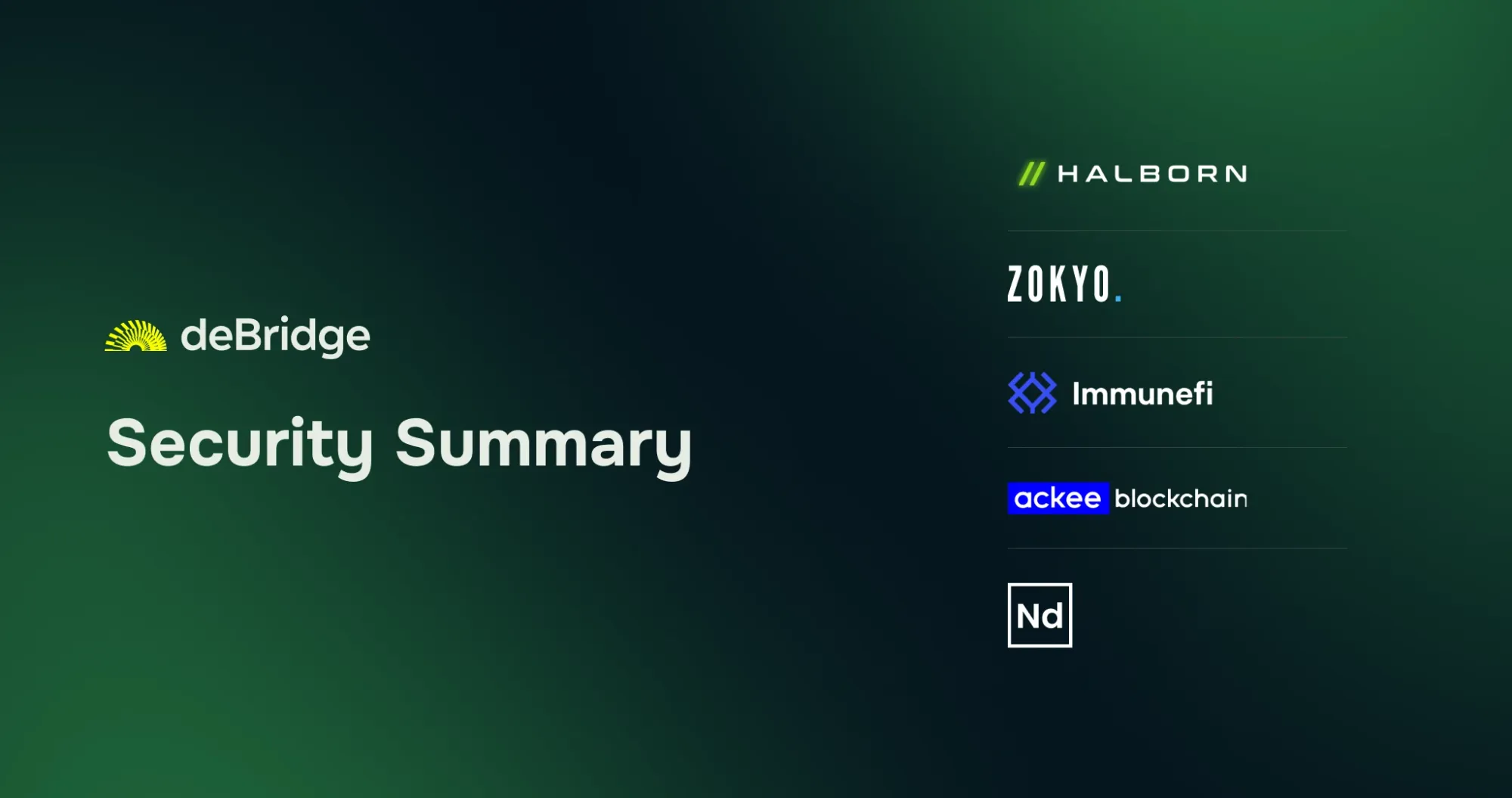
Audits are essential for a crypto product. deBridge has already completed 30+ security audits by firms including Zokyo, Halborn, and Ackee, along with a $200k bug bounty that has never been claimed.
- 0-TVL means no pooled liquidity risk
- Audited 30+ times, with zero security incidents
- Funds delivered to the wallet before transaction finalization
- Trusted by Phantom, Trust Wallet, MetaMask, Jupiter, OKX, and Solflare