


A Guide On How To Bridge To Sonic Quickly And Securely



Table of Contents
- Key Takeaways
- Why Bridge to Sonic
- Sonic Ecosystem Projects
- Sonic Gateway
- Overcoming Sonic Bridging Challenges
- What You Need Before Bridging to Sonic
- Step-by-Step Guide: Bridging to Sonic With deBridge
- Conclusion
- Frequently Asked Questions (FAQs)
- Related Resources
If you've been deep in DeFi for a while, you'll remember Sonic's predecessor, Fantom. Sonic takes the torch from Fantom as an EVM layer-1 platform, aiming to offer developers attractive incentives, powerful infrastructure, and its new $S token.
Sonic is an advanced Layer 1 EVM-compatible blockchain designed for speed, efficiency, and scalability. Built to support the next generation of decentralized applications (dApps), Sonic combines the consensus mechanisms with optimized infrastructure to process transactions in seconds. It has the potential to process 10,000 TPS with sub-second finality.
Getting started with the Sonic network is easy, but first, you need to bridge your assets from Ethereum or other networks. Bridging allows you to transfer tokens securely between chains, enabling access to Sonic’s ecosystem.
That’s where deBridge comes in. Built with a 0-TVL architecture and real-time execution, deBridge eliminates slippage and minimizes the attack surface, making it the fastest, most secure way to bridge to the Sonic ecosystem in seconds.
Key Takeaways
- Sonic is an EVM-compatible, high-speed, low-cost L1 chain.
- Sonic ecosystem is growing, with projects in DeFi, AI, RWAs, BTCFI, Launchpads, and more domains.
- The native bridge, Sonic Gateway, only allows asset transfers between Ethereum and Sonic and supports limited token types.
- deBridge enables real-time transfers to Sonic with no slippage, no pooled liquidity risks, and support for all liquid assets.
Why Bridge to Sonic
Sonic is emerging as one of the most efficient and user-friendly Layer 1 ecosystems in DeFi. It offers a high-performance environment for both users and developers. By bridging to Sonic, users gain access to near-instant transactions with gas fees that are a fraction of what they’d pay on legacy networks like Ethereum.
Beyond low costs, Sonic’s growing ecosystem of DeFi applications, yield platforms, and lending protocols offers opportunities to engage with onchain finance. Sonic is also EVM compatible, making it easy for existing users to migrate assets and interact with dApps without friction.
Common Use Cases
- Trading and Swapping Tokens: Execute low-cost swaps and take advantage of arbitrage opportunities.
- Yield Farming and Staking: Earn rewards by participating in native liquidity pools and staking programs.
- NFT Marketplaces: Create, trade, and collect NFTs with minimal gas fees.
- Lending and Borrowing: Access decentralized lending platforms and unlock liquidity using your digital assets.
- Developer Deployments: Launch scalable dApps and DeFi protocols on Sonic with minimal operational costs.
Sonic Ecosystem Projects
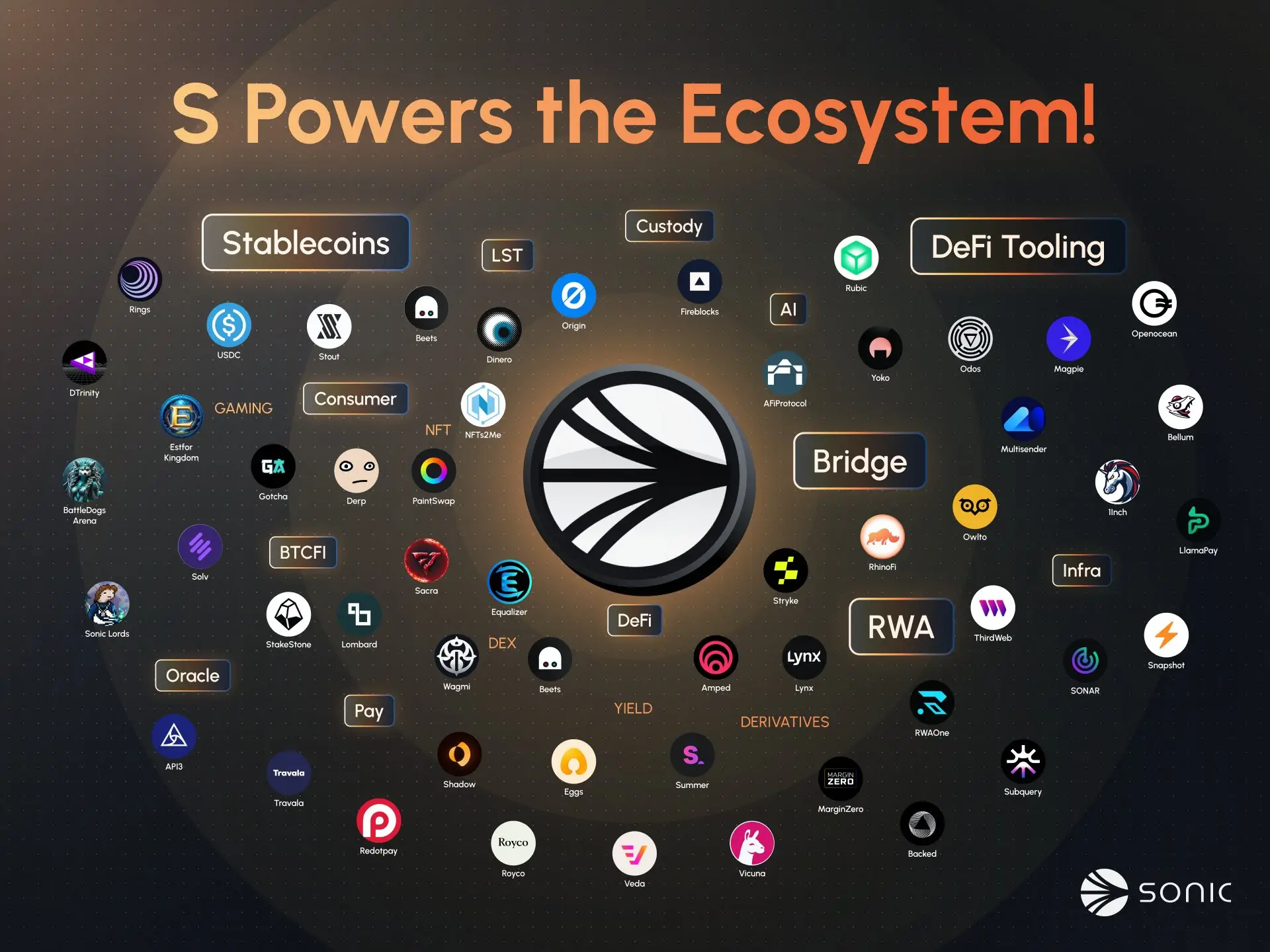
The Sonic ecosystem is rapidly expanding, with projects across DeFi, AI, RWAs, BTCFI, Launchpads, and more, creating a vibrant, diverse onchain economy. From high-yield DeFi protocols and AI-powered trading platforms to Consumer-native dApps and RWA platforms, these projects are driving real user engagement and liquidity.
Let's take a closer look at some projects that are already having a huge impact on the users
DeFi: Beets, Rings, Beefy, Magpie Protocol
AI: Stability, Yoko
DeFi Tooling: Magpie, Openocean
Sonic Gateway
Sonic Gateway is Sonic's native bridge that facilitates token transfers between Ethereum and Sonic. Users can bridge funds to Sonic by depositing assets into the bridge, initiating the transaction, and claiming their assets on the destination chain (Sonic).
What are the limitations of Sonic Gateway?
Sonic Bridge supports only a limited range of assets (FTM, USDT, USDC, etc.), which may not be the best fit for everyone holding tokens outside this list. The transaction process takes minutes, making it less suitable for users who want to bridge quickly.
The official Sonic Bridge allows users to bridge only between Ethereum and Sonic, making it difficult for those seeking to bridge from Layer 2 solutions or Solana. Furthermore, it lacks advanced features such as native token swaps and cross-chain dApp integrations, making it less appealing to the DeFi-native audience.
Overcoming Sonic Bridging Challenges

While several third-party bridges support transfers to Sonic, such as Sonic Gateway, Symbiosis, Rhino, and more, many rely on outdated models that introduce inefficiencies and risks. Traditional bridges often use pooled liquidity, which leads to slippage, liquidity shortages, and potentially an increase in the attack surface.
deBridge eliminates these challenges with its 0-TVL architecture, meaning funds are not locked in liquidity pools. Every transaction executes in real time with no slippage, no wrapped assets, and direct settlement of native tokens on Sonic.
What You Need Before Bridging to Sonic
Before connecting to Sonic, you must set up your wallet client using the Sonic Mainnet RPC information. To do this, visit Chainlist, connect your wallet, and allow it to incorporate Sonic RPC details into your client.
Ensure you have enough gas tokens on your source chain (e.g., ETH, BNB, or SOL, depending on the origin chain) to cover bridging transaction fees. It’s also recommended to hold a small amount of Sonic tokens ($S) in your wallet to pay for gas once your assets arrive on Sonic.
With everything prepared, you’re now ready to bridge assets to Sonic and begin exploring its fast, low-cost, and powerful onchain ecosystem.
Step-by-Step Guide: Bridging to Sonic With deBridge

deBridge offers a quick bridging solution to transfer assets between Arbitrum and any asset on Sonic, or vice versa. Here are the simple steps to bridge your crypto assets efficiently:
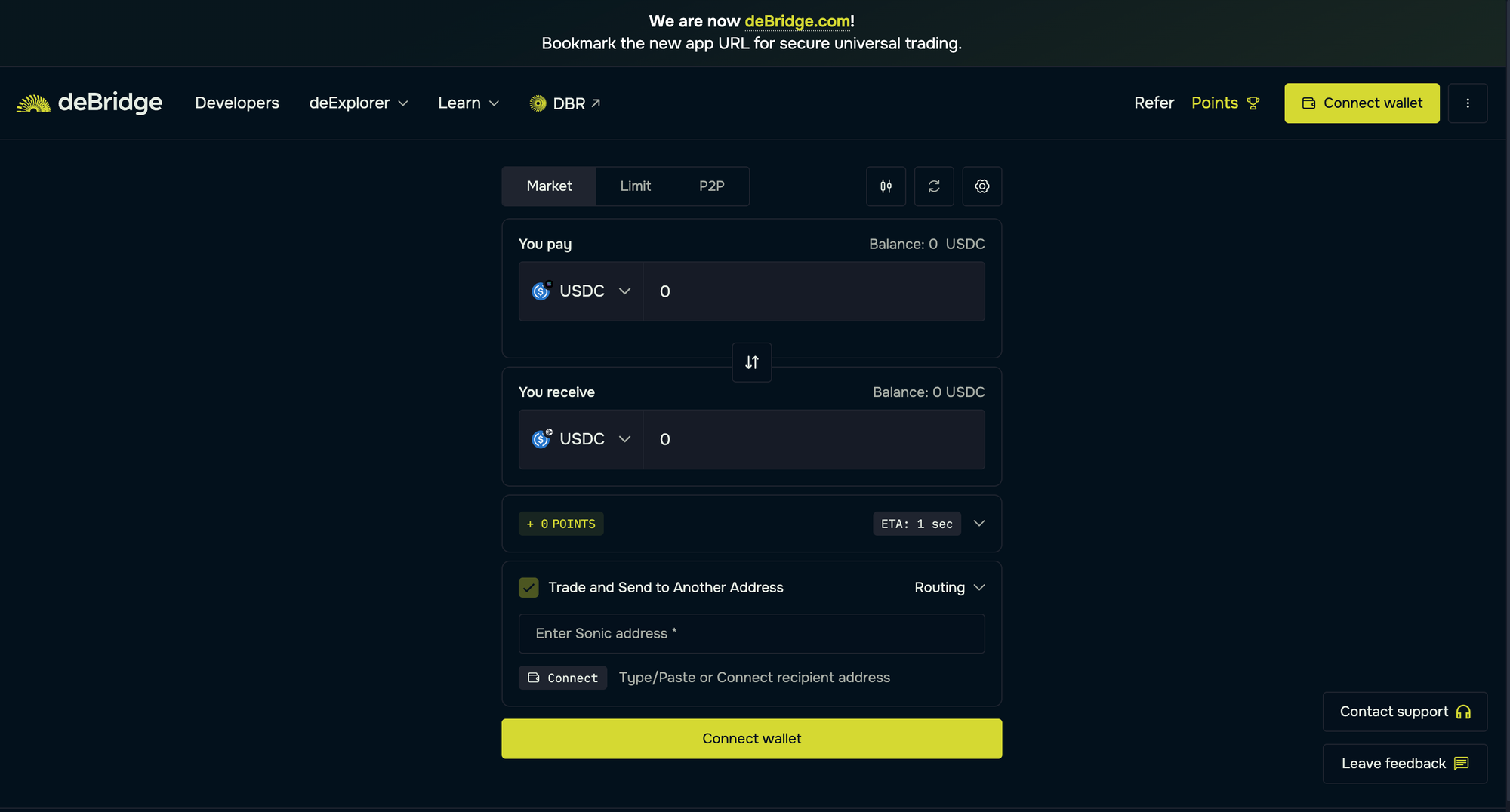
- Select the source chain and asset you’d like to bridge. Here, we will select Solana as the source chain and USDC as the asset.
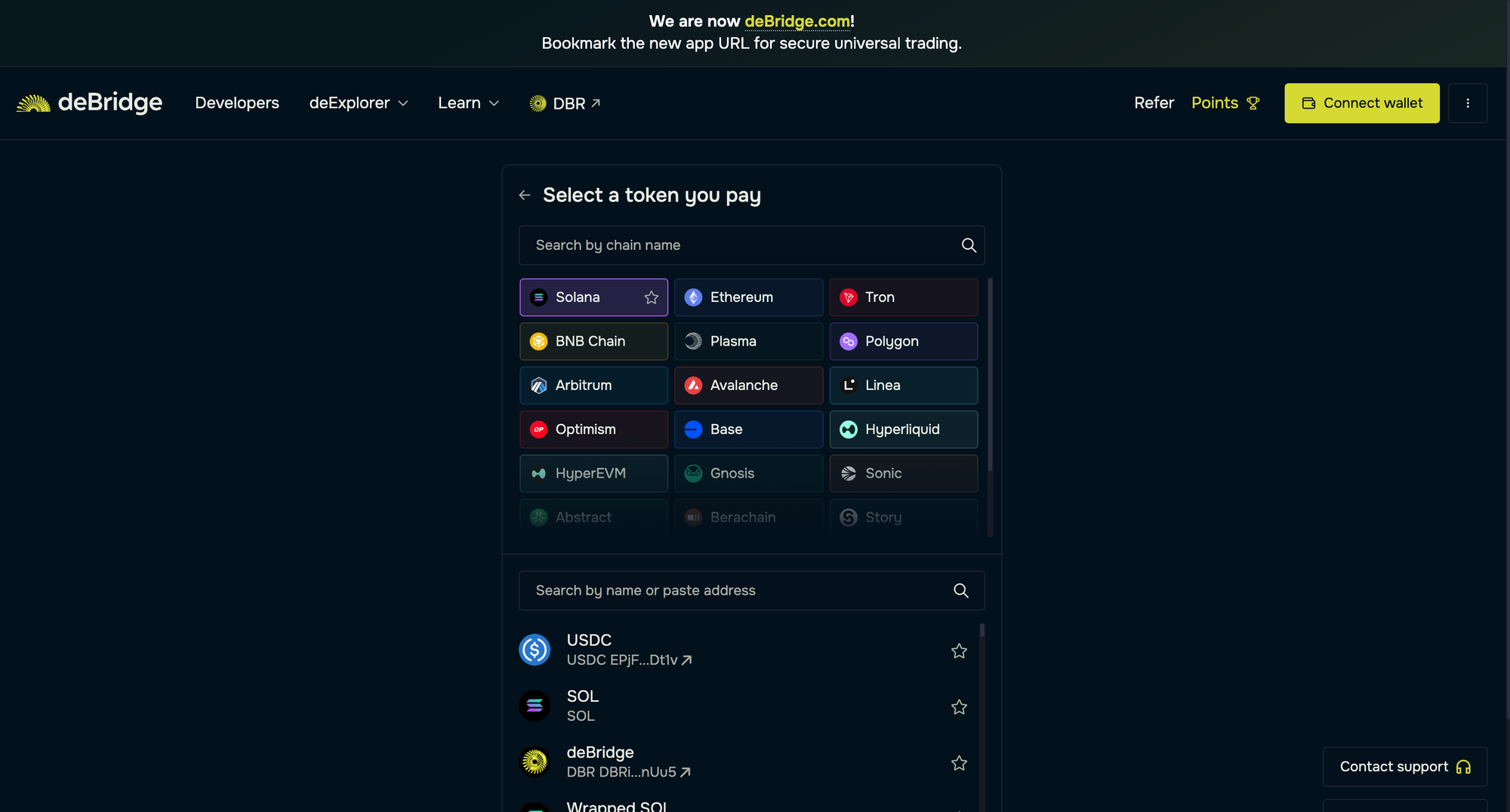
- Next, select the destination chain and asset you’d like to receive. Here, we will choose Sonic and USDC as the asset on the target chain.
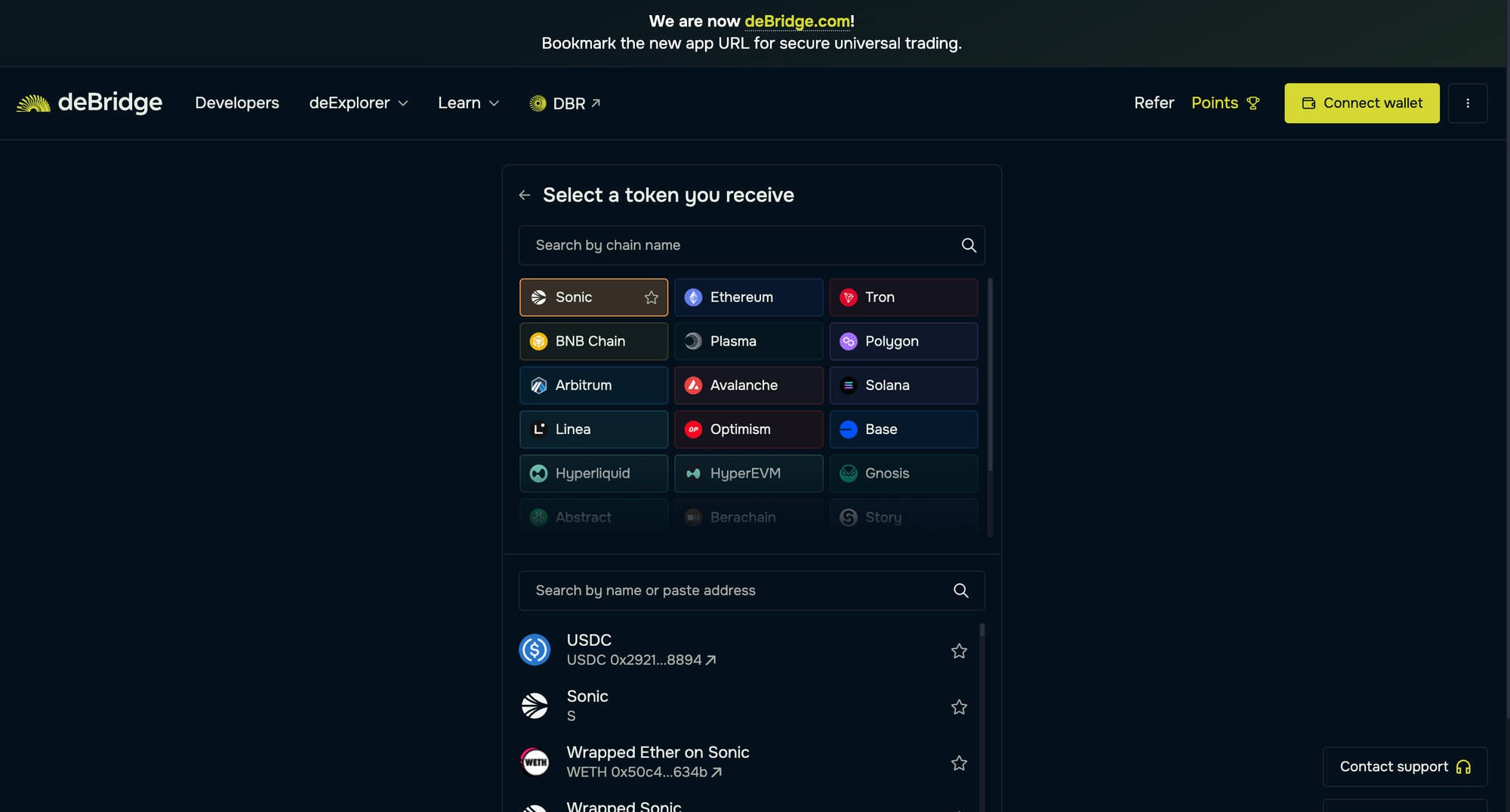
- Connect your Solana wallet as the source and Sonic (EVM) wallet as the destination.
- Enter the USDC quantity and review the transaction details.
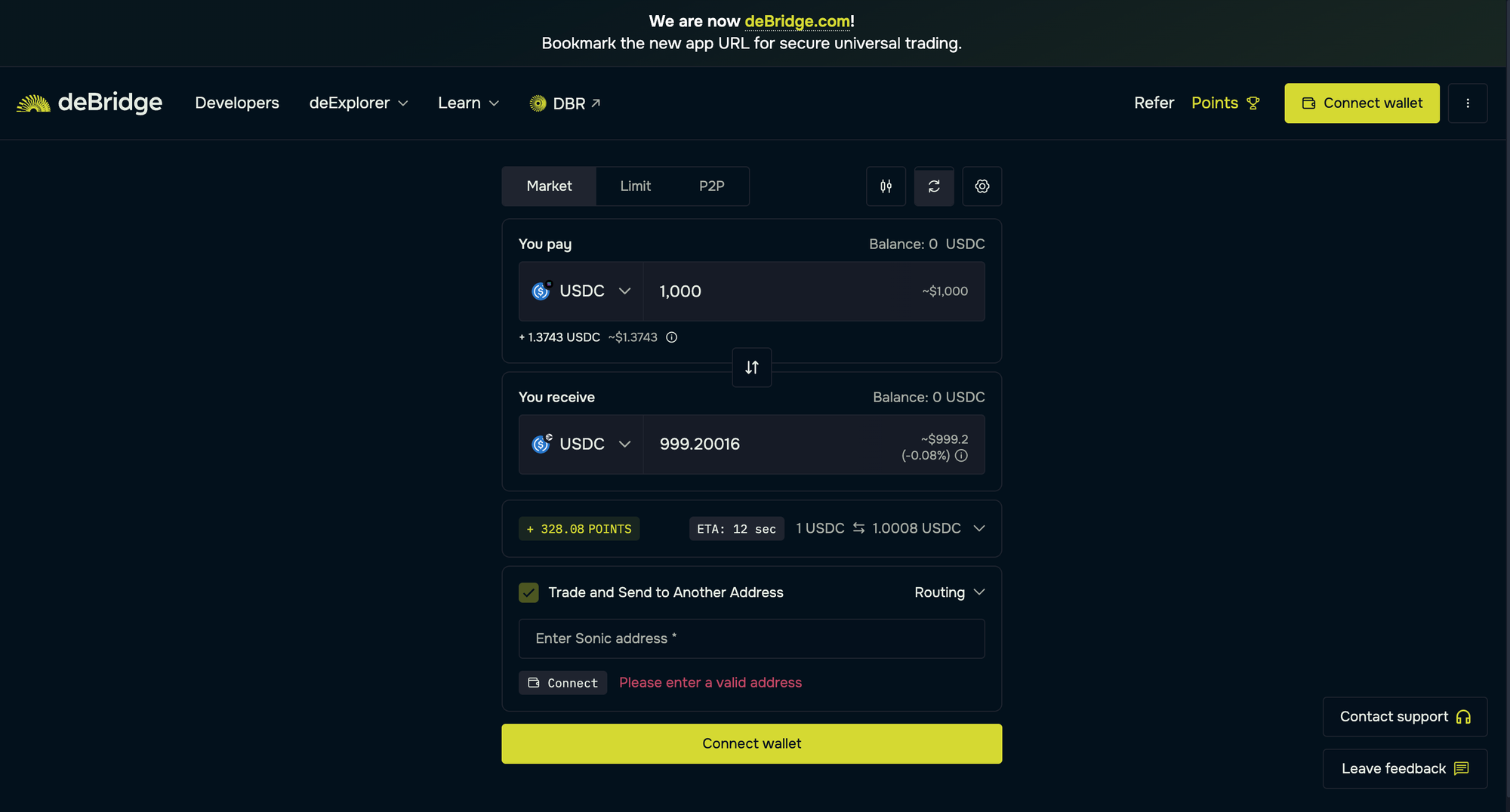
- Confirm trade and sign the ensuing transactions to receive native USDC in your Sonic account.
Pro Tips
- Make sure you have sufficient $S in your destination chain (Sonic) for future transactions.
The bridging process is simple and only takes a few seconds to complete. You will receive the bridged assets in your desired Sonic wallet. Technical users can also inspect the transaction(s) on the Sonic Explorer.
Conclusion
Bridging to Sonic opens the door to one of the fastest and most developer-friendly ecosystems in Web3. With its EVM compatibility, high-speed, and low-cost environment, Sonic represents the next evolution of the Fantom vision.
Using deBridge ensures that your move to Sonic is not only instant but also completely secure. Paired with 0-TVL architecture, real-time execution, and a no-wrapped-token design, eliminates traditional bridge risks such as slippage and liquidity fragmentation.
It’s time to move fast. It’s time to bridge to Sonic with deBridge.