


Bitget Wallet Unlocks Deep Cross-Chain Liquidity with deBridge


Bitget Wallet is a non-custodial crypto wallet designed to make crypto simple, seamless, and secure for everyone. It routes trades across multiple liquidity sources to provide users with optimal pricing and execution.
Bitget Wallet integrated deBridge to allow users to move capital easily across multiple ecosystems, offering native cross-chain transfers directly inside the wallet interface. The integration enabled them to achieve millions in trading volume and attract thousands of users who move across multiple ecosystems without friction.
The Challenge: Getting liquidity efficiently
Bitget Wallet aims to enable a future where crypto empowers everyone with greater freedom of finance. It is home to a full suite of crypto services, including swaps, market insights, staking, rewards, a DApp browser, and crypto payment solutions. However, moving across chains within the wallet interface remained a key source of friction.
Typical user challenges included:
- Complex bridging workflows requiring multiple tools
- Fragmented liquidity across chains
- High user drop-off when using other tools
- Slow execution and uncertain outcomes.
Bitget Wallet needed a solution that could:
- Enable native cross-chain transfers
- Maintain fast execution
- Provide deep liquidity
- Integrate seamlessly into the existing UI
Bitget Wallet Integrated deBridge
Bitget Wallet integrated the deBridge API to provide a fast, capital-efficient cross-chain liquidity interface powered by the deBridge Protocol. The integration allows users to move assets between Ethereum, Tron, Base, Solana, BNB Chain, and more, within the wallet.
As a result, Bitget users can move funds across various ecosystems without ever leaving the app for separate bridging tools. Here’s what deBridge enables for Bitget Wallet:
- Native cross-chain trading: Transfer assets across chains with native settlement rather than wrapped tokens.
- Deep liquidity access: Move wherever you want to and get deep liquidity for all your trades.
- Fast execution: Real-time execution minimizes slippage and price movement risk.
- Embedded UX: Users can perform all cross-chain transfers within the Bitget Wallet.
Implementation
The integration is designed to be simple and frictionless for both Bitget Wallet and its users.
1. deBridge Integration
- The deBridge API is integrated into the Bitget Wallet’s interface.
2. Cross-Chain Liquidity
- Users select their source chain and asset.
3. Native Transfer Execution
- deBridge executes the cross-chain transfer.
The entire process takes place within a single interface, dramatically simplifying cross-chain movement between multiple chains.
Key Results
The Bitget Wallet integration is on its way to becoming one of the top 5 integrations of the deBridge ecosystem.
Massive liquidity inflows
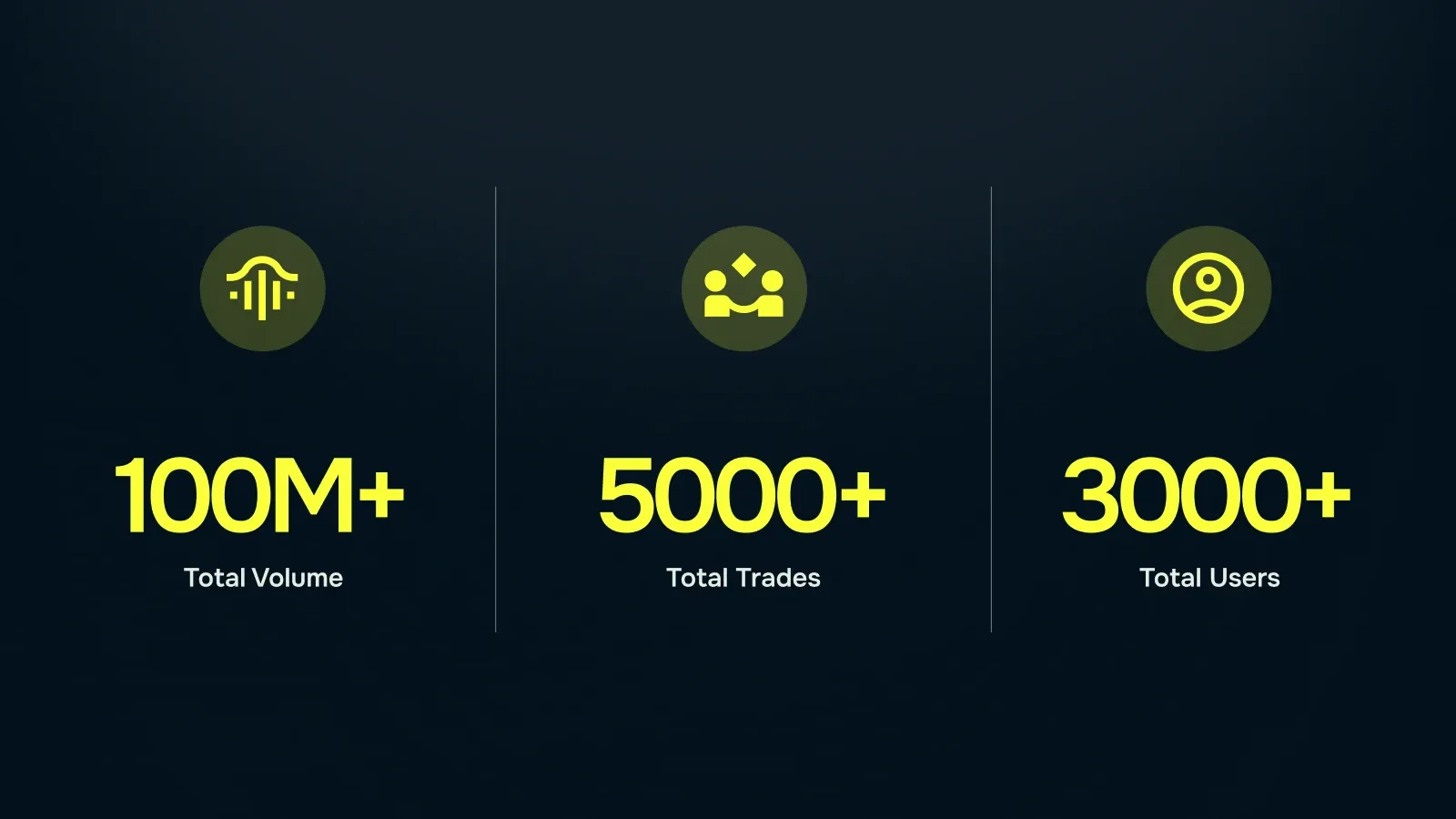
Over $100M in trade volume has been executed via the integration, with the most popular route being Ethereum → Tron.
User adoption
Over 3,000 users have used the integrated cross-chain flow in the Bitget Wallet and regularly trade in the 7-figure range.
Continuous trading activity
Over 5000 trades were executed via deBridge inside the Bitget Wallet.
This highlights the impact of the Bitget Wallet × deBridge integration, enabling users to move assets across multiple ecosystems without leaving the wallet.
Tron's prominence in this integration reflects its trajectory, as it now ranks as the second-most active chain in the cross-chain environment. With deep stablecoin liquidity, Tron has become a default settlement layer for users moving capital across ecosystems.
These results demonstrate that reducing friction at the point of liquidity entry can dramatically accelerate adoption.
Building Cross-Chain Rails
Cross-chain liquidity rails are becoming embedded infrastructure.
Instead of sending users to an external bridge, liquidity was brought directly into the wallet interface. A seamless UX ensured traders could move funds across chains easily. deBridge’s architecture enables cross-chain swaps without relying on pooled liquidity or wrapped tokens.
Rather than forcing users to manage bridges themselves, platforms are increasingly integrating cross-chain execution directly into their interfaces.
By integrating the deBridge API, Bitget Wallet transformed cross-chain onboarding from a fragmented multi-step process into a seamless trading flow.