


How TRON Unlocks Cross-Chain Execution for Developers and AI Agents with deBridge


Boasting over 376 million accounts and 13.6 billion transactions, Tron is the world’s fastest-growing public chain. It powers millions of users daily, driven largely by high-speed, low-cost USDT transactions.
To put it into perspective, over 50% of all Tether (USDT) in circulation runs on the TRON network. But as the industry evolves, the challenge is no longer just scaling activity within a single chain. It’s enabling that activity to move seamlessly across all of them.
To meet this shift, TRON is integrating with deBridge and bringing cross-chain execution directly into developer environments. This opens the door to a new generation of applications powered by AI agents.
Key Results
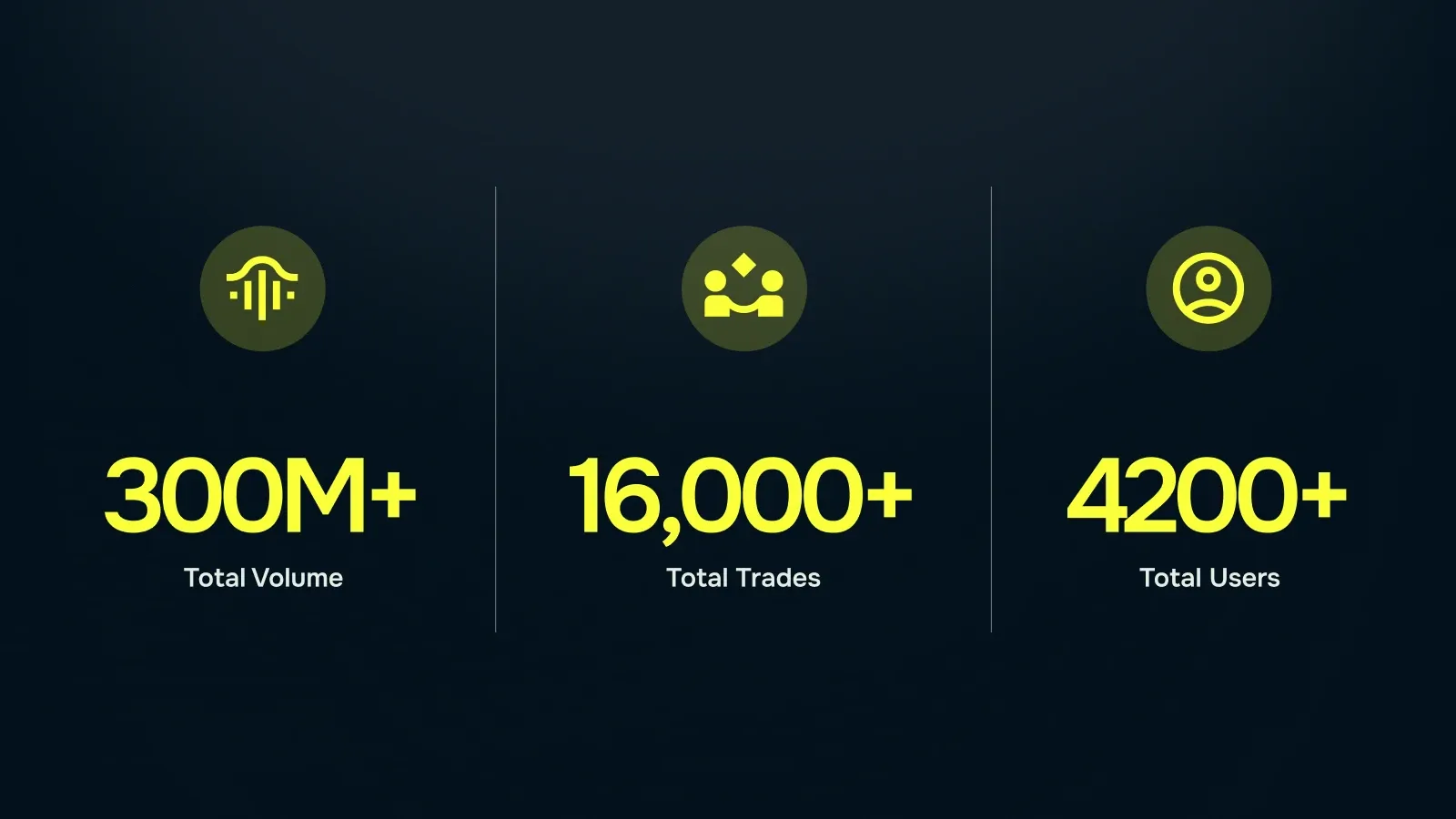
The above image illustrates the effect of integrating Tron blockchain with deBridge. It helps users move assets from other ecosystems to Tron in seconds.
These metrics demonstrate the demand for embedded cross-chain liquidity rails inside trading interfaces. Now, we will focus on how adding Tron to the deBridge MCP takes the agentic meta to new heights.
The Challenge: Enabling access beyond a single ecosystem
Tron has a massive user base that depends on the network for cost efficiency and deep user adoption. However, fragmentation exists in Tron, as in every major ecosystem.
Opportunities emerge across ecosystems. A Tron user might find better yield opportunities on Ethereum or vice versa. If there is no direct way to achieve it, users often struggle to stay within a single ecosystem.
Building cross-chain experiences often means stitching together multiple tools, managing complex integrations, and introducing additional steps that degrade the user experience. For users, it means navigating bridging flows, handling gas on different chains, and dealing with execution uncertainty.
At the same time, a new paradigm is emerging. AI agents are beginning to participate in onchain activity by monitoring markets, making decisions, and executing transactions autonomously.
The agents need the ability to act autonomously across chains. It is possible now.
Tron adds deBridge MCP Server
Tron adds itself to the deBridge MCP server to enable multichain swaps, trades, and transfers. This allows agents to move assets from external chains such as Ethereum, BNB Chain, Arbitrum, Base, and more directly to Tron within the terminal, eliminating the need for separate bridging tools.
Rather than requiring developers to build custom cross-chain infrastructure, the MCP server provides a lightweight, plug-and-play interface that connects directly to deBridge’s liquidity network.
Key capabilities included:
- Native cross-chain trading: Transfer assets across chains with native settlement rather than wrapped tokens.
- Deep liquidity access: Tap liquidity across multiple ecosystems before executing trades on Tron.
- Fast execution: Real-time execution minimizes slippage and price movement risk.
- IDE Friendly: Users can configure deBridge MCP for 20+ IDEs by asking their agents to visit https://agents.debridge.com/.
Implementation
Developers can connect to the MCP server with a minimal configuration, immediately enabling cross-chain functionality inside their applications or agent workflows.
A developer or an agent can request a quote, generate a route, and execute a cross-chain transaction without leaving the environment (Claude, ChatGPT, etc). Execution is finalized through secure signing flows via wallets such as OWS, ensuring users retain full control at all times.
The entire process takes place within a single interface, dramatically simplifying the movement of funds across multiple chains.
How does it help Developers & AI Agents?
Developers can now build applications that are no longer constrained by a single chain. Instead of designing around fragmentation, they can design around outcomes by pulling liquidity from wherever it exists and executing seamlessly in the background.
For users, this translates into a fundamentally improved experience. deBridge MCP translates natural-language intents into complex onchain operations. This means users no longer have to perform manual bridging, approval hunting, or using complex DEX interfaces.
For AI agents, it introduces a completely new capability: the power to not only monitor the market but also to take immediate action across multiple chains in real time.
Security stays unchanged. The main advantage of deBridge MCP is that it never handles private keys, guaranteeing that execution remains entirely under the user's control.
Conclusion
By integrating with deBridge MCP, Tron is positioning itself as part of that global execution layer where value can move freely, applications can operate across ecosystems, and developers can build without constraints.