Can USDC Be Sent to an Ethereum Wallet? Avoid Costly Mistakes

Table of Contents
- Key Takeaways
- What is Ethereum-native USDC?
- Why Send USDC to Ethereum?
- Sending USDC to an Ethereum Wallet
- How to Safely Transfer USDC to Ethereum with deBridge
- What Makes deBridge Different from Other USDC Bridges
- How to Reduce Gas Costs When Bridging USDC to Ethereum
- deBridge Security Summary
- Frequently Asked Questions (FAQs)
- Related Resources
USDC (short for USD Coin) is one of the most widely used stablecoins in crypto, designed to maintain a 1:1 peg with the US dollar and backed by fully reserved assets. While many users assume that sending USDC is as simple as copying a wallet address and clicking “send,” the reality is different.
USDC exists on multiple blockchains, including Ethereum, Solana, Polygon, Arbitrum, Base, BNB Chain, and more. Each version is native to its own network and follows that chain’s technical standards. This means you can only send an Ethereum-native ERC-20 version of USDC to the Ethereum blockchain.
If you try to send USDC from another chain (like Solana or Polygon) directly to an Ethereum address without using a bridge, the funds may become permanently inaccessible. This is where many costly mistakes happen. To move USDC safely between blockchains, you need a cross-chain bridge such as deBridge, which allows you to move native assets in real-time on Ethereum in the correct ERC-20 format without the usual friction or risk.
Key Takeaways
- Send USDC directly to an Ethereum wallet if it is the Ethereum-native ERC-20 version; USDC from other chains must be bridged first.
- USDC is a multi-chain stablecoin, and each version is native to its own blockchain and uses a different contract standard.
- Sending USDC from chains like Solana, Polygon, or Base to Ethereum without a bridge can result in permanently inaccessible funds.
- Cross-chain bridges, such as deBridge, securely convert non-Ethereum USDC to native ERC-20 USDC in real time.
What is Ethereum-native USDC?
Ethereum-native USDC is the version of USD Coin issued directly on the Ethereum blockchain and built using the ERC-20 standard. This means it follows the technical rules that all Ethereum tokens use, allowing it to interact seamlessly with Ethereum-native protocols.
Although USDC exists on many blockchains, each version is a separate asset with its own contract address and token standard. Only the ERC-20 version is recognized by Ethereum. Understanding this distinction is essential when moving funds, since sending a non-Ethereum version of USDC to an Ethereum wallet will not work without conversion.
Why Send USDC to Ethereum?
Users move USDC to Ethereum because it remains the primary settlement layer for DeFi and onchain liquidity. Some of the popular reasons to move to Ethereum include:
- Accessing major DeFi protocols (like Aave, Lido) for lending, borrowing, and yield strategies
- Trading in deep liquidity pools on Ethereum-based DEXs
- Using USDC as collateral for derivatives and structured products
- Interacting with smart contracts for payments, escrow, and tokenized assets
- Routing capital to L2 networks (such as Base, Arbitrum) via Ethereum as the base layer
Holding USDC in its Ethereum-native ERC-20 form ensures maximum compatibility across wallets, protocols, and applications, making it the most flexible version for onchain activity.
Sending USDC to an Ethereum Wallet
Confusion arises because USDC is a multi-chain asset available on Ethereum, Solana, Polygon, and other networks, but each version is native to its own blockchain. A regular transfer or send only works within the same network (such as Ethereum).
To move USDC from another chain to Ethereum, you must use a cross-chain bridge that converts it into the ERC-20 version. Using a secure protocol to bridge to Ethereum ensures the correct asset arrives and avoids costly errors.
Common mistakes users make
- Sending Solana or Polygon USDC to an Ethereum address can make funds inaccessible.
- Assuming all USDC shares one contract address often causes failed transactions.
- Choosing the wrong network on exchanges sends tokens to unsupported chains.
- Confusing “sending” with “bridging” leads to irreversible cross-chain mistakes.
How to Safely Transfer USDC to Ethereum with deBridge
deBridge offers a quick bridging solution to transfer assets between Tron and any asset on Ethereum, or vice versa. Here are the simple steps to bridge your crypto assets efficiently:
- Visit https://app.debridge.com
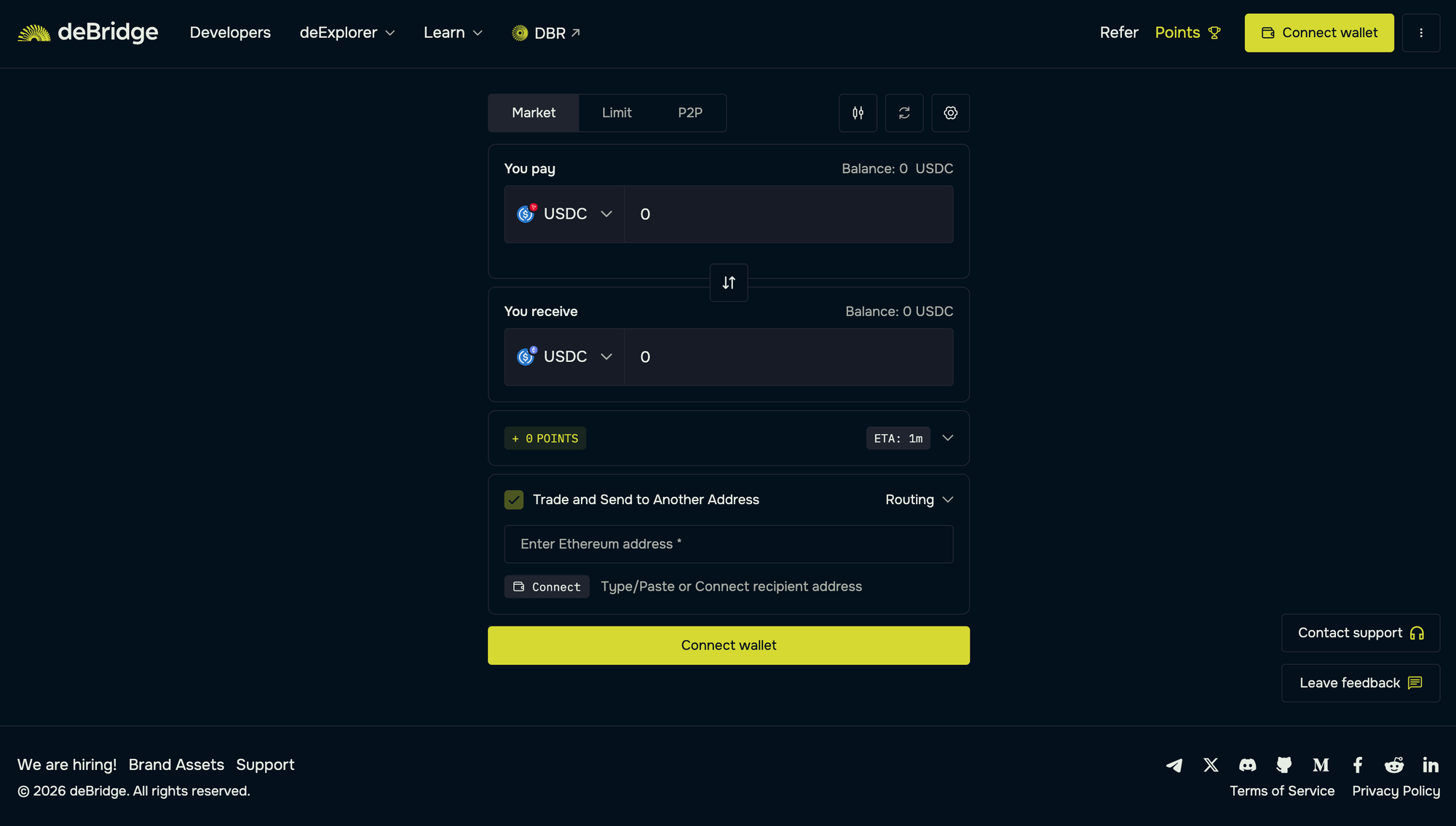
- Select Tron as the source chain and TRX as the asset.
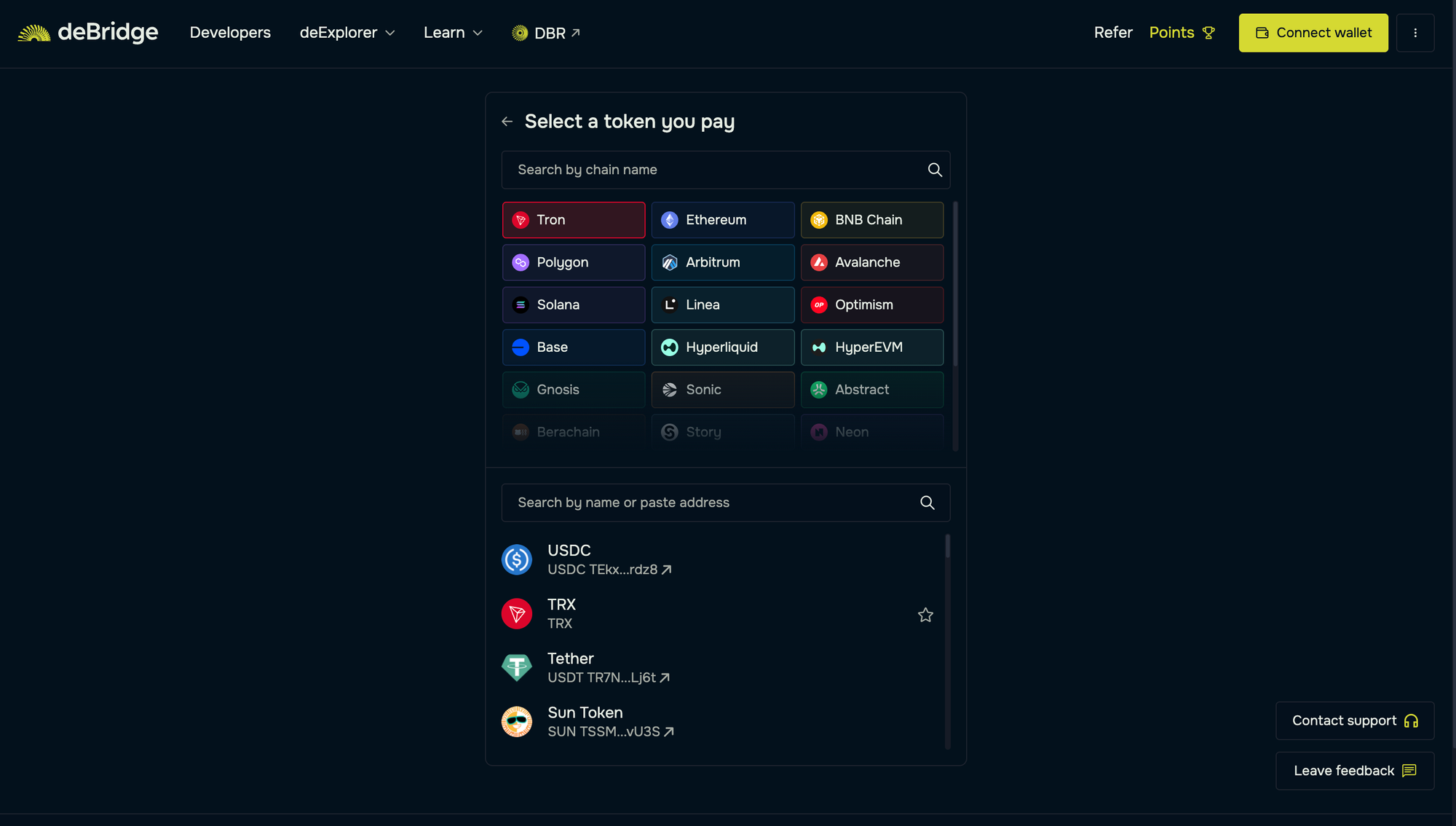
- Next, select Ethereum as the destination chain and USDC as the asset.
- Connect your Tron wallet as the source and Ethereum wallet as the destination.
- Enter the TRX quantity and review the transaction details.
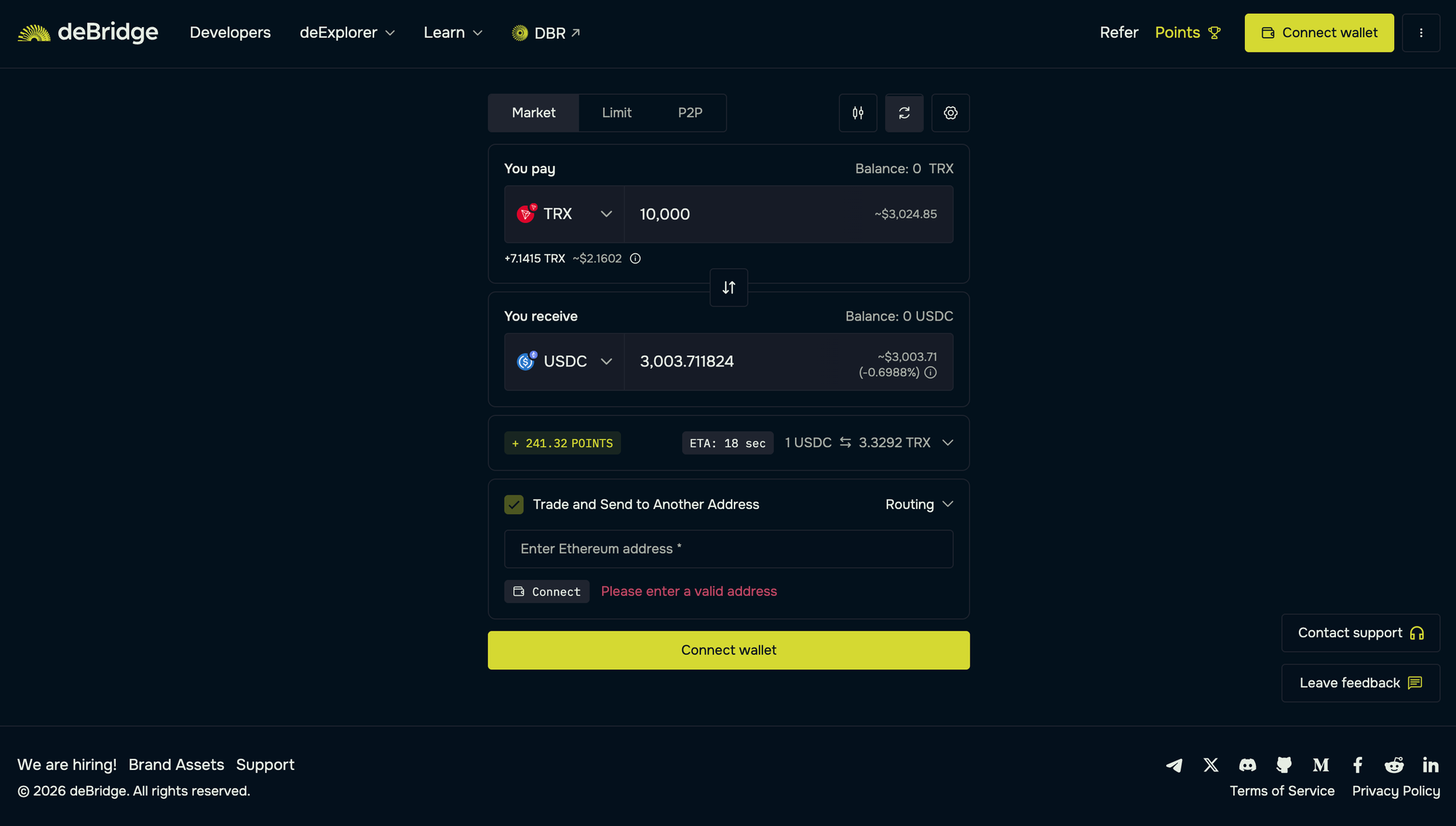
- Confirm trade and sign the ensuing transactions to receive native ERC-20 USDC in your Ethereum account.
Pro Tips
- Make sure you have sufficient ETH in your destination chain for future transactions.
- Try to avoid sending funds during peak hours to save on ETH gas costs.
The bridging process is simple and only takes a few seconds to complete. You will receive the bridged assets in your desired Ethereum wallet. Technical users can also inspect the transaction(s) on the Etherscan.
What Makes deBridge Different from Other USDC Bridges
deBridge differentiates itself with a 0-TVL architecture that eliminates pooled-liquidity risk common in traditional bridges. It enables native asset transfers (no wrapped tokens) with near-instant settlement in 1–2 seconds.
Built for both users and developers, deBridge supports major wallets and offers easy SDK and API integration for scalable cross-chain applications.
Comparison Table
Key Differentiators
- 0-TVL Design: No liquidity pools, no counterparty risk
- Real-Time Execution: Swaps settle in seconds, not blocks.
- Native Assets: Always receive authentic tokens.
- Zero Slippage: Guaranteed execution at quoted rates.
deBridge is running a $200K+ bug bounty that has never been claimed. It has faced zero downtime even during network spikes and helped users move crypto assets across blockchains.
How to Reduce Gas Costs When Bridging USDC to Ethereum
Gas fees on Tron are a major issue, particularly during periods of high network congestion. While deBridge is optimized for fast, cost-effective bridging, users can take additional steps to reduce gas costs further. Let’s read about them:
Tips For Reducing Gas Costs
- Monitor Tron gas prices: Use Tronscan to see current network conditions and track gas prices.
- Avoid peak congestion times: Gas fees are higher during weekday afternoons (UTC). Consider initiating your bridge during off-peak hours, such as late at night UTC or on weekends.
- Use "average" or "custom" settings: Most wallets let you choose among "slow," "average," and "fast" gas speeds. Opting for "average" offers a good balance between speed and cost.
While gas efficiency not only saves you money, it also reduces network load and supports a more sustainable ecosystem. By staying on top of the gas prices, users can make TRX→USDC bridging even more affordable.
deBridge Security Summary
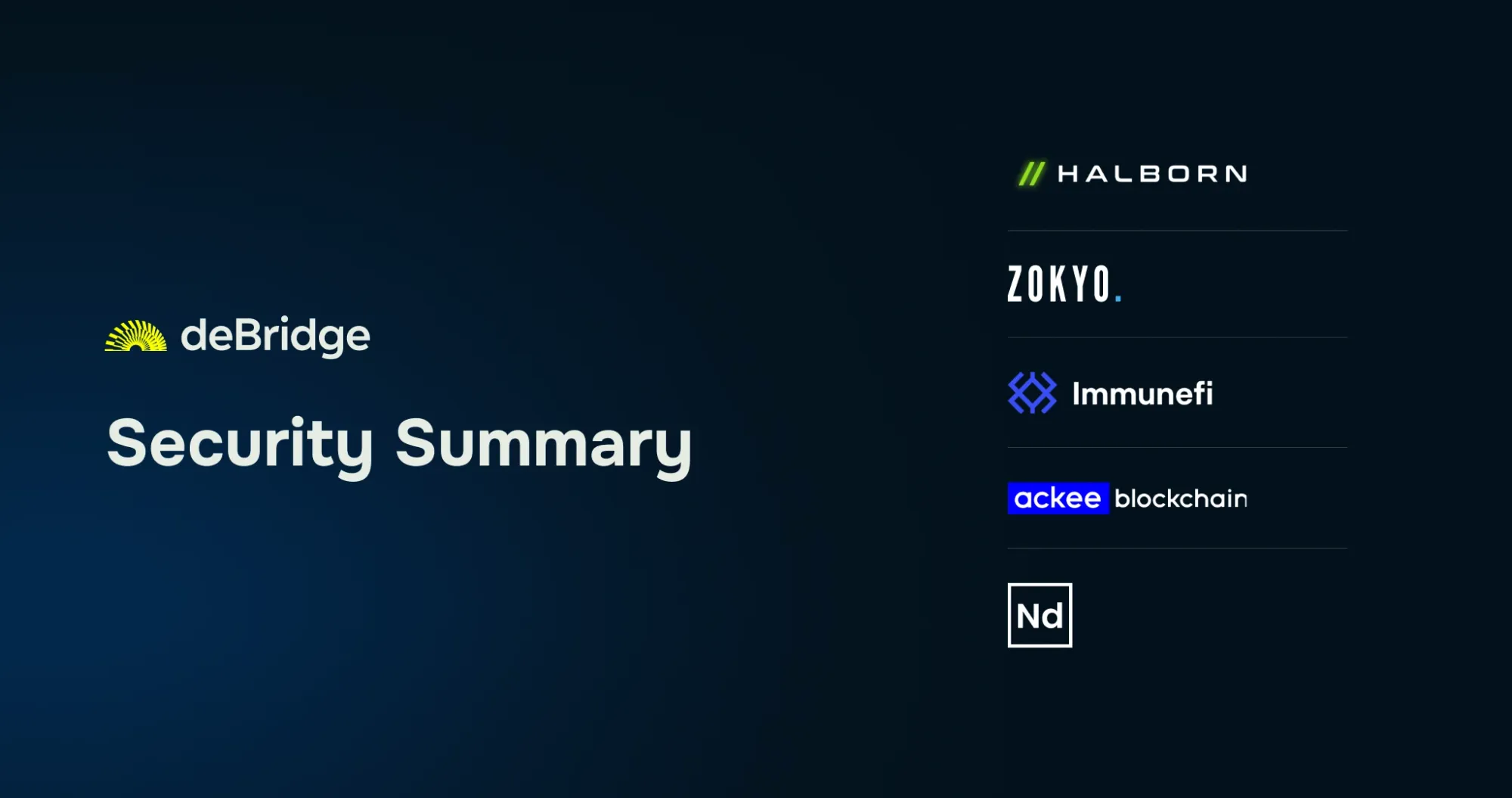
deBridge uses a 0-TVL architecture that skips the need for liquidity pools and helps protect user funds from exploits such as pool draining, leaving no attack surface.
deBridge keeps user funds safe throughout the order lifecycle. The protocol ensures funds arrive in the destination wallet before the transaction is finalized, giving you confidence to move assets across 25+ chains in seconds.
Trust Signals
deBridge is the top choice of users looking to bridge across 25+ chains from anywhere in DeFi. Some of the standout features include:
- 0-TVL = no pooled user funds
- Audited 30+ times, zero security incidents
- $200K bug bounty (never claimed)
- Universal wallet support
- Trusted by Phantom, Jupiter, and Solflare