How to Bridge to BNB Chain Using deBridge: Fast, Secure, and Simple

Table of Contents
- Key Takeaways
- Why Users Bridge to BNB Chain
- Official BNB Chain Bridge
- BNB Bridging Challenges
- Before You Start: What You Need to Bridge
- Step-by-Step: How to Bridge to BNB Chain Using deBridge
- Developer Integration & Widget Use Cases
- Security Advantages: Why deBridge is Safer
- Conclusion
- Frequently Asked Questions (FAQs)
- Related Resources
Users bridge to BNB Chain for its low fees, fast finality, and deep DeFi liquidity, making it ideal for trading, building, and yield strategies. However, bridging to BNB often involves wrapped assets, smart contract risk, high source-chain gas costs, and slow settlement times that disrupt execution.
deBridge solves these issues with a 0-TVL architecture, enabling fast, secure, native asset transfers to BNB Chain with seamless execution. This means you can start exploring BNB Chain’s ecosystem with confidence, whether you’re deploying a dApp or diving into the trenches.
Key Takeaways
- BNB Chain attracts users with low fees, fast finality, and full EVM compatibility, making it ideal for DeFi, NFTs, and more.
- Traditional bridges to BNB often rely on wrapped assets, pooled liquidity, and slow settlement, introducing risk and inefficiency.
- deBridge enables native, real-time ETH-to-BNB transfers using a 0-TVL architecture, i.e., no wrapped tokens, no locked liquidity.
- Users can bridge assets to BNB Chain in seconds with real-time execution and broad asset support across 25+ chains.
- Developers can integrate cross-chain bridging directly into apps using deBridge’s API or widget for seamless user onboarding.
Why Users Bridge to BNB Chain
BNB Chain has become a go-to destination for both everyday and power users thanks to its low transaction fees, fast confirmations, and full EVM compatibility. This means any Ethereum-native dApp, wallet, or tool can work seamlessly to onboard users from the chainscape. Its ecosystem spans high-yield DeFi protocols, NFT marketplaces, and GameFi projects, all supported by a wide range of assets available on deBridge.
Common Use Cases
- Accessing yield farms and lending protocols
- Trading on low-fee decentralized exchanges (DEXs)
- Minting or trading NFTs on popular marketplaces
- Moving stablecoins for faster settlement
- Deploying Ethereum-compatible smart contracts
Bridging to BNB Chain lets you tap into a fast-growing network built for scalability and interoperability.
Official BNB Chain Bridge
BNB Chain Bridge is the native bridge of BNB, enabling token transfers between different chains and the BNB Smart Chain. The official bridge acts as an aggregator, gathering quotes from multiple bridges (such as deBridge) to help you transfer assets to the destination chain, BNB Chain.
While convenient, it supports a limited set of assets and blockchains. It does not always provide the fastest or best route, which is why many users explore alternative bridges offering broader token support and optimized routing.
BNB Bridging Challenges
Users often face multiple issues while bridging assets to BNB Chain. Let's have a look at the common pain points:
- Wrapped Tokens: Many bridges don’t deliver native tokens; instead, users receive wrapped or synthetic versions.
- Settlement Delays: Transactions may take minutes or hours due to liquidity routing or manual validation.
- Pooled Liquidity Risks: Centralized liquidity pools can be hacked, drained, or mismanaged.
- CEX Reliance: Many users still rely on centralized exchanges to move stablecoins between chains, resulting in withdrawal limits and KYC delays.
How deBridge Solves Them
deBridge removes the bottlenecks and risks of liquidity pools by enabling value and information to flow with deep liquidity and guaranteed rates.
- Real-time Bridging: Transfers settle in seconds with instant finality. No waiting, no stuck transactions.
- Native Assets Only: ETH in, native BNB out. No wrapped tokens.
- 0-TVL Architecture: No user funds are stored in smart contracts or liquidity pools, eliminating honeypot risk.
- Universal Wallet Support: Compatible with EVM wallets like MetaMask, WalletConnect, Coinbase Wallet, Trust Wallet, and others.
Comparison Table: deBridge vs Other Options
When choosing a bridge to move assets to BNB Chain, the differences in speed, security, fees, and asset support can make or break your experience.
Before You Start: What You Need to Bridge
Before you begin, ensure you meet the basic requirements for bridging to the BNB Chain. Let's take a look at the checklist below:
- Supported wallet: Install an Ethereum-compatible wallet such as MetaMask or Trust Wallet.
- Gas on the source chain: Hold enough gas tokens on your origin network (ETH) to cover bridging fees.
- BNB for transaction fees: Keep a small amount of $BNB in your wallet for gas fees on BNB Chain.
If your wallet isn’t connected to BNB Chain yet, you can quickly configure it using tools like Chainlist or by manually entering the RPC details. Finally, use a trusted bridge to mitigate liquidity and smart contract risks. Double-check URLs, confirm transaction details, and avoid interacting with unknown contracts. With the right wallet, gas setup, and security mindset, you’re ready to bridge confidently.
Step-by-Step: How to Bridge to BNB Chain Using deBridge

BNB Chain currently lacks a native solution for transferring funds from a blockchain to BNB Chain. That's where deBridge comes in. It offers a quick and secure way to bridge assets between BNB Chain and 25 other networks. Let's walk through the steps to perform bridging for your crypto assets:
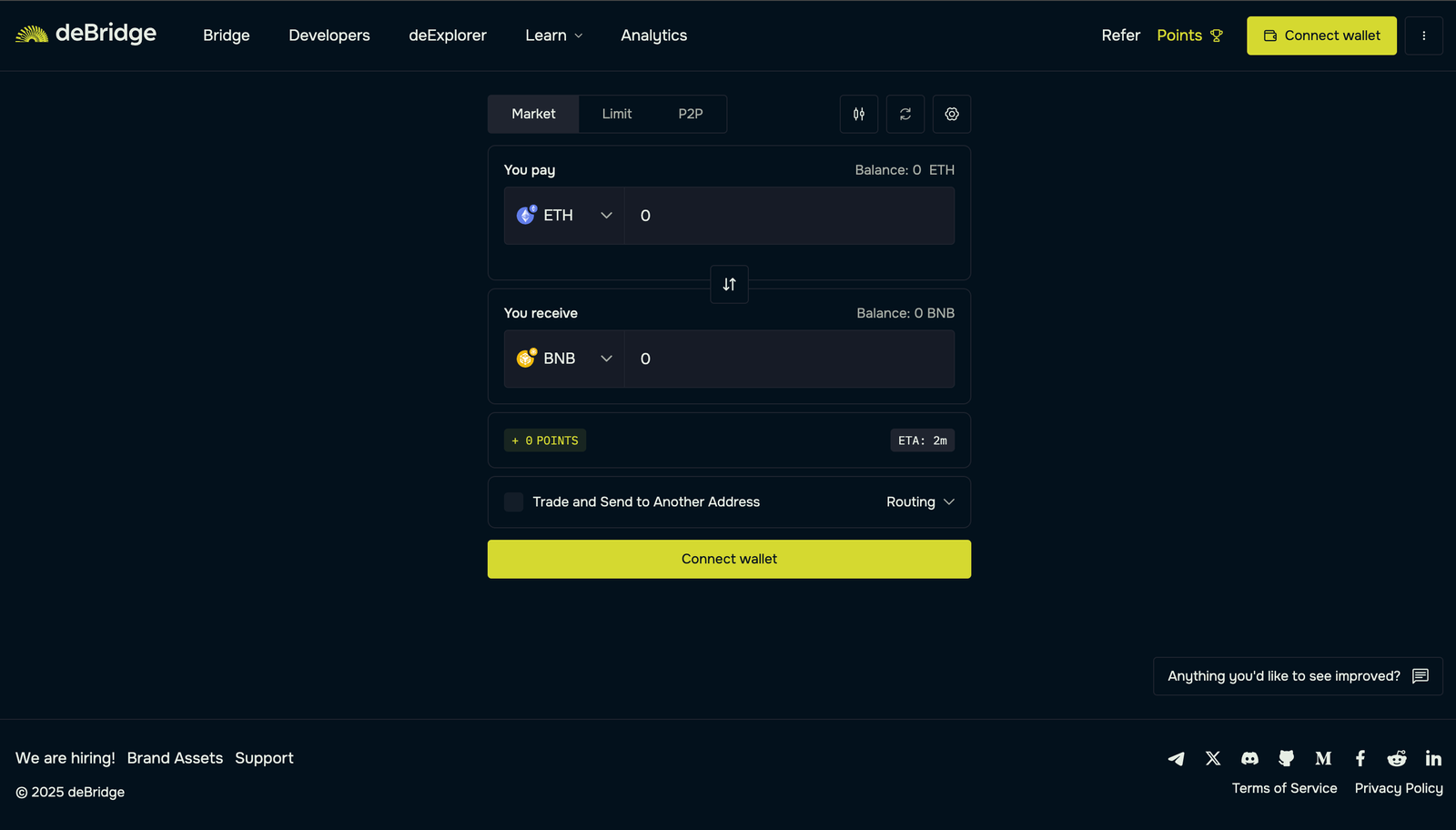
- Select the source chain and asset you’d like to bridge. Here, we will select Ethereum as the source chain and ETH as the asset.
- Next, select the destination chain and asset you’d like to receive. Here, we will select BNB Chain and BNB as the asset on the target chain.
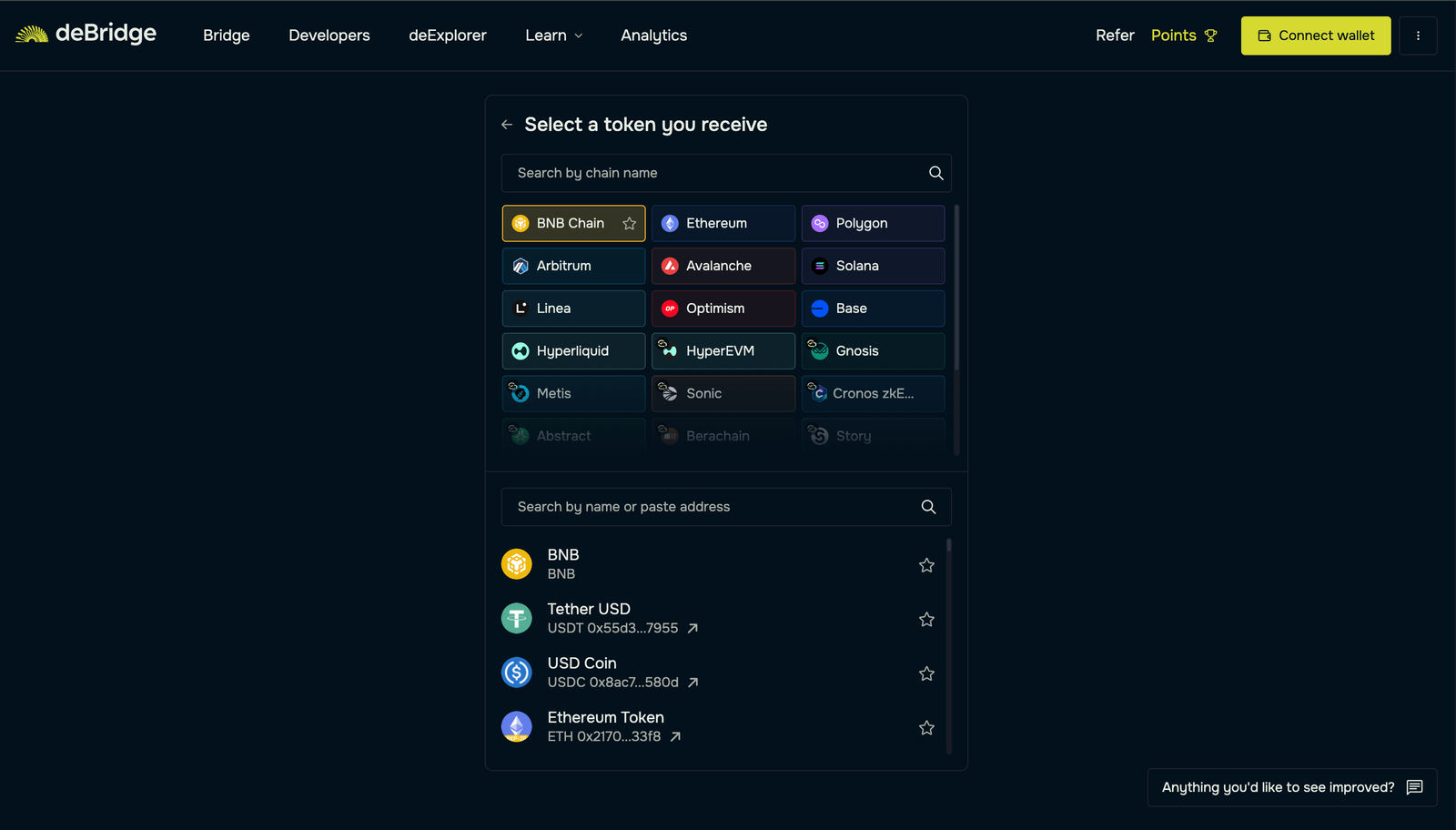
- Connect your EVM wallet as the source and destination.
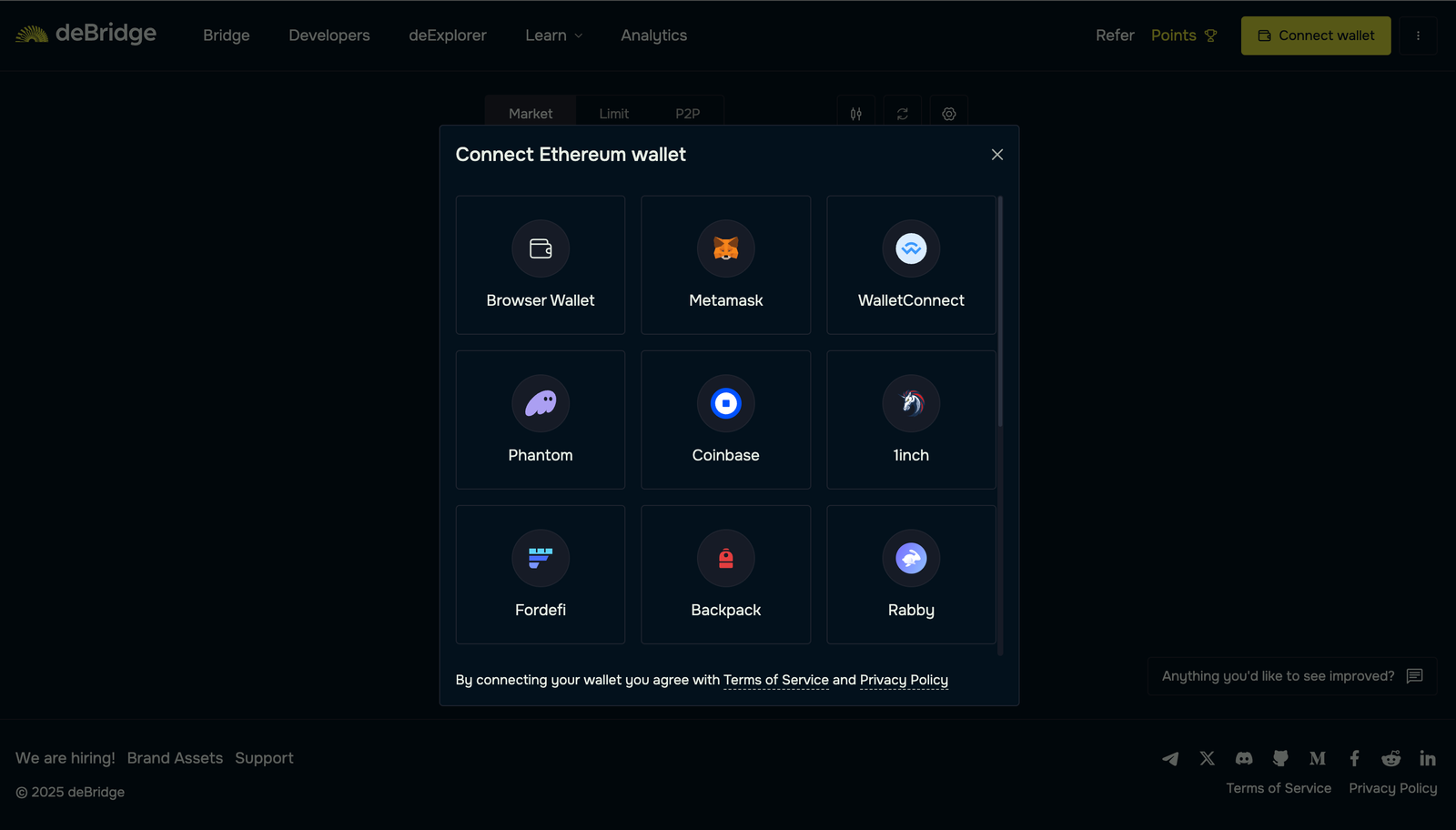
- Enter the ETH quantity and review the transaction details.
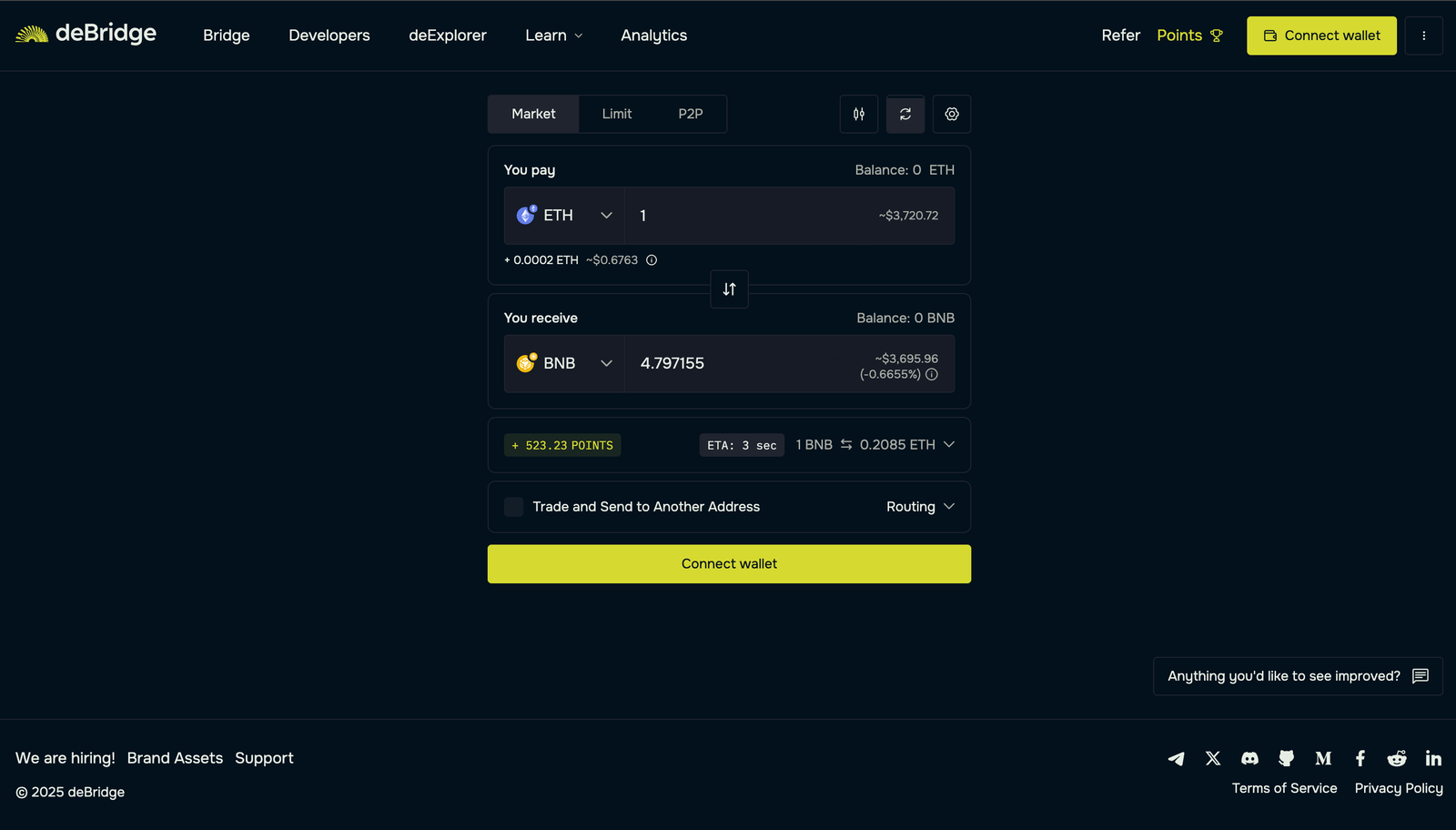
- Confirm trade and sign the ensuing transactions to receive native BNB in your BNB Chain account.
Pro Tips
- Make sure you have sufficient BNB in your destination chain (Binance Smart Chain) for future transactions.
- Try to avoid bridging during peak hours to save on ETH gas costs. You can track gas prices on Etherscan.
With the BNB Smart Chain, you can enjoy a seamless experience with low network fees, ensuring your BNB tokens arrive in your wallet in just a few seconds. Technical users can also inspect the transaction(s) on the BNB Chain explorer.
Developer Integration & Widget Use Cases
For builders, deBridge offers a seamless way to integrate cross-chain transfers directly into their dApp, decentralized exchange, or wallet. With our API and embeddable bridge widget, you can enable users to move assets across supported networks, including Ethereum, Binance Smart Chain, Arbitrum, Solana, and more, in seconds.
Teams can customize the widget to match their brand colors and embed it anywhere for quick onboarding. This makes it ideal for DeFi protocols, dApps, Telegram bots, wallets, and more, enabling a seamless, native bridging experience without redirecting users from your app.
Why Integrate deBridge
Developers can embed cross-chain ETH-to-BNB swaps directly into their apps using deBridge’s widget or API.
- One-Line Integration: Add cross-chain functionality without rewriting your stack.
- Easy-to-use API: Access bridging routes and quotes in seconds.
- Instant Finality: Every transaction settles natively in real-time.
- Affiliate Revenue Model: Earn fees from every trade executed through the integration.
- Multi-Chain Support: Integrate deBridge once and support 25+ chains instantly.
Start building with deBridge today. Explore our documentation and guides to see how easy it is to go live.
Security Advantages: Why deBridge is Safer
Security is at the core of deBridge’s design.
Every transfer minimizes risk without compromising on speed. Unlike traditional cross-chain bridges that pool user funds in liquidity pools, deBridge operates on a 0-TVL architecture, skipping the need for locked liquidity. This ensures assets are delivered natively, eliminating the risks of depegging or liquidity shortages.
deBridge has undergone 30+ audits and runs a $200K bug bounty program to incentivize white-hat security testing. With $17B+ in total volume settled since inception, deBridge has proven its reliability in real-world, high-volume conditions.
Today, many well-known crypto projects, including Phantom, MetaMask, Solflare, Jupiter Exchange, Infinex, and more, trust deBridge. It is built for users who like to stay one step ahead.
Conclusion
Bridging to BNB Chain doesn’t have to be slow, risky, or complicated. With deBridge, you get native asset transfers, such as BNB, in seconds.
Whether you’re a trader chasing high-yield opportunities, a power DeFi user, or a developer integrating cross-chain functionality, deBridge makes the process fast, safe, and seamless. Start instantly via the deBridge app or dive into our docs for integration guides.