Top DEX Swap Aggregators in 2026 for Secure DeFi Swaps

Table of Contents
- Key Takeaways
- How DEX Swap Aggregators Work
- Top DEX Aggregators in 2026
- How to Choose the Right DEX Aggregator
- deBridge For Cross-Chain Swaps
- Frequently Asked Questions (FAQs)
- Related Resources
Finding the best price for a token swap used to mean hopping between different DEXs, comparing rates, and watching slippage eat into your trade. DEX swap aggregators solve this by scanning multiple liquidity sources and providing the best quote for your trade.
Not all aggregators work the same way. Some operate within a single chain (samechain), while others move assets across blockchains. In this guide, we break down how DEX swap aggregators work, compare the best DEX aggregators in 2026, and explain why modern cross-chain protocols like deBridge are the first choice for fast, secure, and native swaps.
Key Takeaways
- DEX aggregators scan multiple decentralized exchanges to find optimal swap rates, saving you time and reducing costs
- Onchain aggregators work within a single blockchain; cross-chain aggregators let you swap assets across different networks
- Cross-chain solutions come in two flavors: pool-based (AMM) and 0-TVL models like deBridge that avoid pooled liquidity risks
- Security is important: Always look for platforms with extensive audits and clean track records before trusting them with large swaps
- For cross-chain swaps specifically, deBridge offers real-time execution without slippage or wrapped token complications
How DEX Swap Aggregators Work
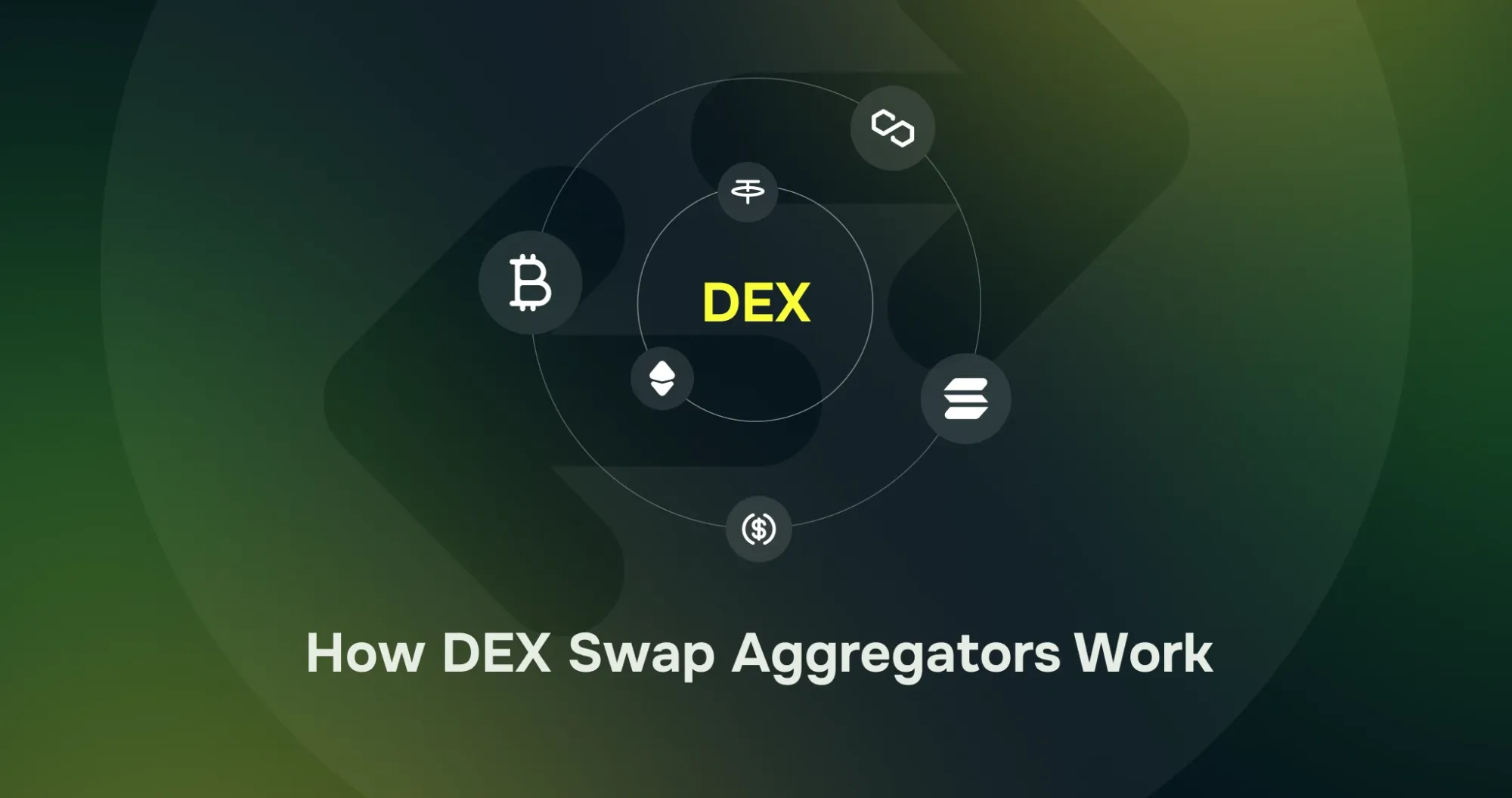
DEX aggregators act as smart routers for your trades. When you swap Token A for Token B, the aggregator queries multiple liquidity sources like Uniswap, SushiSwap, 0x, and others, to find the best rate. This helps you receive better rates than manually checking each DEX for a swap.
Onchain Aggregators
Onchain aggregators focus on a single blockchain. If you're swapping on Base, for example, they'll scan all the DEXs supporting the Base blockchain to optimize your trade. They're straightforward and effective for samechain swaps.
Pros: Simple to use with fewer potential failure points
Cons: Onchain aggregators are limited to one chain. If you need to move assets from Solana to Ethereum, you'll need a separate bridging solution.
Cross-Chain Aggregators
Cross-chain aggregators allow you to swap assets across entirely different blockchains. For example, moving USDT from Ethereum to Tron.
There are two main cross-chain models:
- Cross-chain AMM Aggregators (pool-based): These rely on liquidity pools on each chain. Your assets go into a pool on the source chain, and you receive assets from a pool on the destination chain.
- 0-TVL Aggregators (like deBridge): These don't use pooled liquidity. Instead, they are based on an intent-based architecture that minimizes the attack surface area. You get native assets on the destination chain, not wrapped versions.
Pros: Move assets anywhere, access liquidity across the entire crypto ecosystem, and often better rates for cross-chain trades
Cons: More complexity than onchain aggregators
Top DEX Aggregators in 2026
Here’s a breakdown of the platforms that cover both onchain and cross-chain swaps:
- deBridge
- 1inch
- Jupiter
- Paraswap
- Matcha
- CoW Swap
deBridge
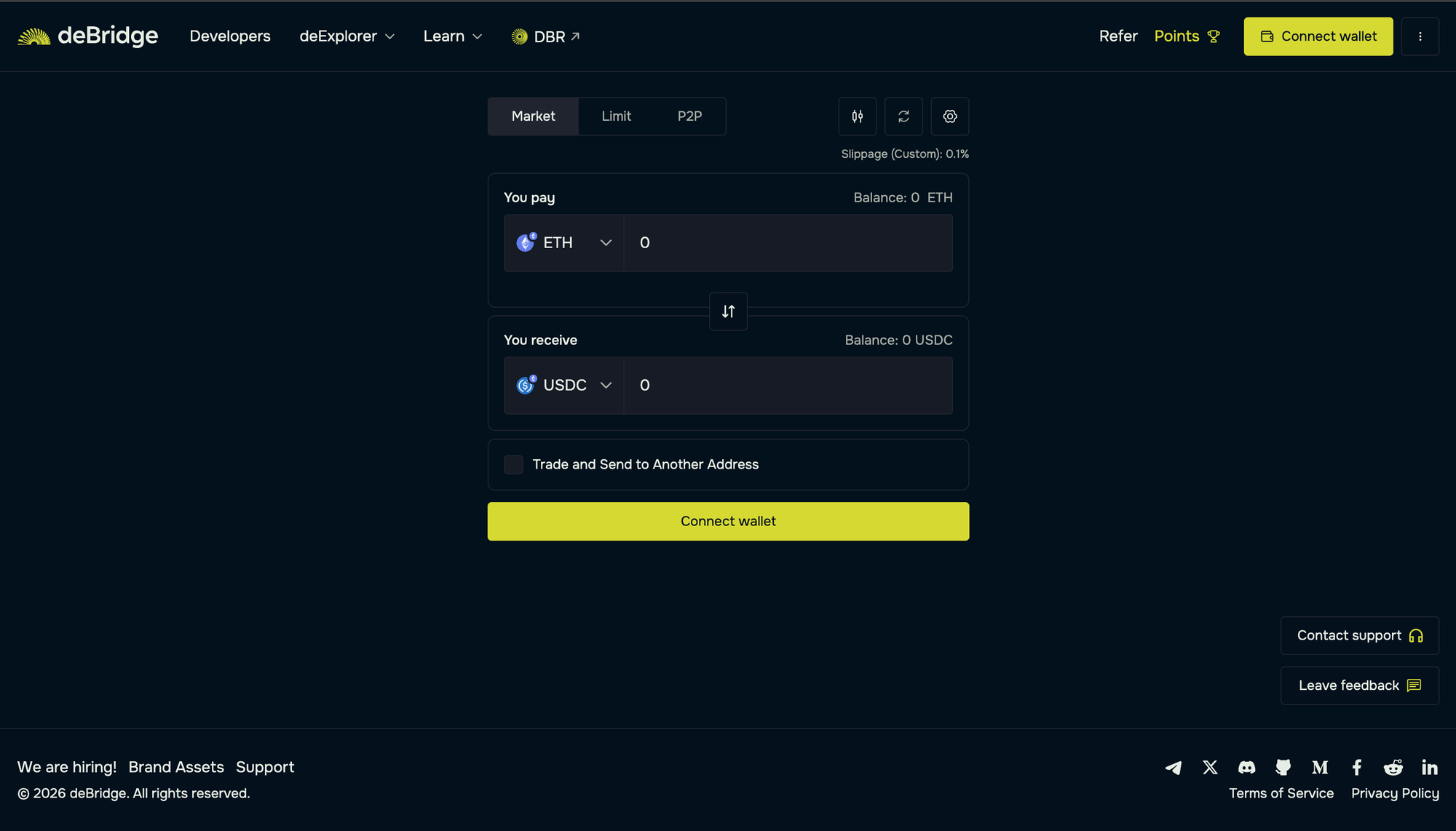
deBridge takes a fundamentally different approach to cross-chain swaps. Instead of routing through liquidity pools (and their associated risks), it uses a 0-TVL model for all cross-chain trades. This means no wrapped tokens, no pool exposure, and real-time execution.
The protocol supports swaps across major chains, including Ethereum, Solana, BNB Chain, Polygon, Arbitrum, and 20+ more.
Supported tokens: Millions (ETH, USDC, TRX, USDT, SOL, ARB, DOGE, BNB, HYPE, etc.)
Supported wallets: MetaMask, Rabby, Phantom, Trust Wallet, Coinbase Wallet, and most major options
Developer tools: Full API and SDK for integrating cross-chain swaps into dApps
Best for: Cross-chain swaps, samechain swaps, high-value transfers, users who want native assets without wrapped token risk
Why Choose deBridge?
deBridge has processed over $18 billion in transactions and is trusted by well-known wallets and dApps like Phantom, MetaMask, Trust Wallet, Jupiter Exchange, and many others.
- Native asset transfers (no wrapped token risks)
- Real-time execution with instant finality
- Zero slippage (always receive the exact amount)
- Deep security track record with 30+ audits
- $200k bug bounty program
- Developer-friendly APIs
1inch
1inch pioneered DEX aggregation and remains one of the most widely used platforms for onchain swaps. Their algorithm finds optimal routes across dozens of liquidity sources, and they've expanded to support multiple chains.
Supported tokens: 400,000+ across supported networks
Supported wallets: MetaMask, Ledger, Trezor, WalletConnect, and most browser wallets
Developer tools: Aggregation API, Fusion mode for gasless swaps
Why Choose 1inch?
1inch excels at finding the best rates for same-chain swaps, particularly on Ethereum, where liquidity is fragmented across many DEXs. However, cross-chain capabilities are more limited than those of dedicated bridging solutions.
Jupiter
Jupiter dominates Solana. If you're active in the Solana ecosystem, you’ve heard good things about Jupiter as it handles a large volume on the network. The interface is clean, execution is fast, and they've added features like limit orders and DCA.
Supported tokens: All SPL tokens on Solana (thousands)
Supported wallets: Phantom, Solflare, Backpack, Ledger via adapters
Developer tools: Comprehensive API for Solana dApps
Why Choose Jupiter?
If Solana is your primary chain, you’ve already used Jupiter once in your life. The depth of liquidity sources they aggregate and the speed of execution reflect Solana's strengths. The only limitation is its reliance on Solana. To move assets cross-chain, you'll need to pair it with a bridge like deBridge.
Paraswap
Paraswap focuses on institutional-grade execution with features like MEV protection and optimized gas usage. Their algorithm splits orders across multiple routes when beneficial.
Supported tokens: Major assets across Ethereum and EVM chains
Supported wallets: MetaMask, WalletConnect, Coinbase Wallet, and more
Developer tools: API with advanced routing options
Why Choose Paraswap?
The MEV protection is the headline feature. If you're making trades large enough that front-running is a real concern, Paraswap's architecture helps mitigate that.
Matcha
Built by the 0x team, Matcha offers a polished interface backed by the 0x protocol's liquidity network. Features gasless swaps on certain networks.
Supported tokens: Major assets
Supported wallets: MetaMask, Coinbase Wallet, WalletConnect
Developer tools: 0x API access
Why Choose Matcha?
The underlying 0x protocol is battle-tested, though chain support is more limited than some alternatives.
CoW Swap
CoW Swap uses batch auctions instead of traditional AMM mechanics. Orders are collected and matched off-chain before settling onchain, providing MEV protection.
Supported tokens: ERC-20 tokens on Ethereum and Gnosis Chain
Supported wallets: MetaMask, WalletConnect, hardware wallets
Developer tools: API for programmatic trading
Why Choose CoW Swap?
The batch auction model can produce better outcomes for certain trades. Limited chain support may be a dealbreaker for multi-chain users.
How to Choose the Right DEX Aggregator
Choosing the right DEX aggregator depends on how and where you want to trade. Not all platforms offer the same execution model, risk profile, or asset coverage. Here are some points worth considering when choosing a DEX swap aggregator:
- Chain coverage: Multi-chain traders need cross-chain capabilities
- Swap type: Samechain vs cross-chain swaps
- Wallet support: Ensure your preferred wallet works with the platform
- Token support: Check that your pairs are supported
- Security pool: Liquidity pools vs non-custodial designs
- Execution speed: Real-time execution (like deBridge) prevents price movements during swaps.
If you are looking for a protocol that delivers both onchain efficiency and cross-chain reliability, deBridge stands out, offering real-time execution, no pooled-liquidity risk, and a unified solution across chains.
deBridge For Cross-Chain Swaps
When you need to move assets between chains, the choice becomes clearer. deBridge's 0-TVL model eliminates pooled liquidity risks and significantly reduces the attack surface area. Instead of a wrapped version, you get native assets on the destination chain, which reduces smart contract risk. Execution happens in real time, with zero slippage.
Security is the #1 priority for deBridge. It has undergone 30+ security audits and a $200k bug bounty that has never been claimed. Combined with broad chain support and developer-friendly tools, it's the best choice for cross-chain swaps in 2026.