Fastest Way to Swap Tokens on Solana (2026 Guide)


Table of Contents
- Key Takeaways
- Types of Solana Swaps
- Why Swap Tokens on Solana
- Common Issues With Cross-Chain Solana Swaps
- Step-by-Step Guide on How to Swap Tokens on Solana with deBridge
- What Makes deBridge Different from Other DEXs
- For Developers: Integrate Cross-Chain Solana Swaps into Your App
- deBridge Security Summary
- Frequently Asked Questions (FAQs)
- Related Resources
Solana is the leading high-performance network powering internet capital markets, payments, and crypto applications. It is the fastest-growing platform, powering 50M+ addresses monthly, and known for low fees and high throughput.
Solana is the preferred network for millions of users for their everyday DeFi activity. As the ecosystem has developed, the options for users to exchange assets on Solana have also increased. Today, Solana swap DEXs fall into two clear categories: Onchain swap DEXs (standard AMMs) and Cross-chain swap protocols.
When moving to Solana, bridging is challenging due to differing token standards, reliance on wrapped assets, and liquidity pool risks that can lead to delays or security issues. deBridge solves this with native asset transfers, instant settlement, and a 0-TVL design, making it the fastest and safest way to bridge from BNB Chain to Solana.
In this guide, we break down the types of Solana swaps, common issues, compare the best Solana swap platforms in 2026, and explain why modern cross-chain protocols like deBridge are the first choice for fast, secure, and native swaps.
Key Takeaways
- Solana is a high-performance blockchain optimized for fast, low-cost DeFi activity.
- Solana swaps fall into two categories: onchain AMM DEXs for native assets and cross-chain swap protocols for moving liquidity across blockchains.
- Traditional cross-chain bridges introduce risks, including wrapped tokens, slippage, and settlement delays.
- deBridge eliminates these issues through native asset transfers, instant finality, and a secure 0-TVL architecture.
- Both users and developers benefit from deBridge’s speed, security, and seamless cross-chain integration.
Types of Solana Swaps
Before selecting a platform, it’s important to understand how Solana swap DEXs work beyond the surface. While they look similar at first glance, their underlying execution models vary greatly.
Onchain AMM Swap DEXs
AMM (Automated Market Maker) DEXs are the most common type of decentralized exchange. These platforms rely on liquidity pools, where users deposit token pairs that traders swap against. Prices are determined algorithmically based on pool ratios rather than order books.
AMM Swap DEXs provide deep liquidity for popular Solana-native tokens, offer a simplified UI, and integrate well with Solana wallets. However, they also have drawbacks, including high slippage on large trades, impermanent loss, and limitations on onchain swaps. They are best suited for small to medium-sized onchain swaps within the Solana ecosystem.
Cross-Chain Swap Protocols
Cross-chain swap protocols enable users to swap assets across blockchains, such as moving USDC from Ethereum to Solana. These enable users to access Solana from other ecosystems, expanding capital mobility across multiple blockchains. Let’s take a look at the two main cross-chain models:
- Cross-chain AMMs (pool-based): These rely on liquidity pools deployed across multiple chains. A popular example is Symbiosis.
- 0-TVL cross-chain protocols: These do not rely on pooled liquidity. Instead, they execute swaps using external liquidity sources and message-passing infrastructure. deBridge is a popular example.
Some users also rely on DEX aggregators, which do not hold liquidity themselves but route trades across multiple underlying DEXs and protocols to find the best price.
Why Swap Tokens on Solana
BNB Chain is favored by many for its deep liquidity, DeFi protocols, and faster transaction processing. But its strengths also come with trade-offs, such as gas fees and slower finality, especially during periods of heavy network traffic.
Solana flips that equation. With instant finality and low fees (typically under $0.01 per transaction), it’s built for performance and for those who don't like to wait. Solana is home to consumer-focused dApps, NFT platforms, SocialFi, and yield strategies that require speed and efficiency.
Common Use Cases
- Memecoins: Trenches are hot, and Solana is the top choice for memecoins traders.
- Yield Aggregators: Put your assets to work on protocols such as Kamino or Jito.
- Arbitrage & Trading Bots: Execute strategies that require sub-second execution.
- NFT Minting: Participate in Solana-based NFT launches on platforms like Magic Eden and Tensor.
- Governance: Vote and engage with Solana-native governance protocols.
Common Issues With Cross-Chain Solana Swaps
Most BNB-to-SOL bridges still rely on liquidity-pool-based mechanisms, which puts users’ assets at risk. Wrapped tokens and high slippage add complexity and create liquidity risks.
Most Common Pain Points
- Wrapped Tokens: It involves locking an asset on the source chain and minting a synthetic version on the destination chain.
- Centralized Bridges: Some bridges rely on third-party custody, creating a single point of failure and contradicting DeFi’s decentralization ethos.
- Failed Transactions: Buggy smart contracts and overloaded validators can cause transactions to fail.
- Slippage on large volumes: Liquidity pool-based bridges suffer from high slippage, particularly during periods of high volatility or large transfers.
- Settlement delay: Many crypto bridges require multiple confirmations and oracle checks, leading to delays of over an hour.
How deBridge Solves Them
deBridge is the universal execution engine for onchain markets, putting traders ahead of the curve on every opportunity.
- Native asset bridging means no wrapped tokens.
- 0-TVL architecture helps eliminate pooled liquidity risk.
- Instant finality ensures funds arrive in your wallet immediately.
- Multi-wallet support lets you use any wallet, including MetaMask, Phantom, Coinbase Wallet, and more.
Learn how deBridge improves DeFi UX with real-time bridging.
Step-by-Step Guide on How to Swap Tokens on Solana with deBridge
deBridge enables you to move quickly and securely from 25+ blockchains to Solana in real time. Let's walk through the steps involved in bridging assets:
- Visit https://app.debridge.com
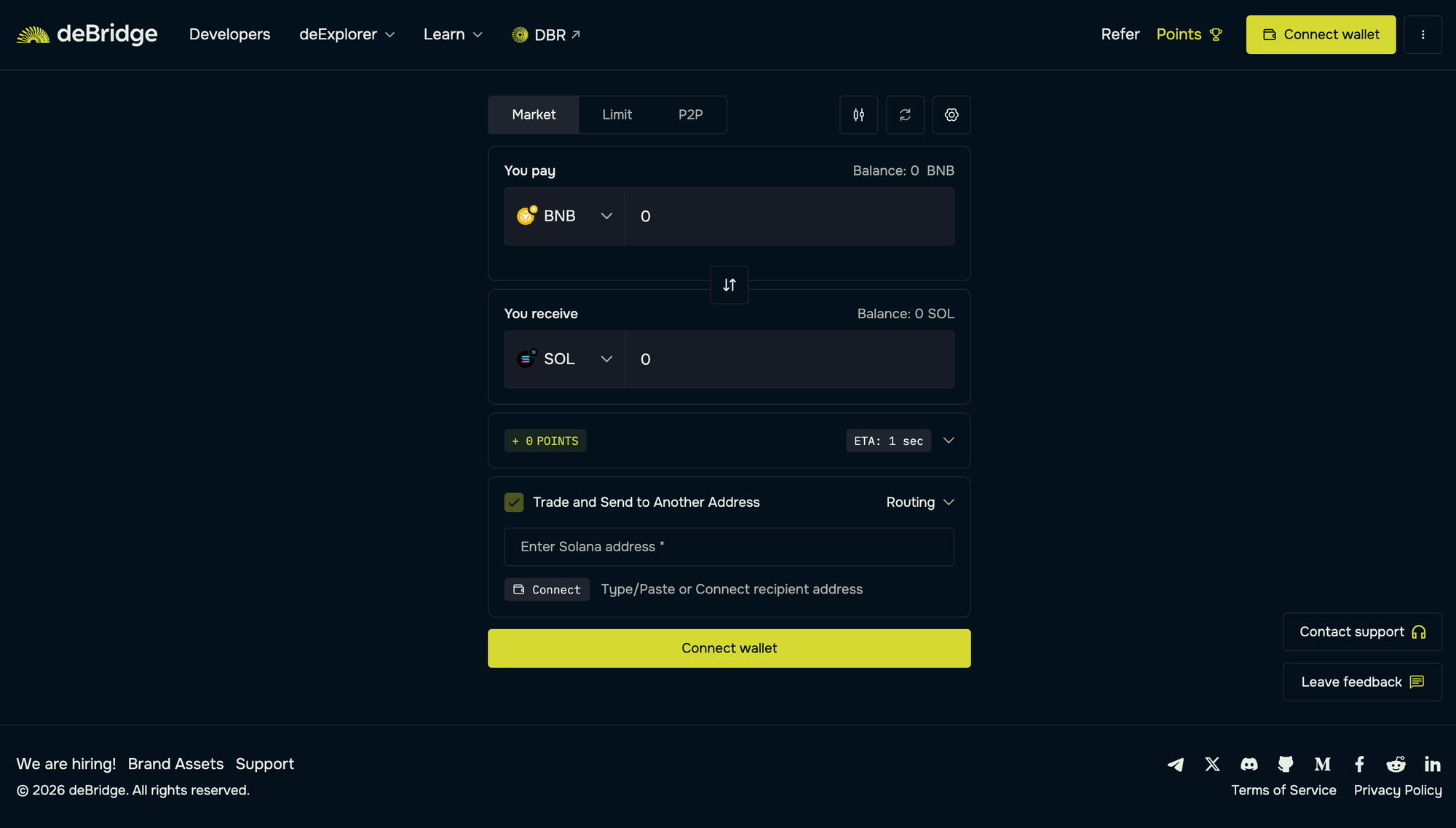
- Select BNB Chain as the source network and BNB as the asset.
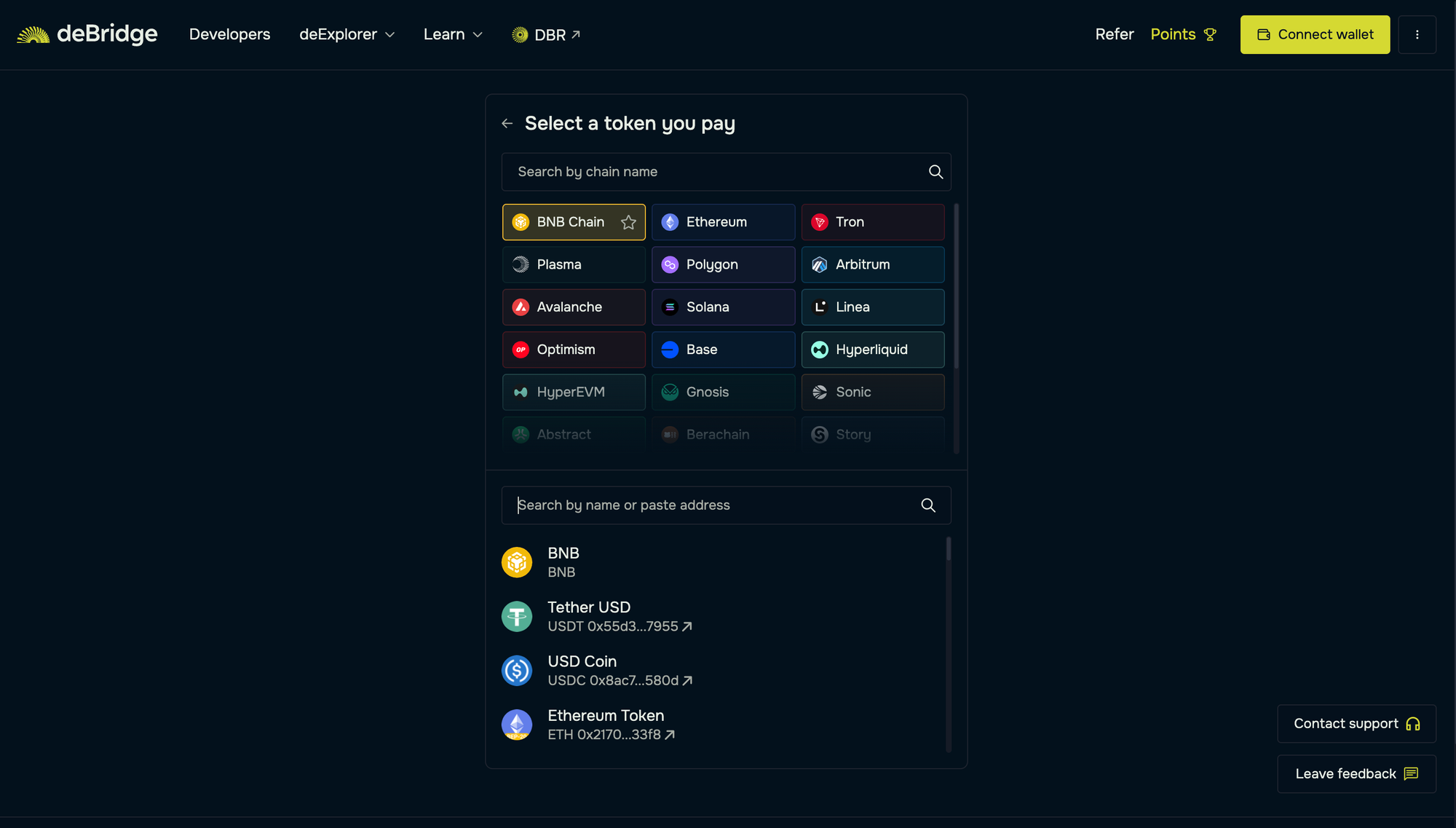
- Select Solana as the destination network and SOL as the asset.
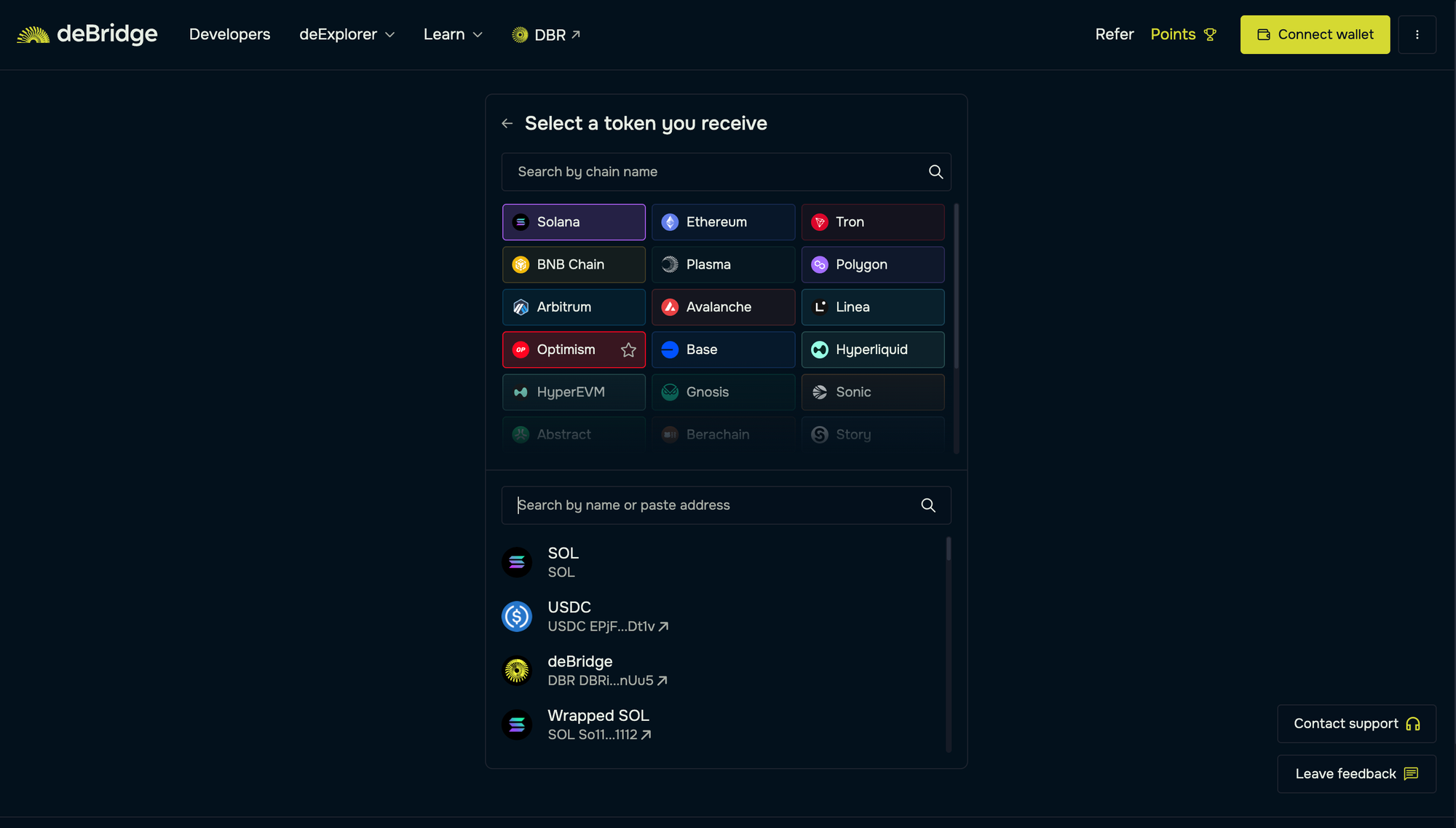
- Connect your EVM wallet as the source and Solana wallet as the destination.
- Enter the BNB quantity and review the transaction details.
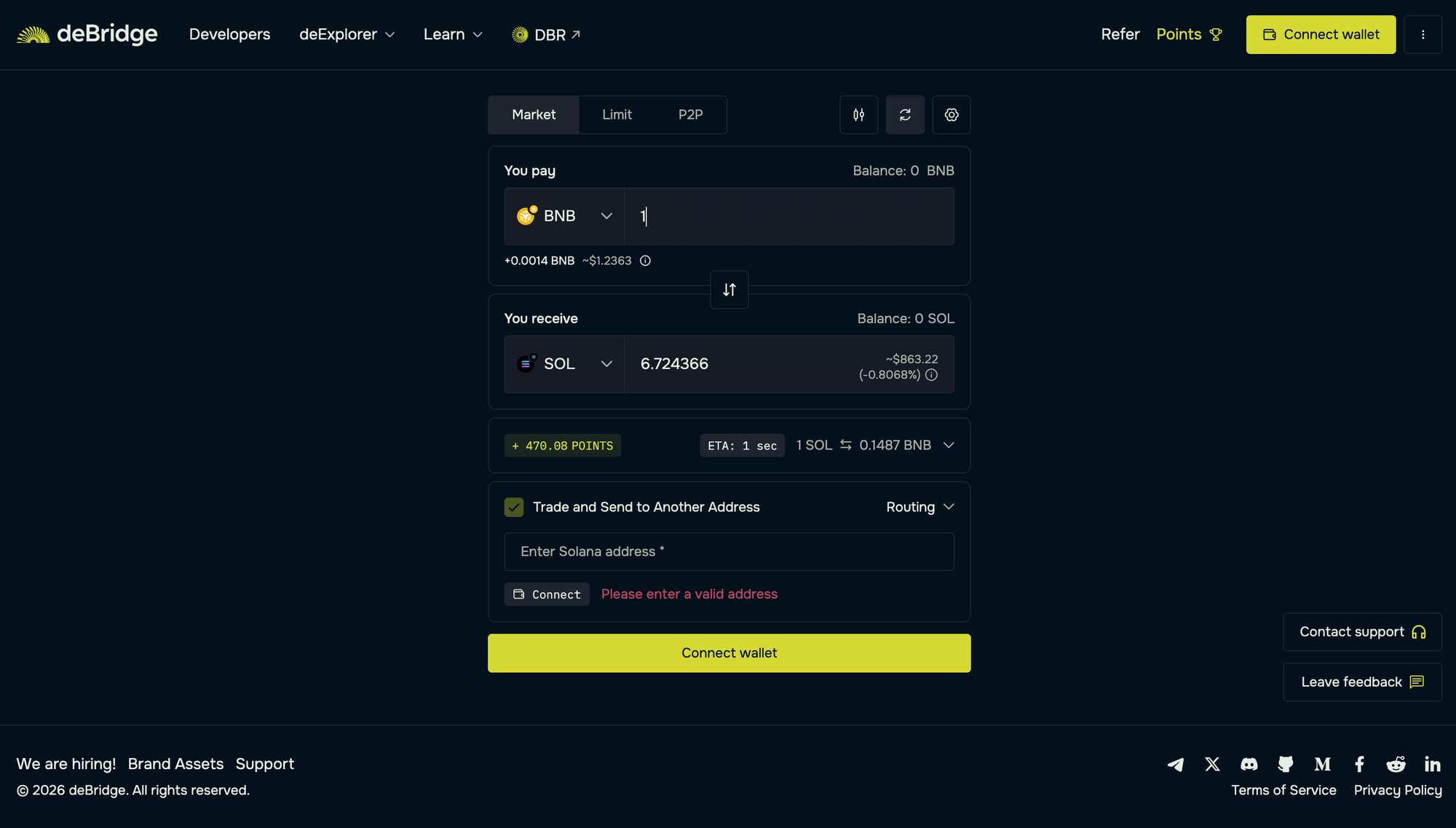
- Confirm the trade and sign transactions to receive native SOL in your wallet.
Pro Tips
- Make sure you have sufficient SOL in your destination chain (Solana) for future transactions.
With Solana, you can enjoy a seamless experience with low transaction fees and high speeds, ensuring your SOL tokens arrive in your wallet in just a few seconds. Technical users can also inspect the transaction(s) on the Solana explorer.
What Makes deBridge Different from Other DEXs
Security, speed, and transparency set deBridge apart from other DEXs. While most crypto bridges rely on liquidity pools and wrapped assets, deBridge is based on a 0-TVL architecture to enhance security multifold and enable zero-risk cross-chain swaps.
Comparison Table
For Developers: Integrate Cross-Chain Swaps into Your App
deBridge offers a seamless way to integrate cross-chain transfers directly into their dApp. Developers can take advantage of the API and embeddable bridge widget to bring users from the entire chainverse into their app. This gives them access to 0-TVL architecture, native asset bridging, real-time execution, and zero slippage.
Teams can customize the widget to match their brand colors and embed it anywhere for quick onboarding. This makes it ideal for DeFi protocols, dApps, Telegram bots, wallets, and more, enabling a seamless, native bridging experience without redirecting users from your app.
Why Integrate deBridge
Developers can embed cross-chain BNB-to-SOL swaps directly into their apps using deBridge’s widget or API.
- One-Line Integration: Add cross-chain functionality without rewriting your stack.
- Easy-to-use API: Access bridging routes and quotes in seconds.
- Instant Finality: Tx settles natively in real time.
- Affiliate Revenue Model: Earn fees from every trade.
- Multi-Chain Support: Support 25+ chains instantly.
deBridge Security Summary
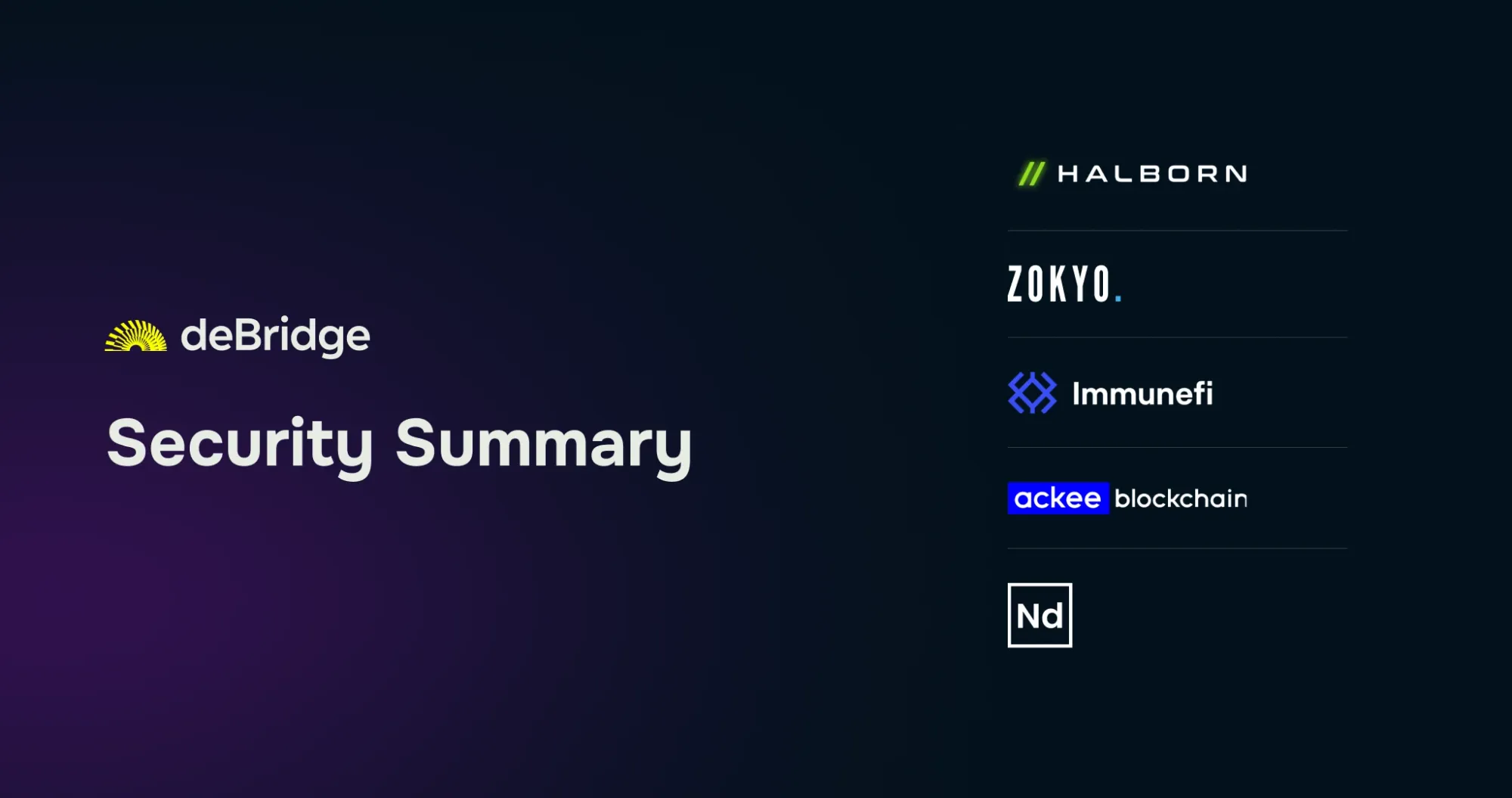
Security is the #1 priority for deBridge.
Unlike traditional bridges that rely on liquidity pools, deBridge operates on a 0-TVL architecture, eliminating pools and ensuring no attack surface for exploits or vulnerabilities.
deBridge has undergone 30+ security audits, hosts a $200,000 bug bounty, and maintains a clean track record of zero exploits since its launch. Top security firms like Halborn and Zokyo have audited deBridge, ensuring it is safe for users to navigate the DeFi space.
Today, many well-known crypto projects, including Phantom, Trust Wallet, MetaMask, Jupiter Exchange, and more, trust deBridge. It is built for users who like to stay ahead of the curve and move assets across 25+ chains at lightning speed.
Why Users Trust deBridge
deBridge has earned users’ trust by helping them trade any opportunity, ahead of the curve. It also offers a variety of features, including:
- 0-TVL architecture ensures no liquidity pools
- 30+ audits across the deBridge protocol and smart contracts
- $200K bug bounty (never claimed)
- Zero exploits since launch
- Trusted by leading protocols and wallets