How to Swap on Hyperliquid in an Instant with deBridge

Table of Contents
- Key Takeaways
- What is Hyperliquid?
- Types of Hyperliquid Swaps
- Why Swap Tokens on Hyperliquid
- Common Issues with Cross-Chain Hyperliquid Swaps
- How to Swap on Hyperliquid with deBridge: Step-by-Step
- What Makes deBridge Different from Other DEXs
- For Developers: Add Cross-Chain Hyperliquid Swaps into Your App
- deBridge Security Summary
- Frequently Asked Questions (FAQs)
- Related Resources
Hyperliquid has become one of the fastest decentralized exchanges in crypto. Built on its own custom Layer 1 blockchain, it offers perpetual futures trading with sub-second execution, zero gas fees, and deep liquidity that rivals centralized platforms such as Binance and Coinbase.
With millions in daily active users and billions in daily trading volume through 2025, traders are clearly gravitating toward Hyperliquid for speed and reliability.
But getting your assets onto Hyperliquid from another chain can be tricky if you use the wrong tools. Wrapped tokens, slippage, and slow settlement times are common issues for traders. This guide walks you through how to swap tokens to Hyperliquid using deBridge, and explains why it stands out from other cross-chain options available today.
Key Takeaways
- Hyperliquid is a high-performance perpetual futures DEX on its own L1, offering zero gas trading fees and sub-second execution.
- Swaps can be onchain (within Hyperliquid) or cross-chain (from blockchains like Ethereum or Solana).
- Cross-chain swaps often involve wrapped tokens, slippage, and delays, but deBridge eliminates them with its 0-TVL architecture.
- deBridge delivers native tokens to Hyperliquid with zero slippage and real-time execution.
What Is Hyperliquid?

Hyperliquid is a decentralized perpetual futures exchange built on its own custom layer 1 blockchain. Unlike most DeFi trading platforms that rely on automated market makers, Hyperliquid operates a fully onchain order book that matches buyers and sellers directly.
The platform is designed specifically for trading performance. It handles thousands of transactions per second with finality times under one second. This makes it possible to offer the trading experience previously available only on centralized exchanges while keeping everything verifiable onchain.
Types of Hyperliquid Swaps
When people talk about swapping on Hyperliquid, they usually mean one of two things. Understanding the difference matters because each type uses different tools and comes with its own trade-offs.
Onchain swaps: It occurs entirely within the Hyperliquid ecosystem. Once your assets are on Hyperliquid, you can trade supported tokens (such as BTC, ETH, HYPE, and more) on the native order book, with fast execution and minimal fees.
Cross-chain swaps: These involve moving tokens from another blockchain (like Ethereum, Solana, or BNB Chain) to Hyperliquid. Cross-chain swaps require a bridge (such as deBridge) to handle this process end-to-end, delivering native tokens directly to Hyperliquid.
Why Swap Tokens on Hyperliquid
Hyperliquid has attracted billions in trading volume due to its unique combination of speed, zero gas fees, and deep liquidity. Trades settle in under a second thanks to HyperBFT consensus, and the onchain order book maintains tight spreads across popular pairs.
Common Use Cases
- Funding a trading account: Moving USDC or stablecoins from Ethereum, Solana, or BNB Chain to start trading perpetuals.
- Accessing new markets: HIP-3 builder-deployed perpetuals are launching markets for stocks, commodities, and custom indices.
- Portfolio rebalancing: Shifting assets between chains to catch opportunities on Hyperliquid's order book.
- Participating in the ecosystem: Accessing HyperEVM-based DeFi protocols, yield vaults, or lending platforms.
Common Issues with Cross-Chain Hyperliquid Swaps
Here are the most common pain points traders face when moving assets to Hyperliquid from other chains.
- Wrapped tokens: Many bridges lock your tokens on the source chain and mint a synthetic version on the destination. These wrapped tokens introduce smart contract risk and complexity.
- Pooled liquidity risks: Traditional bridges rely on liquidity pools that create concentrated targets for attackers.
- Slippage: AMM-based bridges can cause your final price to shift on large swaps. For volatile assets or thin pools, the slippage can be significant.
- Settlement delays: Some bridges take minutes or hours to finalize. For active traders, that delay can mean missing critical moves.
- Limited wallet or token support: Not every bridge supports every wallet, token, or destination chain.
How deBridge Solves Them
- 0-TVL architecture: No pooled liquidity means no concentrated attack surface. deBridge does not hold user funds.
- Native asset transfers: You receive real native tokens on Hyperliquid, not wrapped assets.
- Zero slippage, real-time execution: What you see is what you get. Transactions settle in seconds.
- All major wallets supported: Works with MetaMask, Phantom, Rabby, WalletConnect, and more.
How to Swap on Hyperliquid with deBridge: Step-by-Step
Swapping tokens from another blockchain to Hyperliquid through deBridge takes less than a minute and requires no technical knowledge. Here are the simple steps to bridge your crypto assets efficiently:
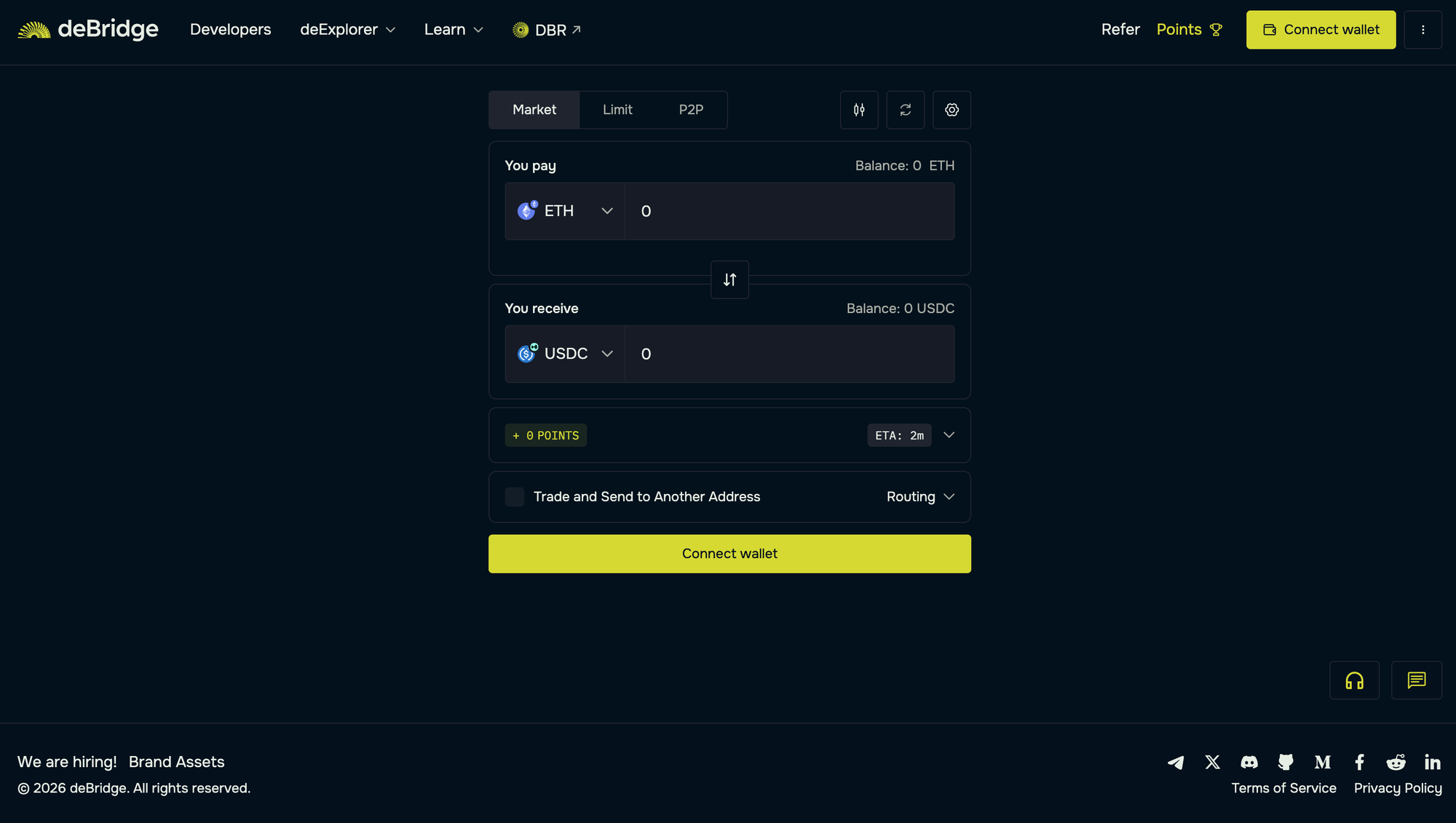
- Select Ethereum as the source chain and ETH as the asset.
- Select Hyperliquid as the destination chain and USDC as the asset.
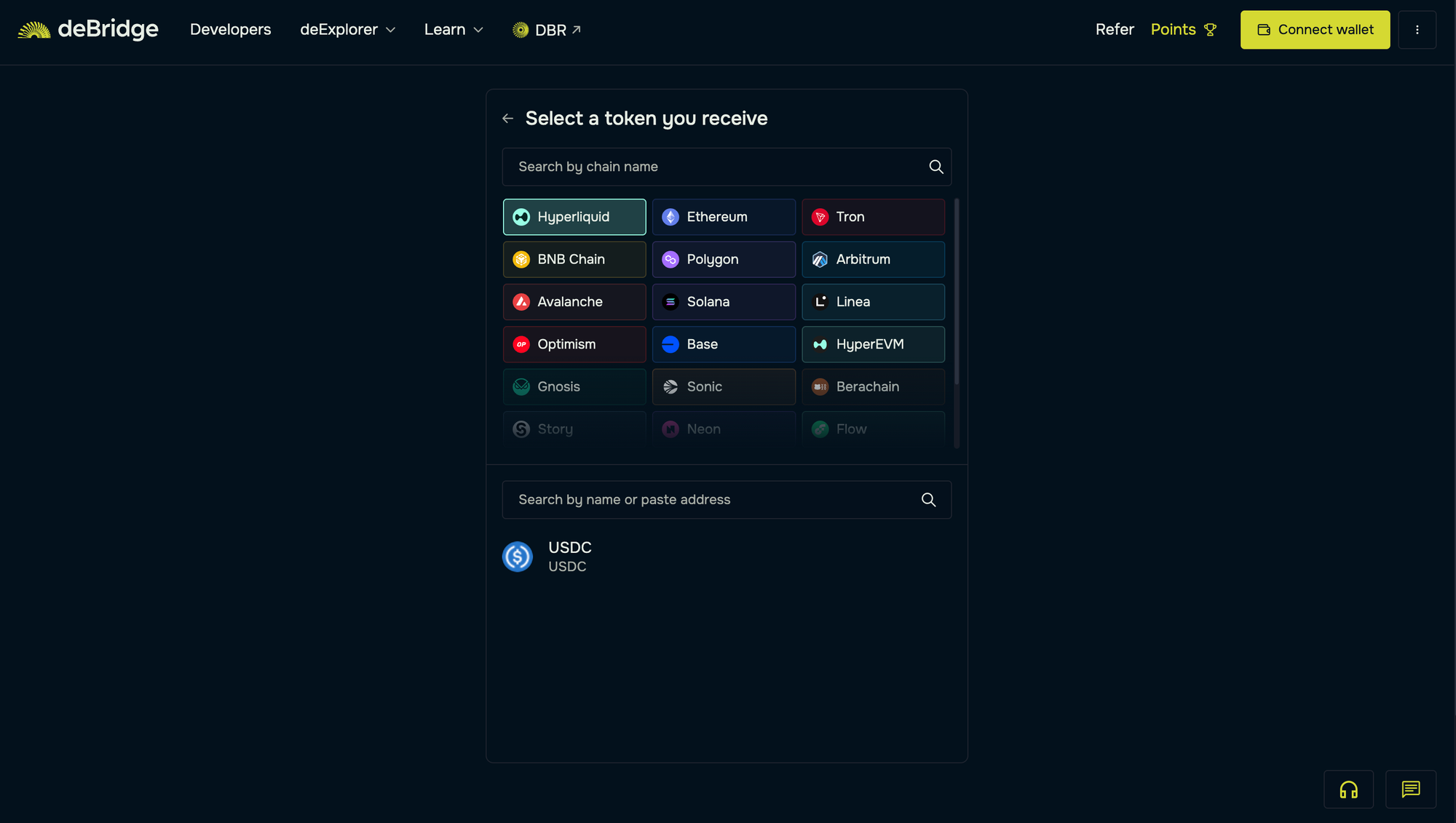
- Connect your Ethereum wallet.
- Enter the ETH quantity and review the transaction details.
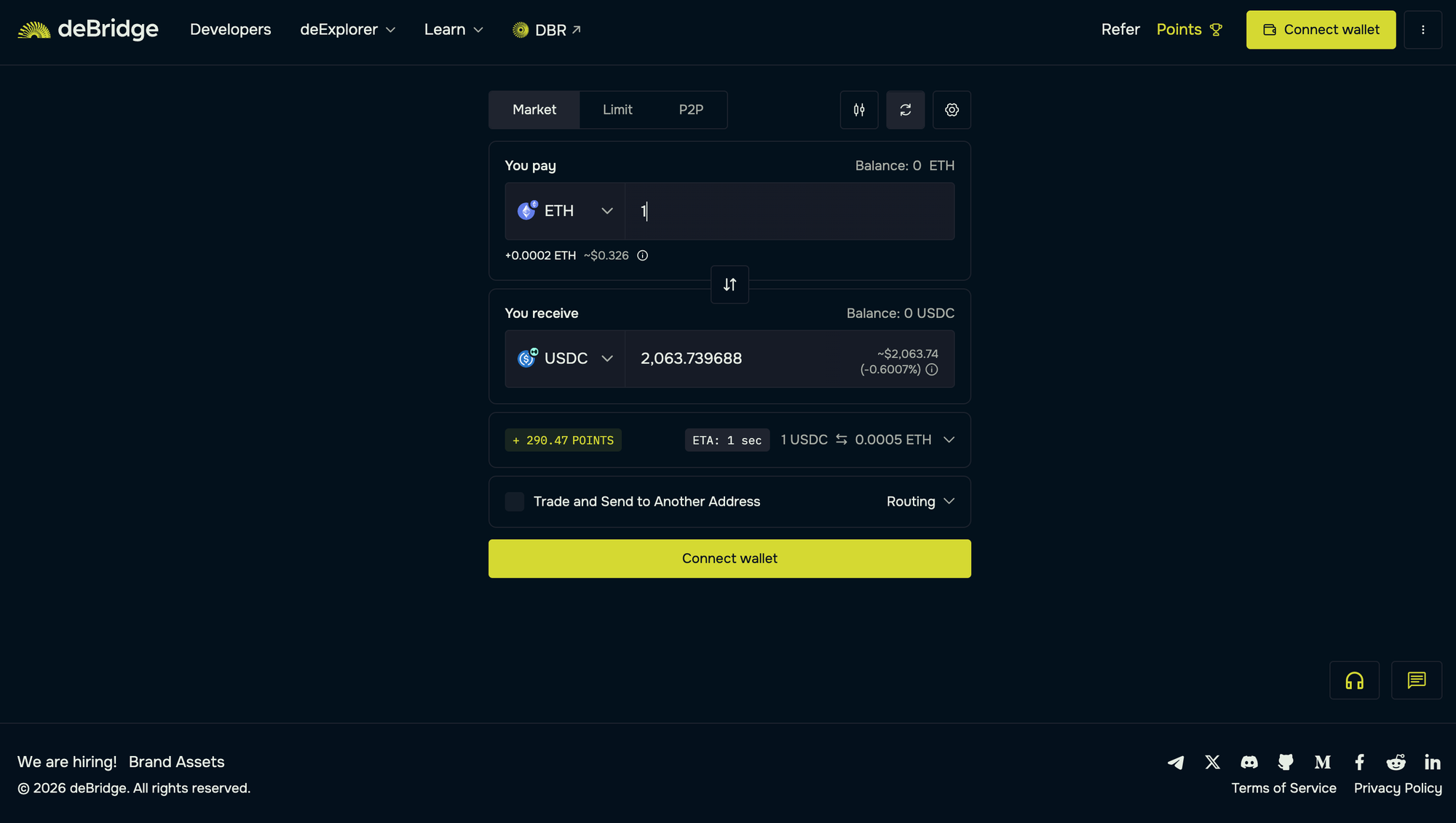
- Confirm trade and sign the ensuing transactions to receive native USDC in your Hyperliquid account.
Pro Tips
- Make sure you have sufficient ETH in your source chain for the bridging transaction.
- Try to avoid sending funds during peak hours to save on ETH gas costs.
The bridging process is simple and only takes a few seconds to complete. You will receive the bridged assets in your Hyperliquid account.
What Makes deBridge Different from Other DEXs
Most bridges rely on liquidity pools that lock up user funds and introduce smart contract risk. deBridge operates on a 0-TVL architecture that requires no pooled capital, eliminating an entire category of risk. It delivers native assets rather than wrapped tokens, executes trades with zero slippage in real time, and supports a wide range of wallets and tokens.
Comparison Table
For Developers: Add Cross-Chain Hyperliquid Swaps into Your App
Developers can add cross-chain Hyperliquid swap functionality using the deBridge API and SDK. The integration is lightweight and flexible.
- SDK integration to add swap capabilities to any frontend.
- RESTful API for custom workflows, bots, and backend services.
- Real-time execution so your users never wait minutes for funds.
- An affiliate revenue model that lets integrators earn from routed transactions.
- Multi-chain support covering Ethereum, Solana, BNB Chain, Arbitrum, Base, Hyperliquid, and more.
deBridge Security Summary
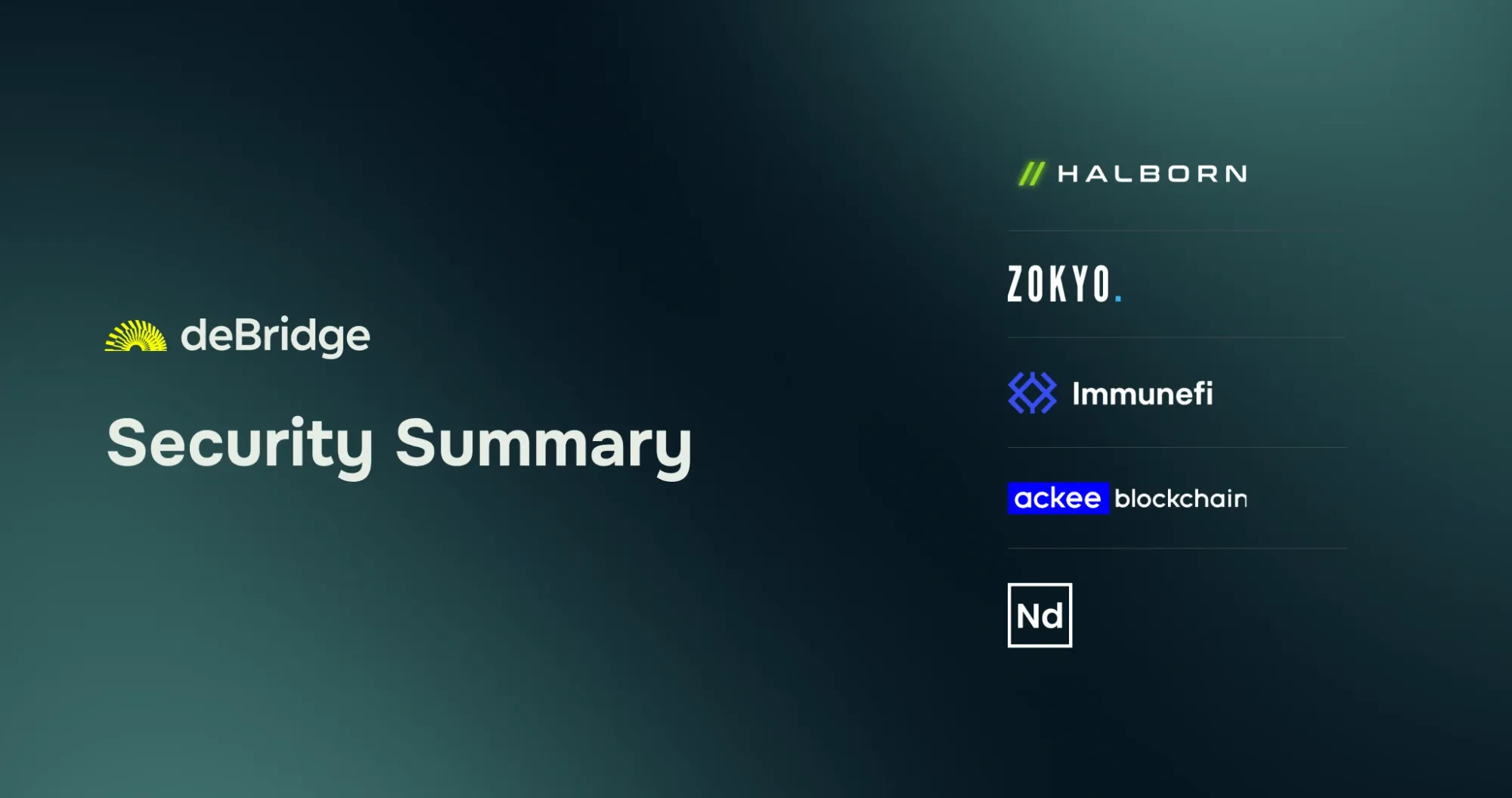
Security is foundational to deBridge
deBridge has undergone 30+ security audits by leading blockchain security firms, including Halborn, Ackee, and others. It offers a $200k bug bounty that remains unclaimed.
It uses a 0-TVL architecture, meaning there are no liquidity pools holding user funds, and it helps protect funds from exploits such as pool draining, leaving no attack surface. deBridge keeps user funds safe throughout the order lifecycle, giving you confidence to move assets across 25+ chains in seconds.
Why Users Trust deBridge
- 0-TVL architecture: No pooled liquidity means no concentrated target for attackers.
- 30+ audits, never exploited: Security is #1 priority. deBridge has not had any security incidents to date.
- Unclaimed bug bounty: The $200k bug bounty remains unclaimed.
- Funds delivered before finalization: Users often receive tokens before the source chain fully confirms.