How to Bridge ETH to BNB Instantly and Securely with deBridge

Table of Contents
- Key Takeaways
- Why Users Bridge from Ethereum to BNB Chain
- Common Issues with ETH to BNB Bridges
- Step-by-Step Guide: How to Bridge ETH to BNB Using deBridge
- How to Minimize Gas When Bridging ETH to BNB
- What Makes deBridge Different from Other ETH to BNB Bridges
- For Developers: Add ETH–BNB Bridging to Your dApp
- deBridge Security Overview
- Conclusion
- FAQs (Frequently Asked Questions)
- Related Resources
Bridging ETH to BNB lets users enjoy lower gas fees, faster transactions, and smoother DeFi access. While Ethereum leads in liquidity and security, BNB Chain offers a cheaper environment for trading, yield farming, and dApp usage. This makes it a lucrative option for users to bridge their assets across chains.
But the legacy bridging experience has been nothing short of a hassle, involving custodial risk, wrapped tokens, or long delays. That’s where deBridge changes the game.
deBridge is a fast, non-custodial bridge that lets you move ETH to BNB Chain instantly. No centralized exchanges. No wrapped assets. No long waits.
Key Takeaways
- Bridging ETH to BNB unlocks faster transactions, lower fees, and access to a high-performance DeFi ecosystem.
- Legacy bridges introduce risks like wrapped tokens, liquidity pools, delays, and custodial exposure.
- deBridge enables real-time ETH-to-BNB transfers with native assets, powered by its 0‑TVL architecture.
- Developers can integrate deBridge via APIs or widgets to add seamless cross-chain bridging and onboard users from multiple chains.
Why Users Bridge from Ethereum to BNB Chain
Ethereum has long been the gold standard for DeFi: unmatched in security, home to deep liquidity, and trusted by institutions and developers worldwide.
Like a coin has two sides, Ethereum’s strengths also come with trade-offs, mainly high network fees and limited scalability for retail users.
BNB Chain addresses the above trade-offs with faster execution, lower fees, and a DeFi ecosystem tailored for mass adoption. It has become the chain of choice for traders, NFT projects, and everyday DeFi users who want performance.
Common Use Cases
- Access to BNB-native dApps like PancakeSwap, Venus, and Alpaca Finance.
- Low-cost trading and yield farming help users save on gas fees.
- Avoid centralized exchanges when transferring funds between ecosystems.
- Mobile-friendly UX for faster interaction on wallets like Trust Wallet.
For DeFi builders, bridging ETH to BNB offers a gateway to a faster, cheaper, and better ecosystem, enabling them to serve a broader base of users without compromise.
Common Issues with ETH to BNB Bridges
The idea of bridging is often misunderstood because of how legacy solutions have worked. They cause more problems than they solve, including asset delays, wrap risks, wallet limitations, and other issues. Let’s break down the most common issues and how deBridge eliminates them.
Key Bridging Pain Points
- CEX Reliance: Most users still rely on centralized exchanges, introducing KYC friction, custody risk, and additional delays.
- Wrapped Tokens and Liquidity Pools: Many traditional bridges mint wrapped tokens backed by liquidity pools, exposing users to smart contract risks.
- Transaction Failures & Delays: Congested bridges, validator lag, and missing confirmations are common across traditional bridges.
- Wallet Compatibility: Limited wallet support increases friction and risk of importing private keys to use the bridging protocol.
How deBridge Solves Them
deBridge removes the bottlenecks and risks of liquidity pools by enabling value and information to flow instantly across the DeFiverse with deep liquidity and guaranteed rates.
- Real-time Bridging: Transfers settle in seconds with instant finality. No waiting, no stuck transactions.
- Native Assets Only: ETH in, native BNB out. No wrapped tokens.
- 0-TVL Architecture: No user funds are stored in smart contracts or liquidity pools, eliminating honeypot risk.
- Universal Wallet Support: Works with MetaMask, WalletConnect, Coinbase Wallet, Trust Wallet, and more.
Step-by-Step Guide: How to Bridge ETH to BNB Using deBridge

deBridge provides an instant bridging solution to help you bridge assets between Ethereum and any asset on Binance Smart Chain and vice versa. Let's walk through the steps involved to perform BNB Chain bridging:
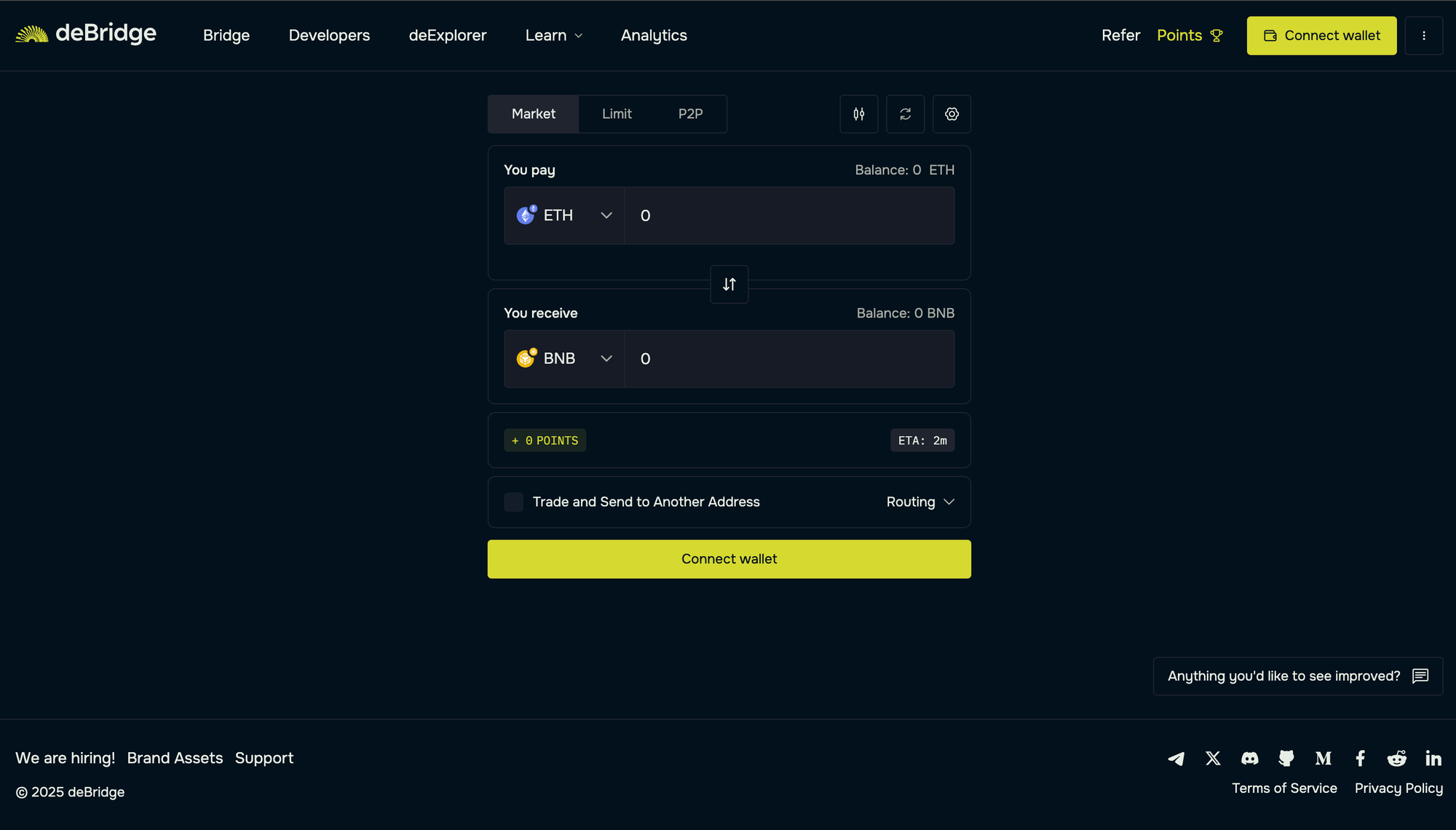
- Select Ethereum as the source network and ETH as the asset.
- Select BNB Chain as the destination network and BNB as the asset.
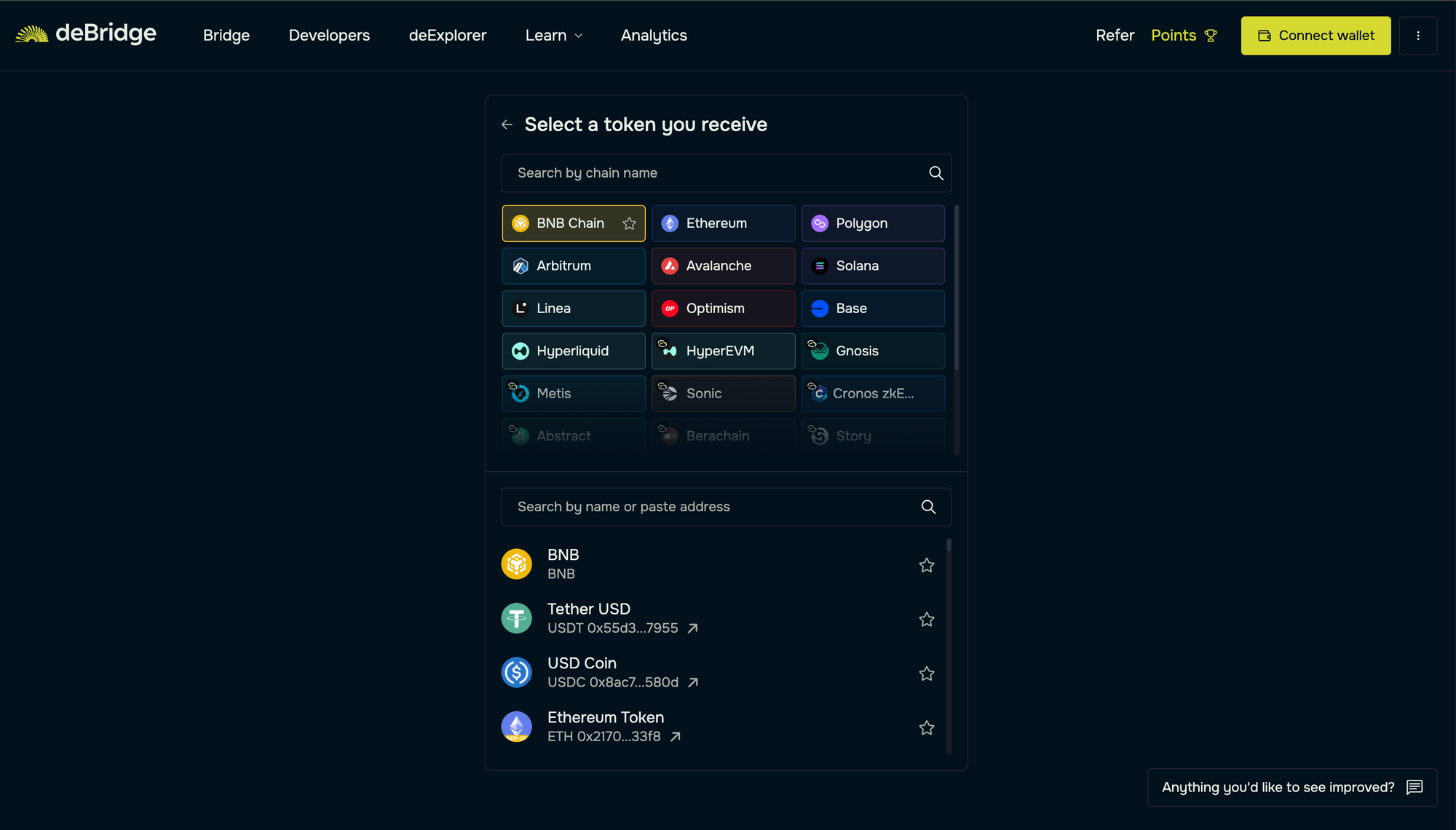
- Connect your EVM wallet as the source and destination.
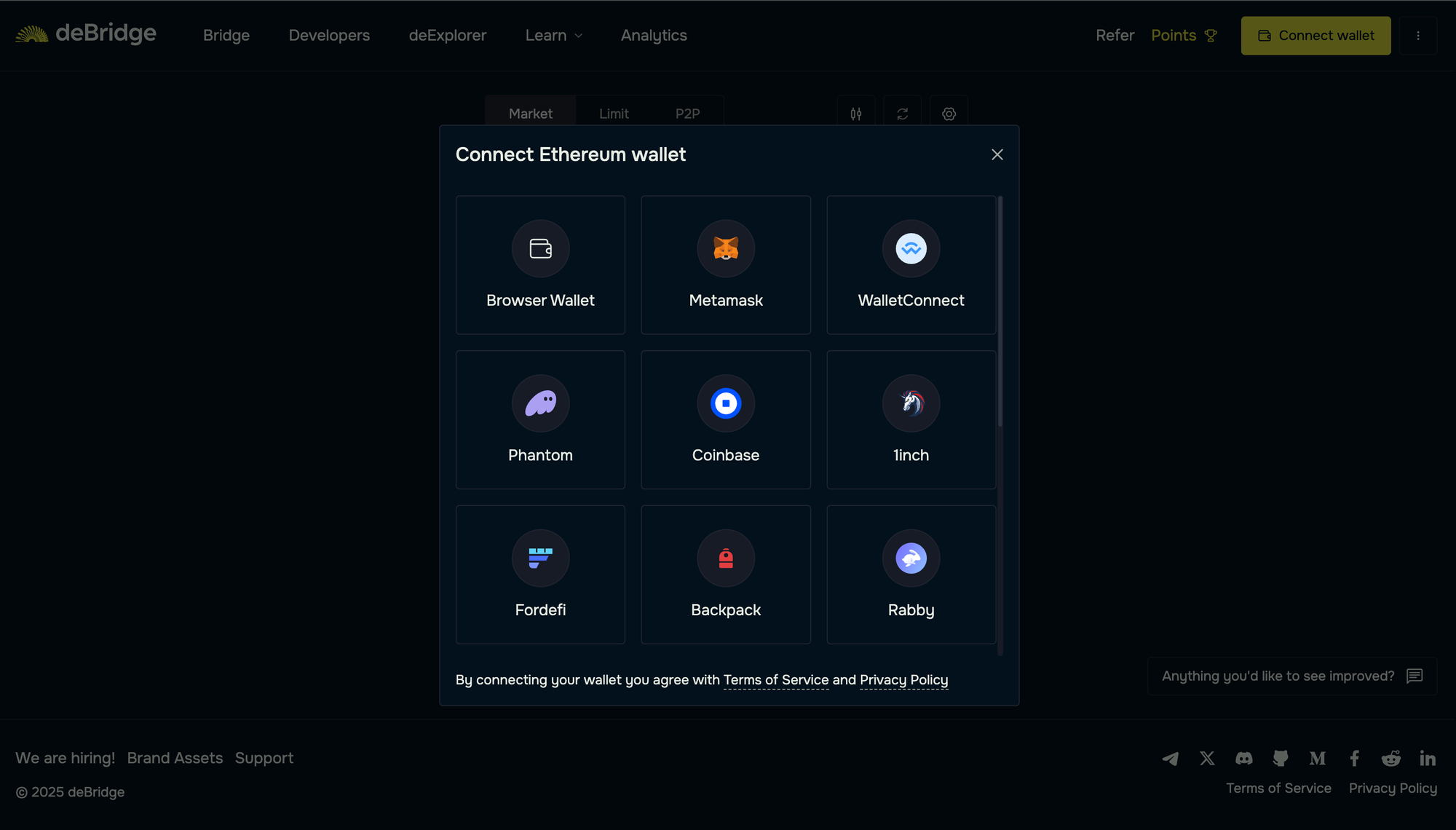
- Enter the ETH quantity and review the transaction details.
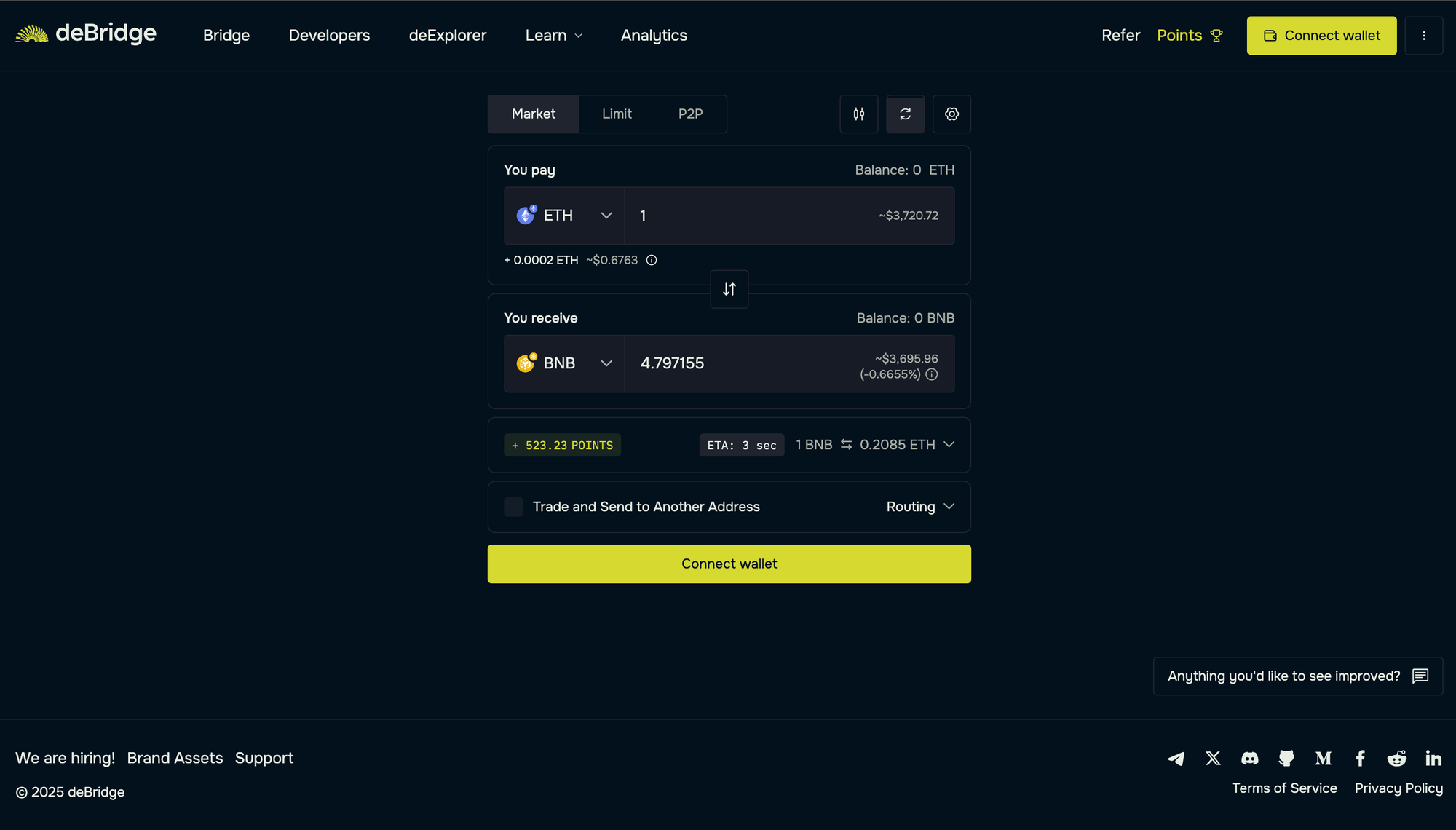
- Click "Confirm trade" and sign the ensuing transactions to receive native BNB in your BNB Chain account.
Pro Tips
- Make sure you have sufficient BNB in your destination chain (BNB Chain) for future transactions. This will help you bridge assets from BNB Chain to other networks.
- Try to avoid bridging during peak hours to reduce ETH gas costs. You can track gas prices on Etherscan.
The bridging process is simple and only takes a few seconds to complete. You will receive the bridged assets (BNB) in your BNB wallet instantly. Technical users can also inspect the transaction(s) on the BNB Chain explorer.
How to Minimize Gas When Bridging ETH to BNB
While bridging ETH to BNB is much faster with deBridge, users often wonder how to minimize gas costs on Ethereum, which is known for high gas fees during periods of high activity.
deBridge is designed for gas efficiency. But there are still a few tips that can help you save even more when bridging tokens across chains.
Optimization Tips
- Monitor gas prices: Use tools like Etherscan Gas Tracker and BSCScan Gas Tracker to track current fees.
- Avoid peak congestion windows: Prevent bridging funds between 2 PM and 6 PM UTC. This is when DeFi activity, arbitrage bots, and activity are super high.
- Choose “Medium” gas settings: It helps balance confirmation speed with cost. You can also customize advanced gas settings if needed.
- Use wallets with gas optimizations: Rabby and OKX Wallet help select optimal fees and batching when possible.
Gas Cost Comparison
Bridge | ETH Gas (USD) | BNB Gas (USD) | Total Approx. Cost |
deBridge | ~$3.20 | ~$0.01 | ~$3.21 |
Binance Exchange | ~$5.00 | N/A | ~$5.00 |
Stargate | ~$4.80 | ~$0.12 | ~$4.92 |
*These numbers are referenced after taking into account the average for July. It is important to DYOR when comparing gas costs.
What Makes deBridge Different from Other ETH to BNB Bridges
Speed, security, and transparency set deBridge apart from other ETH-to-BNB bridges. While most crypto bridges rely on liquidity pools and wrapped assets, deBridge takes a different approach, adopting a 0-TVL architecture to enhance security and enable zero-risk cross-chain swaps.
Comparison Table
Feature | deBridge | Binance (CEX) | Celer | Stargate |
Custody | Non-custodial | Centralized | Mixed | Non-custodial |
Native Assets | Yes | Yes | Often Wrapped | Wrapped |
Wrap Risk | None | None | Medium | High |
Real-Time Execution | Yes | No | No | No |
Gas Optimization | Yes | Partial | Partial | Partial |
Wallet Support | Broad | Limited | Broad | Limited |
For Developers: Add ETH–BNB Bridging to Your dApp

Building cross-chain functionality enables you to bring users from across the DeFiverse into your dApp, exchange, or wallet. With our API and embeddable bridge widget, developers can enable ETH ↔ BNB bridging in just a few lines of code.
Whether you're building a DEX, NFT platform, onchain game, or wallet, integrating deBridge opens a seamless way to onboard users across Ethereum and BNB Chain. Now, with an added functionality, you can explore how to fetch real-time DeFi data with deBridge Hooks.
Integration Benefits
- Simple integrations: Enable cross-chain transfers in minutes with easy-to-use developer tools.
- Native asset delivery: Instead of wrapped tokens, users receive native ETH and BNB with real-time finality of all transactions.
- Revenue via affiliate model: Earn from every transaction routed through your app.
- Multi-chain support: Expand support across Ethereum, BNB Chain, Solana, Arbitrum, Base, and more.
deBridge is designed for performance, making it ideal for both startups and larger dApps. You can also perform a range of UI customizations in the deBridge widget to ensure colors are consistent with your brand.
deBridge Security Overview
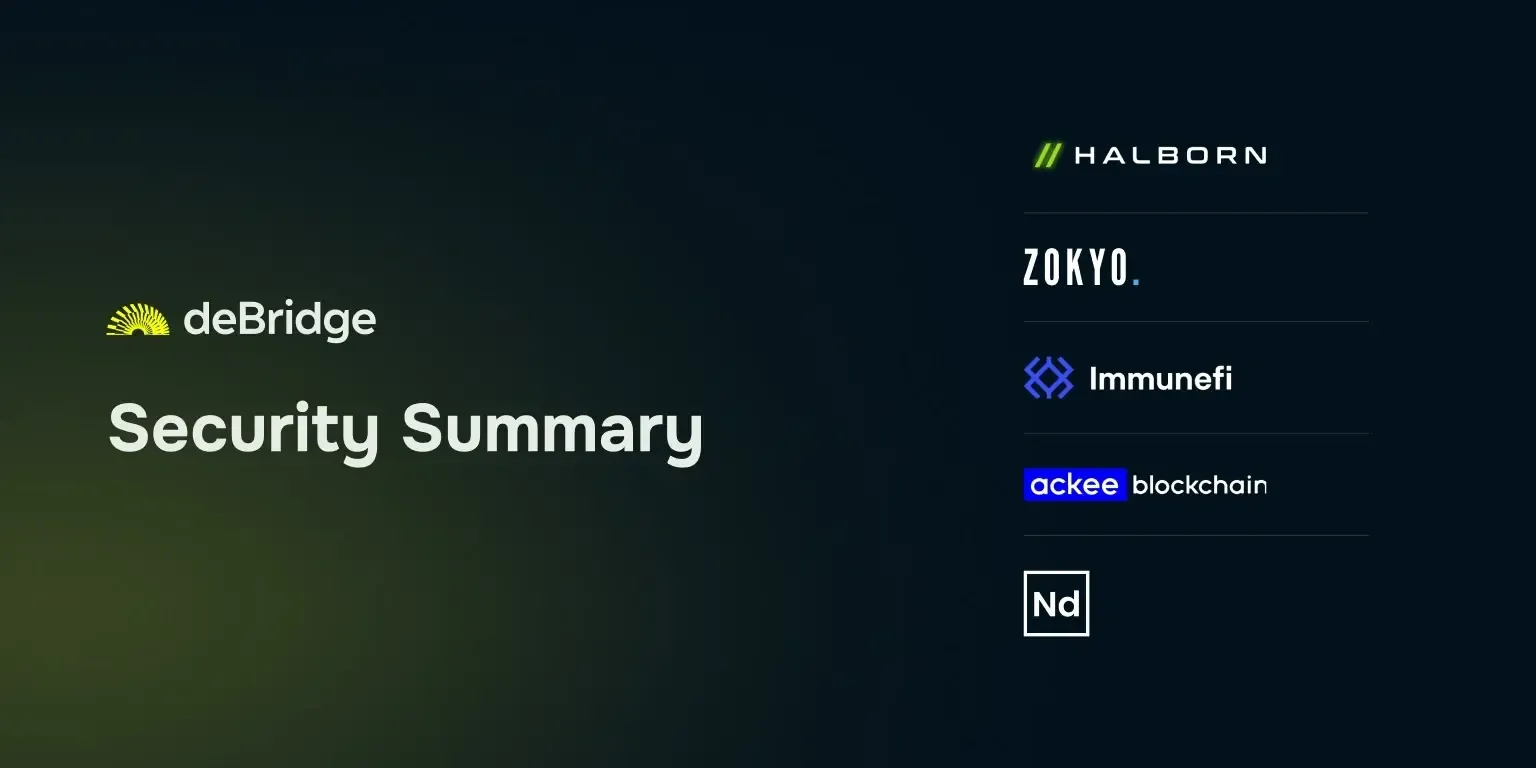
deBridge always puts security first.
Unlike traditional crypto bridges that pool user funds into a single location, deBridge uses a 0-TVL architecture that eliminates the need for liquidity pools. This method prevents exploits such as pool draining, leaving no attack surface.
deBridge keeps user funds safe throughout the order lifecycle. The protocol ensures funds arrive in the destination wallet before the transaction is finalized, giving you confidence to move assets across 25+ chains in seconds.
Trust Signals
deBridge is the top choice of users looking to bridge across 25+ chains from anywhere in DeFi. Some of the standout features include:
- 0-TVL = no pooled user funds
- Audited 30+ times, zero security incidents
- $200K bug bounty (never claimed)
- Trusted by Phantom, Jupiter, and Solflare
Conclusion
Moving assets from Ethereum to BNB Chain gives users access to lightning-fast transactions, lower fees, and a more efficient DeFi ecosystem. While traditional bridges introduce delays, wrapped assets, and security risks, deBridge offers a better alternative. With real-time settlement, native asset transfers, zero pooled liquidity, and a proven security track record, deBridge stands out as the most reliable and seamless way to bridge ETH to BNB.