Introducing deBridge Bundles

As the multi-chain ecosystem expands, developers and users continue to struggle with fragmented liquidity, inconsistent user experiences, and the operational overhead of managing multiple chains.
Today, we’re introducing deBridge Bundles, a new DeFi execution primitive designed to unify these experiences and enable unlimited anychain interactions with a single click. Bundles form the backbone of deBridge’s upcoming protocol evolution, redefining user and developer onchain interactions.
Bundles remove the Complexity
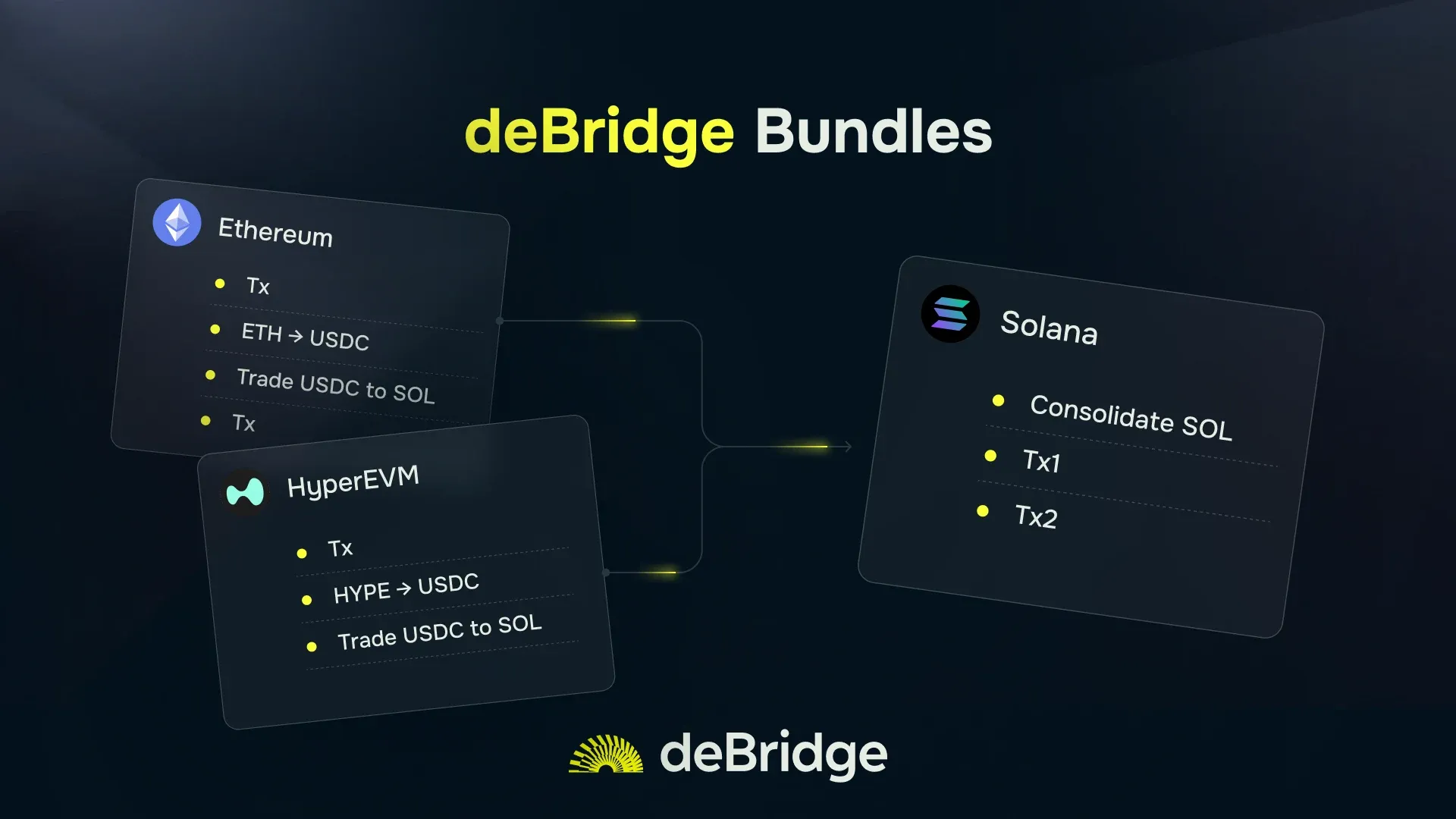
Interacting with multiple chains requires managing slippage, ensuring transactions land, and maintaining native tokens for gas. Instead of forcing users to manage the mechanics of multi-chain execution, Bundles abstract away complexity and allow individuals to simply express what they want to do.
Bundles allow users to express an intent, which the system then executes deterministically. This simplifies the user experience by delivering the desired outcome and abstracting away onchain complexities like managing gas, dealing with cross-chain uncertainty, and more.
Bundles are the Future
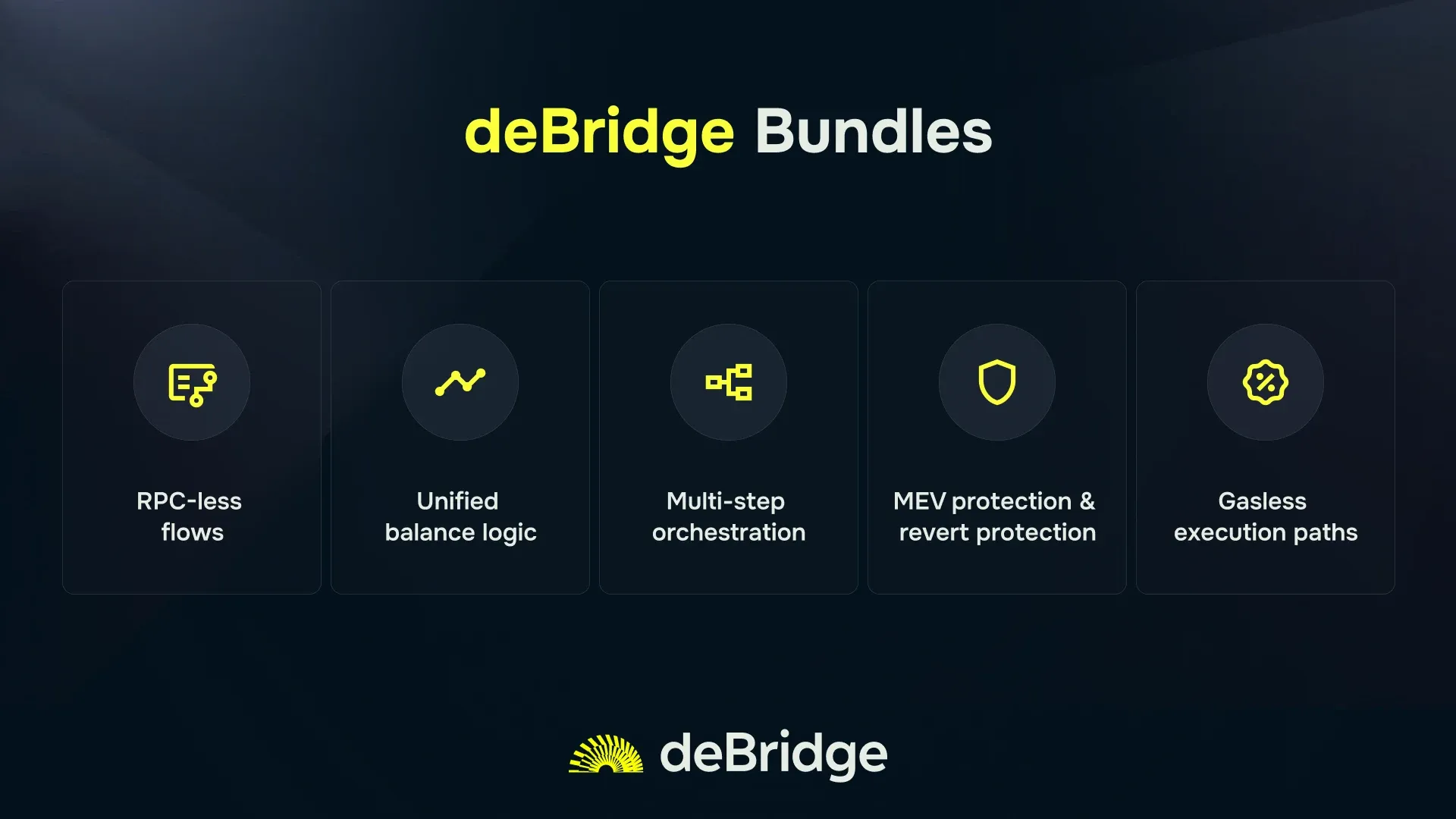
Bundles unlock a new development model. Rather than writing utilities, workarounds, and boilerplate to handle multi-chain execution, developers can focus directly on building applications. They help remove pain points such as:
- Landing transactions through unreliable RPC endpoints
- Re-trying reverted executions
- Managing fragmented balances across chains
- Managing MEV-related concerns
Once resolved, bundles enable a cleaner runtime for applications, wallets, agents, and advanced trading systems.
What Comes Next
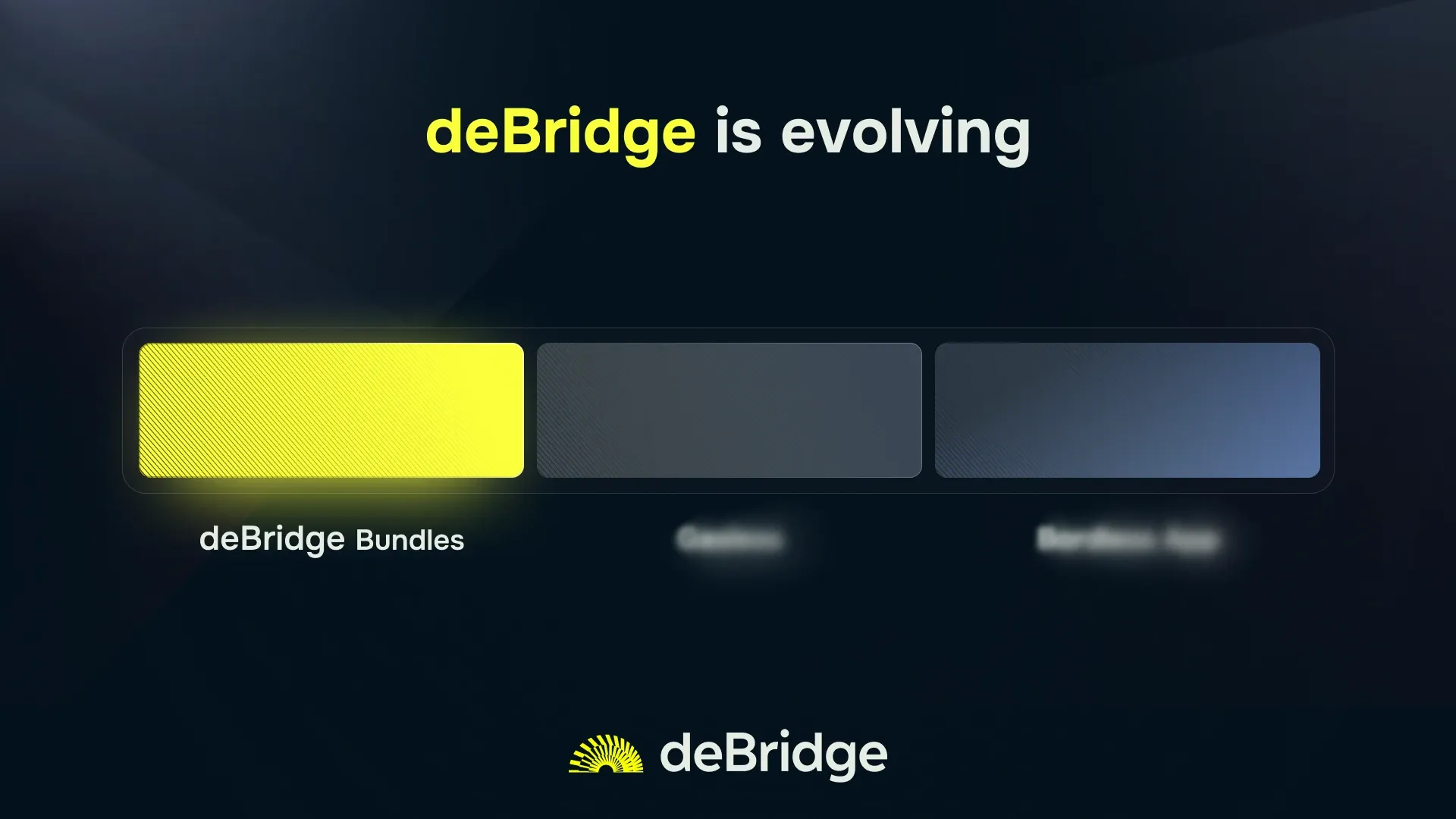
The Bundle format released today marks the beginning of a broader protocol upgrade across the deBridge ecosystem. It provides the core building block for developers to start integrating more powerful intent-based workflows while paving the way for full user-facing experiences that will roll out soon.